

Knowing where to stay in London can make your trip smoother and more enjoyable. The right area saves time and improves your daily experience. This guide highlights the best options for visitors.
This guide compares London neighborhoods by transport convenience, walkability, atmosphere, and short-trip hotel logic so you can choose a base that saves time instead of adding friction.
Quick Takeaways
Start here: Knowing where to stay in London can make your trip smoother and more enjoyable.
Planning note: This guide compares London neighborhoods by transport convenience, walkability, atmosphere, and short-trip hotel logic so you can choose a base that saves time instead of adding friction.
Where to Stay in London: Quick Answer
For most first-time visitors, Covent Garden is the best overall area to stay in London because it is central, walkable, and convenient for sightseeing. South Bank and Waterloo are excellent for landmark-heavy trips, Kensington and South Kensington are better for museums and calmer evenings, and King’s Cross and Bloomsbury work well for transport convenience and balanced value.
Best Areas to Stay in London: Quick Facts
- Best overall for first-timers: Covent Garden for classic central London and easy sightseeing.
- Best for landmarks and riverside walks: South Bank / Waterloo.
- Best for museums and quieter evenings: Kensington / South Kensington.
- Best for transport convenience and value: King’s Cross / Bloomsbury.
London Neighborhood Cheat Sheet
- Covent Garden / Soho fringe: best all-around base for short first trips.
- South Bank / Waterloo: ideal for Westminster, river walks, and orientation.
- Kensington / South Kensington: refined, calmer, and museum-friendly.
- King’s Cross / Bloomsbury: practical, connected, and useful for airport or rail arrivals.
Best Areas to Stay in London
| Area | Best For | Avoid If | Transit Notes | Vibe | Hotel Pick Logic |
|---|---|---|---|---|---|
| Covent Garden | First-timers, walkable short stays, theater fans | You want quiet nights or the lowest hotel prices | Excellent central location with strong walking access | Lively, classic, convenient | Pay for centrality, but confirm room noise levels |
| South Bank / Waterloo | Landmark-heavy trips, riverside walks | You want traditional London streets right outside your hotel | Excellent rail and Tube connections | Open, busy, practical | Best when your itinerary focuses on Westminster and the Thames |
| Kensington / South Kensington | Museums, quieter evenings, comfort-focused stays | You want nonstop nightlife nearby | Good Tube access and excellent museum routing | Refined, calm, polished | Great for travelers prioritizing comfort and sleep |
| King’s Cross / Bloomsbury | Transport convenience, rail access, balanced value | You want the most atmospheric central London feel | One of London’s best-connected transport hubs | Practical, academic, mixed | Choose the exact micro-location carefully |
Covent Garden
Choose Covent Garden if you want the safest first-timer answer. It delivers centrality, walkability, nightlife, and the easiest version of stepping outside and immediately feeling like you are in London.
- Best for: first-time visitors, theater trips, and short city breaks.
- Avoid if: you prioritize quiet nights or larger hotel rooms for the price.
- Transit note: many major attractions are reachable on foot.
- Hotel tip: check reviews carefully for street noise.
- Local insight: a very central hotel is only worth it if you can still sleep comfortably.
South Bank / Waterloo

Choose South Bank or Waterloo if you want riverside London, straightforward sightseeing days, and easy orientation in a huge city. It works especially well for travelers who like visible structure and efficient routes.
- Best for: Westminster sightseeing, Thames walks, and first-time visitors.
- Avoid if: you want a consistently historic neighborhood atmosphere.
- Transit note: excellent for Tube, rail, and walking combinations.
- Hotel tip: choose this area if practical sightseeing matters more than postcard charm.
- Local insight: some sections feel wonderfully central while others feel more business-oriented.
Kensington / South Kensington

Choose Kensington if your ideal London trip includes museums, calmer evenings, and a more polished hotel stay. This is often the easiest area for travelers who want London to feel less hectic after dark.
- Best for: museum lovers, families, and comfort-focused stays.
- Avoid if: you want nightlife directly outside your hotel.
- Transit note: strong Tube access with easy museum connections.
- Hotel tip: ideal when room quality and sleep matter more than nightlife access.
- Local insight: the atmosphere becomes noticeably calmer after dark compared with the West End.
King’s Cross / Bloomsbury
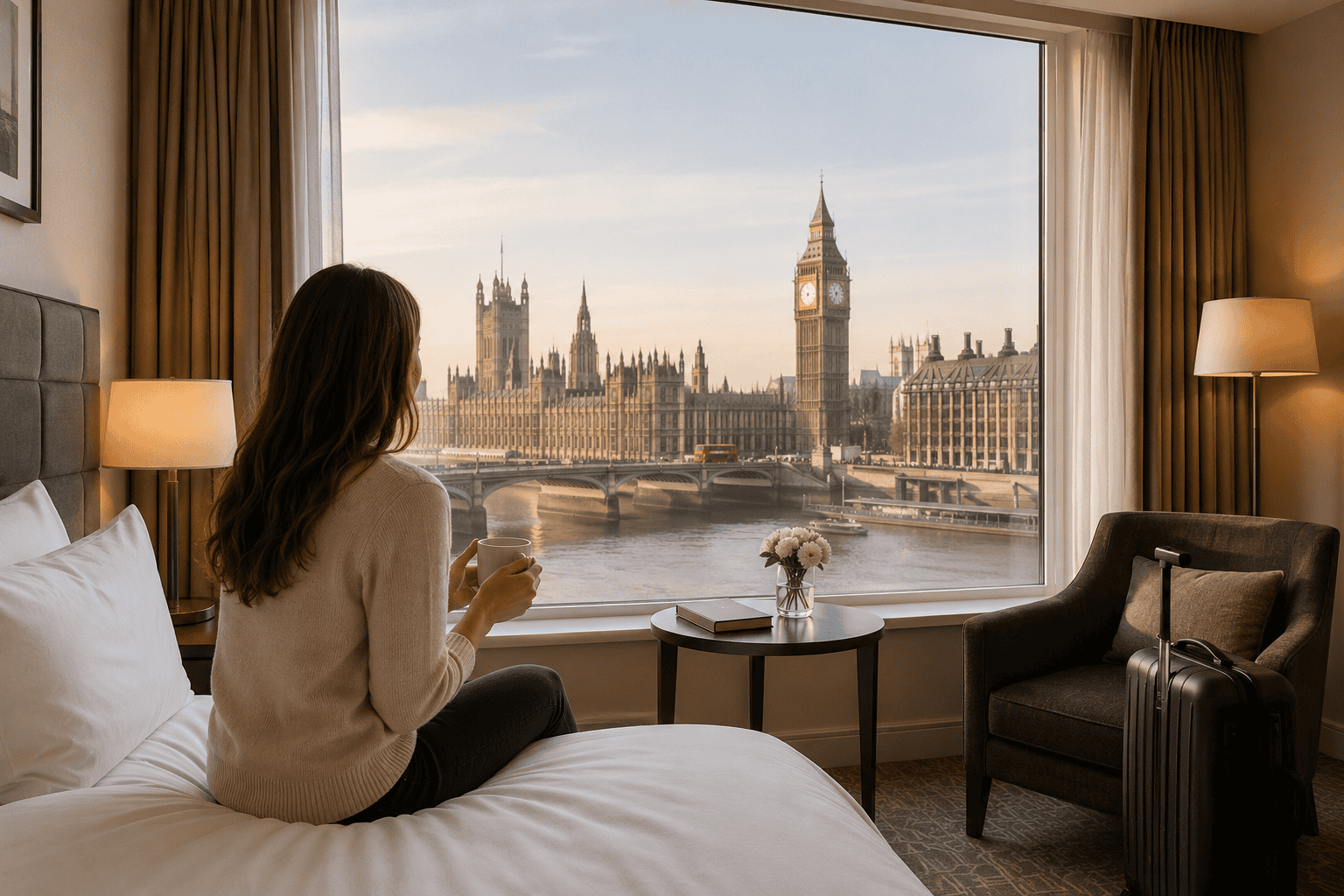
Choose King’s Cross or Bloomsbury if transport convenience and efficient arrivals matter most. This area works especially well for travelers arriving by train, making early departures, or balancing hotel value with strong connectivity.
- Best for: practical travelers, rail connections, and balanced budgets.
- Avoid if: you want the most atmospheric first impression of London.
- Transit note: among the best-connected parts of the city.
- Hotel tip: exact block selection matters more here than in some other neighborhoods.
- Local insight: convenience can either simplify your trip or tempt you into spending too much time commuting.
If You Only Pick One Area
Choose Covent Garden if this is your first London trip and you want the best balance of walkability, evening convenience, and central sightseeing. Choose Kensington instead if you value quieter nights, museums, and a more relaxed atmosphere.
Local Friction Notes First-Timers Miss
- Central London is not one hotel experience. A stay near Covent Garden feels very different from one near a major station or a museum district.
- A cheaper hotel can cost more in time. Saving money far outside the center may add daily transport costs and longer travel days.
- Theater-adjacent hotels can be noisy. Check recent reviews if sleep matters more than nightlife.
- Rail-convenient areas are practical, not always atmospheric. They can be excellent choices, but block-by-block location matters.
- One extra Tube change adds up. A route that looks fine on a map can feel tiring by the third day.
Areas Usually Worth Skipping on a First Trip
- Very far-out budget hotels that make every sightseeing day longer.
- Airport hotels unless your flight schedule truly requires one.
- Nightlife-heavy streets when your real priorities are sightseeing and sleep.
- Hotels chosen only because they seem cheap without considering transport.
- Station-area hotels booked only for the station name, not the immediate surroundings.
Common Mistakes When Choosing Where to Stay in London
- Booking only by price in a city where location shapes the entire trip.
- Assuming the Tube will solve every geography problem.
- Paying for a luxury hotel in the wrong neighborhood.
- Ignoring airport arrival logistics and daily route planning.
- Treating all central London areas as interchangeable.
FAQ
Which area is easiest for a first trip to London?
Covent Garden is usually the easiest all-around choice because it combines central sightseeing, walkability, and lively evenings.
Which London neighborhood works best for a late arrival?
Choose the area with the cleanest airport or rail connection instead of focusing only on famous neighborhood names.
Is Kensington too far for a first London trip?
No. Kensington is often an excellent first-trip base if you want museums, calmer nights, and a more comfortable atmosphere.
Where should families stay in London?
Families often do well in South Kensington or Kensington because the area is calmer in the evenings and convenient for major museums. Covent Garden can also work well for families who want maximum walkability.
Where should you stay in London for one weekend?
For a short weekend, choose Covent Garden or South Bank / Waterloo. Both reduce travel friction and keep major sights, restaurants, and evening options close.
Official London Resources
Related London Guides
- London travel guide
- London 3-day itinerary
- London airport to city guide
- Best things to do in London
- London budget guide
Last verified: 2026-04-18

Mara Vale
Mara Vale writes Eurly travel guides for first-time Europe visitors who want practical routes, realistic pacing, and fewer avoidable planning mistakes.
Eurly guides are written to help readers make confident travel decisions, but opening hours, ticket rules, transit disruptions, and local conditions can change. Always verify key reservations and official schedules before you travel.