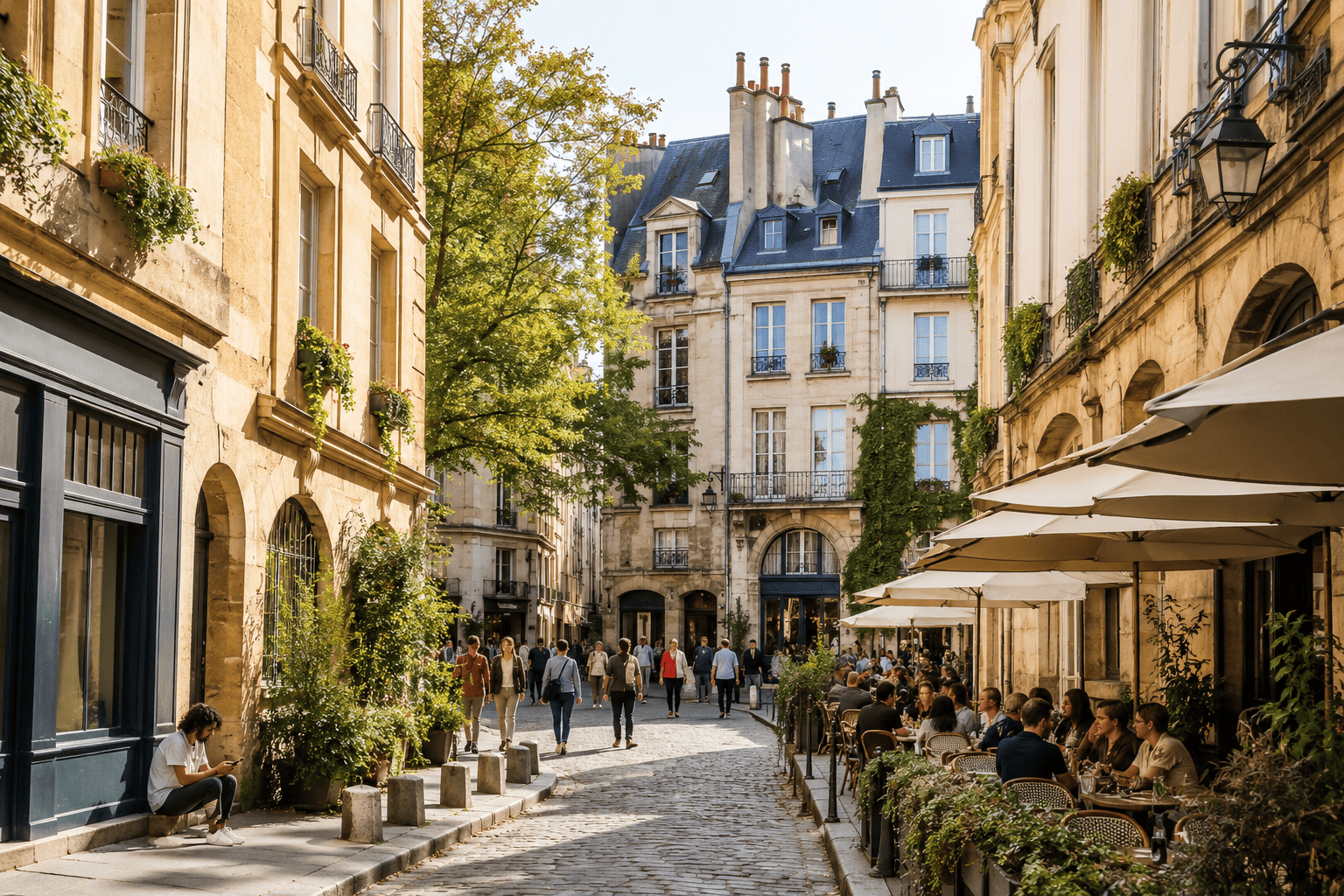
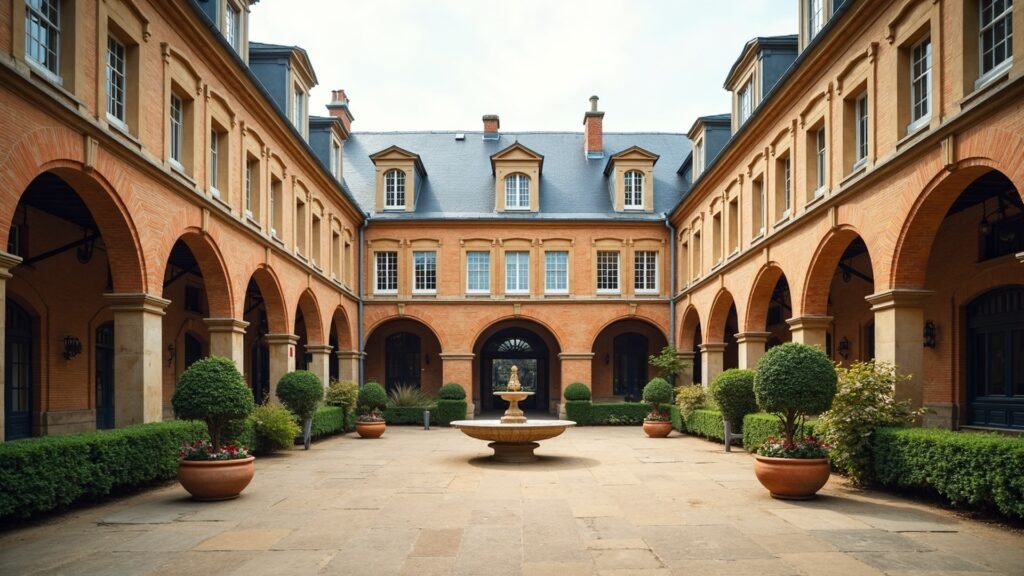
Place des Vosges, Paris neighbourhoods guide

Paris Neighbourhoods Guide 2026: What Each Area Is Really Like

Paris Neighbourhoods Guide (2026): What Each Area Is Really Like

Paris’s arrondissement system tells you almost nothing about what a neighbourhood is actually like. The 1st and the 10th are both “central Paris” by the map, but they are entirely different cities in character. This guide covers the ten neighbourhoods that matter most for first-time visitors — what each one looks like, who it suits, what to do there, and whether to stay in it or just visit.

By Mara Vale for Eurly

How this guide was built: Based on extended personal time in each neighbourhood across multiple Paris trips, with specific attention to the decisions visitors actually face: where to stay, which areas to prioritise, and what each area feels like on the ground rather than on the map.

Last verified: 2026-04-18


How to use this guide

Two different questions are worth separating: where to stay and where to go. The right base for a first Paris trip is not necessarily the neighbourhood with the best restaurants or the most interesting streets. It is the neighbourhood that puts you in walking distance of the most, costs a manageable amount, and does not require metro navigation every time you leave the hotel.

The short answer for first-timers: Le Marais is the right base for most people. Saint-Germain-des-Prés is right if budget is less of a concern. 9th arrondissement / Opéra is underrated for value. Everything else in this guide is worth visiting; fewer of them are optimal bases.


1. Le Marais (3rd and 4th arrondissements)

Character: The Marais is Paris’s most tourist-dense residential neighbourhood — a medieval street grid of narrow lanes, Renaissance mansions, and contemporary art galleries that has become fashionable without losing its architectural bones. The Jewish quarter on Rue des Rosiers has been here since the 13th century. The LGBTQ+ scene centred on Rue Sainte-Croix de la Bretonnerie is one of the most visible in Europe.

Best for: First visits, walkability, food, the LGBTQ+ scene, Jewish cultural heritage, art galleries

Key spots:

  • Place des Vosges — Paris’s oldest planned square (1612), red brick arcades, Victor Hugo’s apartment (No. 6, free entry)
  • Rue des Rosiers — falafel, Jewish bakeries, the best of which is L’As du Fallafel (queue out the door, €7 for a falafel wrap, worth it)
  • Marché des Enfants Rouges (Rue de Bretagne) — Paris’s oldest covered market (1615), free to enter, excellent lunch
  • Musée Carnavalet — free, Paris history museum, one of the great free museums in Europe
  • Musée Picasso — €14, the most important single-artist collection in Paris

Stay here if: A central base matters more than calm. The Marais is lively, well-connected, and walkable to the Île Saint-Louis, the Pompidou, and the banks of the Seine. The right base for most first-timers.


2. Saint-Germain-des-Prés (6th arrondissement)

Café de Flore on Boulevard Saint-Germain, Paris, with terrace seating
Café de Flore: one of Saint-Germain’s famous literary cafés — expensive, but the terrace is worth a coffee

Character: The Left Bank. Café de Flore and Les Deux Magots — where Sartre, Beauvoir, and Hemingway worked — are still here, still serving €8 espressos, and still worth one visit. Saint-Germain is expensive, polished, and architecturally beautiful. It has the highest concentration of art galleries in Paris (concentrated on Rue Mazarine and Rue de Seine), the best bookshops, and a grown-up quality that the Marais — with its selfie crowds — sometimes lacks.

Best for: Art-focused trips, visitors who prioritise atmosphere, museum-adjacent stays (Musée d’Orsay is a 15-minute walk), cafés

Key spots:

  • Église Saint-Germain-des-Prés — free entry, the oldest church in Paris, 6th-century origins, the tower is 11th-century
  • Shakespeare and Company — across the river in the 5th, on Rue de la Bûcherie, the most famous English-language bookshop in Europe
  • Rue de Buci — a lively covered market street with fromageries, wine shops, and a daily vegetable market
  • Luxembourg Gardens — free, one of the best parks in Paris, 10 minutes walk south

Stay here if: You prioritise atmosphere and walking-distance ease over price. Saint-Germain hotels cost more than equivalent rooms in the Marais; the trade-off is that you are in the most beautiful part of Paris.


3. Montmartre (18th arrondissement — the hill)

The Clos Montmartre vineyard on the slopes of Montmartre, Paris
The Clos Montmartre vineyard: the last working vineyard in Paris, harvested every October

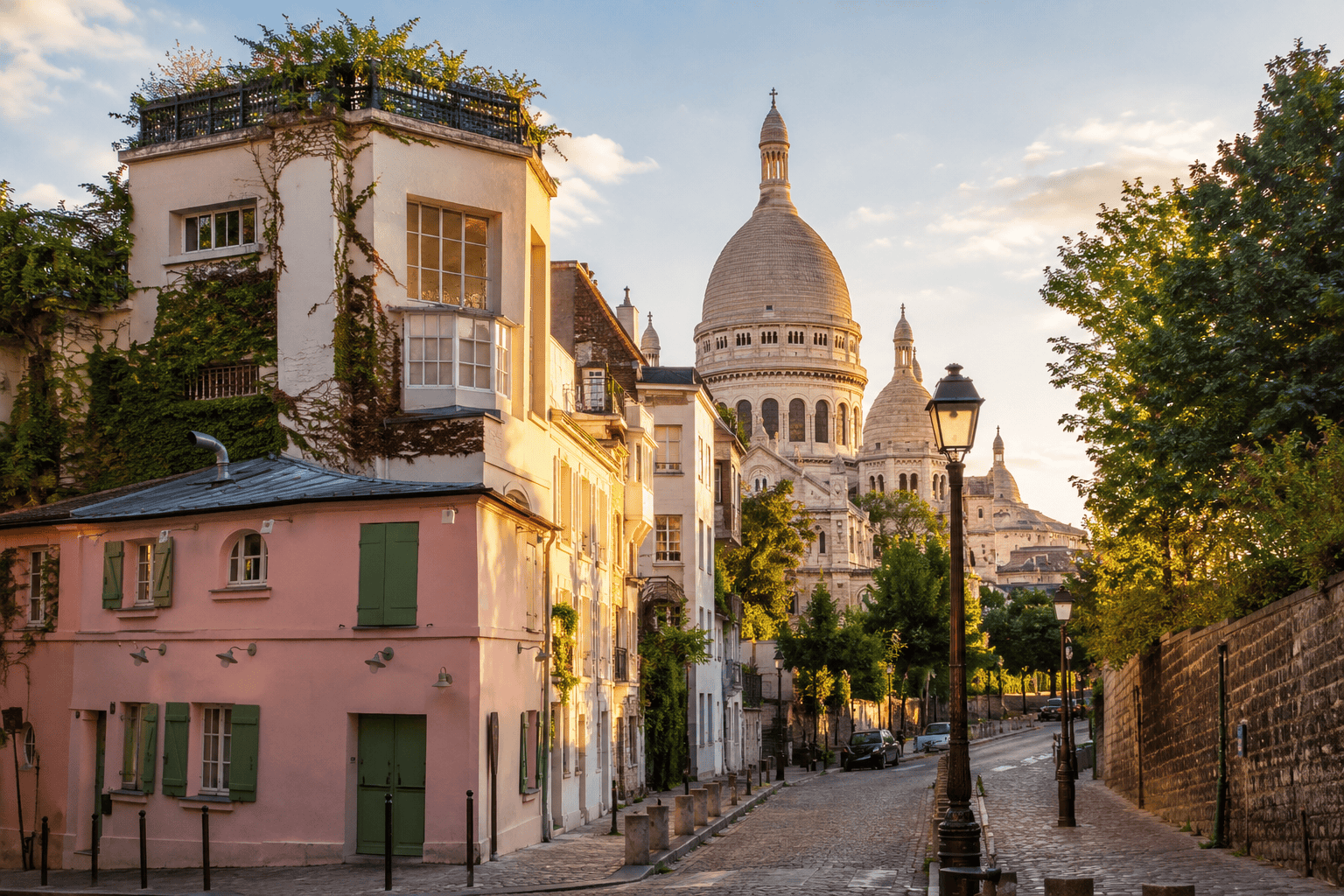
Character: Montmartre is two different places. The summit — Sacré-Cœur, Place du Tertre, the main tourist paths — is heavily visited and commercially oriented. The slopes below the summit, particularly the streets around Abbesses metro, are a genuinely residential village: the Rue Lepic market street, the Moulin de la Galette windmill-turned-restaurant, small squares with local cafés that have not yet become tourist cafés. This is the best urban village atmosphere in Paris.

Best for: Sacré-Cœur and the view from the steps, the village atmosphere on the slopes, visitors who want a quieter base, the Musée de Montmartre (Renoir’s former studio, €15)

Key spots:

  • Sacré-Cœur Basilica — free entry; the steps view is better than the interior
  • Place du Tertre — tourist-heavy, portrait artists, cafés; visit it to see it and move on
  • Rue Lepic — the best residential market street in Paris, at its best on weekend mornings
  • Abbesses metro station — one of the few remaining Art Nouveau metro entrances in Paris, worth the photo

Stay here if: You want a quieter, more residential base and do not mind being slightly further from the Right Bank museums. Good metro connections: Line 12 (Abbesses) connects south to Saint-Germain; Line 2 (Anvers or Pigalle) connects east and west. Do not stay here if you want to be close to the Louvre or Musée d’Orsay — those are 35–40 minutes by metro.


4. Bastille and the 11th arrondissement

Character: The 11th was working-class Paris for most of the 20th century and has become, over the past two decades, one of the most popular neighbourhoods for Parisians in their 20s and 30s. Excellent restaurants at non-tourist prices, wine bars, and a lived-in feeling that the Marais has partly lost. Rue Oberkampf and Rue de la Roquette are the main evening streets. The neighbourhood is adjacent to the Marais but half the hotel prices.

Best for: Food, nightlife, local atmosphere, visitors who want genuine Paris rather than tourist Paris

Key spots:

  • Place de la Bastille — the site of the demolished Bastille prison, the July Column (1840) at the centre, Opéra Bastille on the east side
  • Rue Oberkampf — bar and restaurant street, busiest from Thursday evening through Sunday
  • Rue de Charonne — excellent restaurant concentration, more grown-up than Oberkampf
  • Promenade Plantée — the elevated park starts here at Opéra Bastille (free, 4.7km east)

Stay here if: You want Le Marais energy at lower prices. The walk to Le Marais from central Bastille takes 15 minutes.


5. 9th arrondissement / Grands Boulevards / Opéra

Character: This is an underrated base that most first-timers overlook. The 9th has the grands magasins (Galeries Lafayette, Printemps), the Opéra Garnier, and Rue du Faubourg-Montmartre — one of Paris’s best food streets for affordable lunch. Hotels here cost less than the Marais and the area is more central than it looks: midpoint between Montmartre to the north and the Seine to the south.

Best for: Budget-conscious first-timers, shoppers, visitors who want a genuinely central base without Marais prices

Key spots:

  • Palais Garnier (Opéra de Paris) — guided visit €14, or attend an opera or ballet performance; the Charles Garnier interior (1875) is among the most ornate rooms in Europe
  • Galeries Lafayette — free entry; take the escalators to the rooftop terrace for a free 360° view across Paris including the Eiffel Tower
  • Rue du Faubourg-Montmartre — excellent affordable lunch options, Greek, Lebanese, French all within a single block
  • Passage des Panoramas — the oldest covered passage in Paris (1800), stamp dealers, vintage boutiques, free to walk

Stay here if: You want a central base without paying Marais or Saint-Germain prices. The 9th is 20 minutes by metro from the Louvre, 15 minutes from Notre-Dame, and 10 minutes from Gare du Nord.


6. Canal Saint-Martin (10th arrondissement)

Canal Saint-Martin with iron footbridges and tree-lined banks, Paris
Canal Saint-Martin: iron swing bridges, tree-lined banks, and the best neighbourhood in Paris for a Sunday walk

Character: The neighbourhood that became genuinely fashionable without becoming touristy. The canal itself is a 4.5km waterway with iron footbridges, poplar-lined banks, and working locks. The cafés, boutiques, and restaurants around the canal attract young Parisians rather than visitors — which is precisely what makes it an interesting place to spend time. Hôtel du Nord (Quai de Jemmapes) was made famous by Marcel Carné’s 1938 film; it is now a bar and restaurant.

Best for: Repeat visitors who want a local feel, first-timers who specifically want to avoid tourist-heavy areas, excellent and affordable restaurants

Key spots:

  • Canal Saint-Martin — the stretch between Rue Bichat and Place de la République for the best canal-side walking and evening picnics
  • Rue Beaurepaire — independent boutiques, concept stores, one of the better shopping streets in Paris for non-chain retail
  • Hôtel du Nord — the bar at Quai de Jemmapes 102, for a drink on the canal

Stay here if: This is not your first Paris trip, or if you specifically prioritise a real neighbourhood feel over sightseeing efficiency. Canal Saint-Martin is further from the Right Bank museums than the Marais — plan on metro time for Louvre visits.


7. Latin Quarter (5th arrondissement)

Character: Student area around the Sorbonne — the university has been here since 1257. Rue de la Huchette is a tourist trap street of mediocre Greek restaurants and souvenir shops: avoid it entirely for food. Rue Mouffetard and Place de la Contrescarpe are the genuine local streets — a market, cafés, and an atmosphere that has not been entirely tourist-washed. Shakespeare and Company is technically in the 5th, just across the Seine from Notre-Dame.

Best for: Budget-conscious visitors, students, those who want Left Bank proximity without Saint-Germain prices

Key spots:

  • Panthéon — €13; the tombs of Voltaire, Rousseau, Marie Curie, Victor Hugo, and Émile Zola under the dome
  • Jardin des Plantes — free; the natural history museum gardens, good for families
  • Rue Mouffetard — market street, best on weekend mornings
  • Shakespeare and Company — Rue de la Bûcherie, the most famous English-language bookshop in Europe

Stay here if: You want to be close to the Left Bank museums and the islands at a lower price than Saint-Germain. The walk from Rue Mouffetard to Notre-Dame takes 20 minutes.


8. Pigalle (9th/18th border)

Character: Pigalle has been redefining itself for a decade. The sex shops on Boulevard de Clichy are still there; Parisians mostly ignore them in favour of the restaurant and bar scene that has developed on the streets behind. South Pigalle (SoPi) — the area between Pigalle and Notre-Dame-de-Lorette — has one of the best restaurant concentrations per block in Paris. The Moulin Rouge is here; the exterior is famous, the show costs €105+ per person and is largely a tourist product.

Best for: Visitors who want Montmartre access with a more urban evening scene, food-focused trips

Key spots:

  • Rue des Martyrs — the best food shopping street in Paris; fromageries, boulangeries, butchers, wine shops
  • La Cigale and La Boule Noire — two of Paris’s best concert venues, side by side on Boulevard Rochechouart
  • Moulin Rouge — exterior worth seeing; the show is €105+ and not what most visitors expect
  • SoPi restaurants — the highest concentration of genuinely good mid-range restaurants in Paris

Stay here if: You want Montmartre proximity, excellent restaurants, and a more local evening scene than the Marais.


9. Beaubourg / Les Halles (1st and 4th arrondissements)

Character: The area around the Centre Pompidou — busy, central, and slightly scruffy around the Forum des Halles underground shopping complex. The Pompidou plaza is one of Paris’s best free outdoor spaces: street performers, the fountain, and the building itself (which looks like a refinery turned inside out, which is exactly the intention). Rue Montorgueil is nearby — one of the most alive market and restaurant streets in Paris.

Key spots:

  • Centre Pompidou — €15 for permanent and temporary collections; the building exterior and plaza are free
  • Fontaine Stravinsky — free; the colourful kinetic sculptures by Niki de Saint Phalle and Jean Tinguely beside the Pompidou
  • Rue Montorgueil — the best market-street energy in central Paris; busy at weekends, fishmongers and fromagers alongside restaurant terraces

Stay here if: You want to be within walking distance of the Louvre, the Marais, and the Seine simultaneously.


10. Champs-Élysées / Triangle d’Or (8th arrondissement)

Character: Luxury Paris. Avenue Montaigne runs south from the Champs-Élysées with Dior, Chanel, and Louis Vuitton flagship stores. The Arc de Triomphe anchors the western end of the Champs-Élysées. The hotels here — George V, Plaza Athénée, Le Bristol — are among the most expensive in Europe. The Champs-Élysées itself is wide, impressive, and largely lined with chain stores and tourist-priced cafés.

Best for: Luxury shopping, the Arc de Triomphe visit (€13, the rooftop view over Paris is the best 360° view in the city), visitors for whom cost is not a concern

Key spots:

  • Arc de Triomphe — €13; climb 284 steps to the rooftop for the best view in Paris, looking down twelve radiating avenues including the straight line to the Louvre
  • Champs-Élysées — walk it once for the scale; eat and drink elsewhere
  • Avenue Montaigne — the flagship stores of every major French fashion house

Stay here if: Budget is not a factor and you want the most prestigious Paris address. For everyone else: visit the Arc de Triomphe, walk the Champs-Élysées once, and base yourself elsewhere.


FAQ

What is the best Paris neighbourhood for tourists?

Le Marais (3rd and 4th arrondissements) is the best base for most first-time visitors. It is central, walkable, well-connected by metro, and has good hotels at a range of price points. It is also one of the most interesting neighbourhoods in Paris to walk around. The 9th arrondissement is an underrated alternative with lower prices and a genuinely central location.

Which Paris neighbourhood has the best restaurants?

The 11th arrondissement (Bastille area) and South Pigalle (SoPi) have the highest concentration of genuinely good, non-tourist restaurants in Paris. Rue de Charonne in the 11th and Rue des Martyrs in the 9th are the two streets worth building a food-focused evening around.

Is Montmartre worth staying in?

Montmartre is worth staying in if you want a village-like base and do not need to be close to the Right Bank museums. The Abbesses area is genuinely residential and pleasant. The trade-off is distance: a Louvre visit from Montmartre requires metro time. If the Louvre, Musée d’Orsay, and Pompidou are your priorities, stay in the Marais or the 9th.

What is the trendiest area in Paris?

Canal Saint-Martin (10th arrondissement) has been the neighbourhood that Parisians themselves favour for the past decade — cafés, boutiques, and canal-side evenings that attract locals rather than tourists. South Pigalle is the trendiest restaurant area. The 11th arrondissement around Rue Oberkampf and Rue de Charonne is where the evening scene is most alive.

Which Paris area is safest?

All the areas in this guide are safe for tourists. The Marais, Saint-Germain, Montmartre (Abbesses area), Bastille, the 9th, and Canal Saint-Martin are all comfortable at night. Extra awareness is sensible around Gare du Nord late at night. See the Paris safety guide for specific detail on pickpocket hotspots and scams.

Which Paris neighbourhood is cheapest to stay in?

The 9th arrondissement (Opéra area) and the 11th arrondissement (Bastille) offer the best value for central Paris hotels, running €90–200/night for mid-range accommodation. These are 20–30% cheaper than equivalent hotels in Le Marais (€130–280/night) and significantly cheaper than Saint-Germain (€200+/night). Both neighbourhoods are centrally located with good metro access. See the where to stay in Paris guide for full price breakdowns.


Official resources

Next reads

Schema

“`html

“`

Share This Guide

Send this page to your travel group or save it for your planning notes.

Scroll to Top