
Paris Packing List (2026): What to Bring for Any Season
Paris packing decisions come down to three realities that visitors underestimate: the cobblestones everywhere, the weather that changes within a single day regardless of the season, and the museum days that fill more hours than most people plan for. Pack for those three things and the rest takes care of itself.
By Mara Vale for Eurly
How this guide was built: Tested across multiple Paris trips in different seasons, with specific attention to what causes discomfort on day two and three when the novelty of poor footwear choices has worn off.
Last verified: 2026-04-18
Footwear: the most important decision
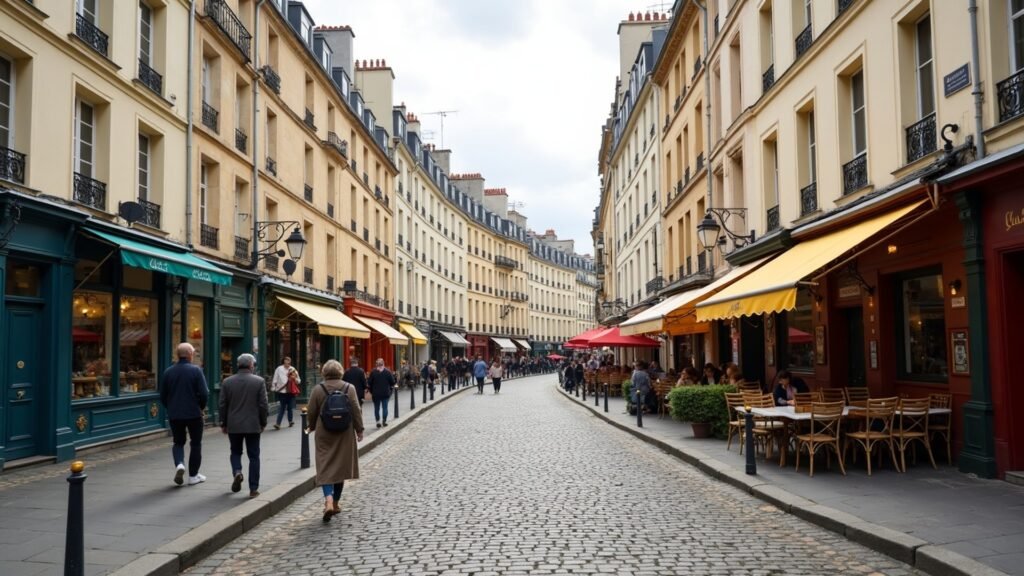
This is not a category where compromise is sensible. Paris has cobblestones in Le Marais, Montmartre, Saint-Germain, and throughout the historic core. A Paris day routinely involves 15,000–20,000 steps. Fashion shoes and dress shoes on Parisian cobblestones cause real pain within two hours.
What to bring:
- Walking shoes or comfortable trainers — non-negotiable. Flat sole with cushioning. Lace-up structure that supports the ankle on uneven surfaces. This is the single most important packing decision for Paris.
- Waterproof shoes or a second pair — Paris receives rain in every month of the year. Wet feet on day two are a mood-killer that affects the entire remainder of the trip. Either pack waterproof walking shoes or bring two pairs so one can dry overnight.
What not to bring:
Dress shoes or heels for everyday sightseeing. If you have a specific dinner, event, or evening that requires them, pack them — but plan to take a taxi to and from rather than walking. The cobblestones between any Paris restaurant and the nearest metro will defeat heels within a block.
Clothing by season
Spring (March–May)
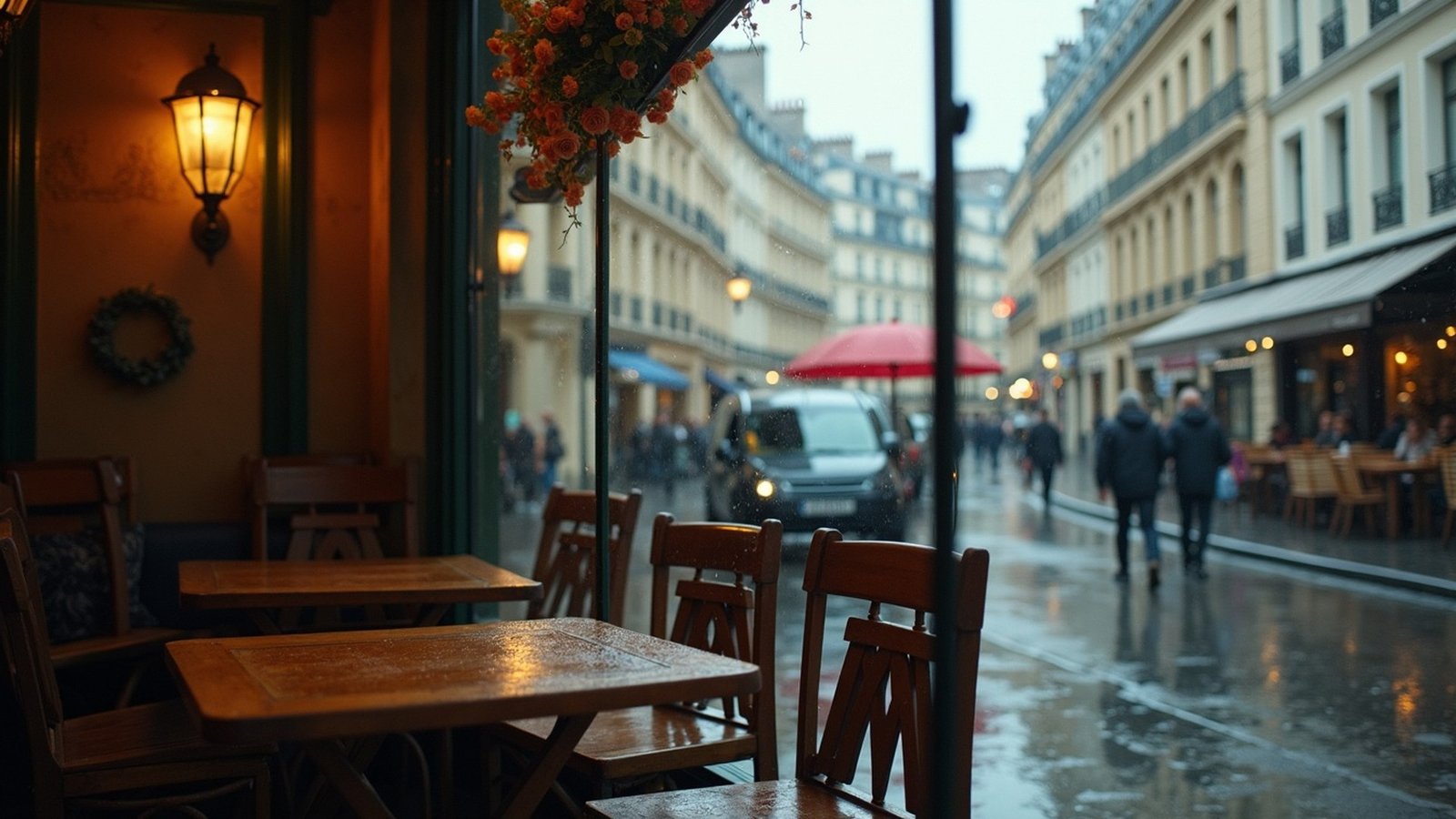
A layering system. Base layer plus a light mid-layer (jumper or fleece) plus a waterproof outer layer. Temperatures range from 8°C in early March to 18°C in late May, and they shift within a single day — a warm afternoon becomes cold by 7pm regularly. Expect rain on at least two or three days of a five-day trip. A compact waterproof jacket is more useful than an umbrella for active sightseeing days.
Summer (June–August)
Light clothing for the heat, plus one layer for air-conditioned museums. The Louvre is cold. The Musée d’Orsay is cold. Any major Paris museum in summer requires a light layer in a bag. Sunscreen is essential July–August. Comfortable walking sandals work for city walking but bring trainers specifically for museum days — sandals on a five-hour museum visit are harder than they look.
Autumn (September–November)
Layering again. September can reach 20°C and feel like late summer; November drops to 8°C and requires a proper warm coat. A mid-weight jacket works for September and October; a warm coat from late October. Pack the same waterproof layer as spring — autumn rain in Paris arrives without much warning.
Winter (December–February)
Warm coat, scarf, gloves. Paris feels colder than the actual temperature because of wind, particularly near the Seine and on elevated spots like Montmartre and the Eiffel Tower. Museum days are natural in winter — the Louvre, Musée d’Orsay, and Pompidou are all better in winter crowds than summer crowds. Pack for outdoor cold between museums, not for sustained outdoor time.
Practical items
Universal power adapter — France uses the Type E plug (two round pins, with a ground pin socket in the socket). Adapters are available at CDG on arrival but cheaper to bring from home.
Portable phone charger — a Paris day from 9am to 10pm involves maps, tickets, photos, and translation apps. A 10,000mAh power bank is the right size for a full day. Pack it charged the night before.
Small crossbody bag or anti-theft bag — more secure than a backpack in metro carriages and crowded tourist areas. The clasp should sit at the front of your body. Backpacks are fine for day trips but leave you more exposed in the specific pickpocket environments (Metro Line 1, Eiffel Tower, Louvre queues).
Reusable water bottle — Paris tap water is drinkable and good. There are free water fountains (Wallace Fountains — the distinctive green cast-iron fountains) throughout the city. Buying bottled water for a week in Paris is unnecessary expense and weight.
Foldable tote bag — for market shopping, boulangerie runs, and carrying a picnic to the Luxembourg Gardens or Canal Saint-Martin. Takes up no space in a bag.
Screen wipes — museum photography in dark rooms produces fingerprint-covered phone screens. A minor thing that improves a lot of photos.
Luggage: what size to bring
For 3–5 nights: rolling carry-on plus a day bag. Paris hotels, particularly in the Marais and Saint-Germain, have lifts that are often too small for large suitcases, or no lift at all. Many Paris hotel rooms are genuinely small. A large suitcase in a standard Paris hotel room creates a logistical problem from day one.
A carry-on (55cm max) plus a day bag covers five nights in Paris without checking luggage at the airport. For longer trips or if you need a checked bag, a medium-size case (around 67cm) is manageable. A large 80cm+ case in a Paris hotel is a daily inconvenience.
Tech, apps, and connectivity
SIM card vs roaming — if your phone plan includes EU roaming (most UK, US, and Australian plans do at no extra cost), activate it before you land. If not, a French SIM from Orange, SFR, or Free Mobile is available at CDG on arrival or at any operator store in Paris for €10–15 with 15–30GB of data. Paris metro signal is strong on newer lines; older lines (4, 5, 6) have gaps underground.
Apps worth downloading before you fly:
| App | Why you need it |
|—|—|
| RATP | Official Paris metro/bus journey planner with live disruptions |
| Google Maps | Download offline Paris map before departure — works without data underground |
| Doctolib | Book a French GP or pharmacist appointment if needed |
| Too Good To Go | Surplus food from Paris bakeries and restaurants at 50–70% off |
| Citymapper | Better than Google for real-time transit alternatives |
Offline maps — download a Paris offline map in Google Maps before you leave home. Once underground on the metro, you will lose signal and the offline map works perfectly for navigation between stops.
Portable battery capacity — 10,000mAh is sufficient for one phone for a full day. If two people are sharing one power bank, 20,000mAh is more realistic. Both are under EU carry-on limits (100Wh, roughly 27,000mAh at 3.7V).
Documents, money, and cards
What to carry daily:
- One debit or credit card with no foreign transaction fees (Wise, Revolut, Halifax Clarity, or similar)
- A small amount of cash — €30–50 is enough for markets, some bakeries, and small tabacs that don’t take cards
- A photo of your passport on your phone (useful if your passport is in the hotel safe)
- Your travel insurance policy number saved in your phone notes
What to leave in the hotel safe:
- Passport (a photo suffices for most daily purposes inside France)
- Backup card
- Any cash above your daily spend
ATMs — use bank ATMs (BNP Paribas, Société Générale, LCL, CIC) rather than standalone ATMs in tourist areas, which often apply their own conversion fees. Always decline the ATM’s offered exchange rate and choose to be charged in euros — your own bank’s rate will be better.
Cards in Paris — contactless card payment is accepted almost everywhere in Paris including most street markets, boulangeries, and cafés. Cash is increasingly unnecessary for most tourist spending, though some smaller bistros and market vendors still prefer it. Keep €20–30 on you at all times.
Day trip packing checklist
Versailles, Giverny, Fontainebleau, and Reims each require slightly different preparation from a city day. Use this checklist for any day trip from Paris:
- Charged phone and power bank — day trips regularly run 10–12 hours
- Printed or downloaded tickets — Versailles and Giverny queues are long; having tickets on your phone is fine but screenshots are more reliable than in-app when signal is weak
- Water bottle — fountains at Versailles and most day-trip destinations are limited; buy water at the Paris departure station rather than at the destination
- Layers — garden-heavy destinations like Versailles and Giverny are exposed; wind is stronger than in the city
- Comfortable shoes — Versailles involves 3–4 km of walking through the gardens alone
- Train ticket downloaded offline — SNCF tickets on the Île-de-France Mobilités app or SNCF Connect app; screenshot them in case of signal failure at the barrier
For Versailles specifically: arrive 30 minutes before your timed-entry slot. The walk from the station to the main entrance is 10–15 minutes, and the security queue adds another 10–15 minutes in peak season.
What not to pack
Heavy camera equipment for a first trip — DSLR bodies with multiple lenses get in the way in crowded museums, slow down navigation, and are a target for theft. Phone cameras produce excellent results in Paris’s well-lit outdoor settings. Bring dedicated camera equipment on a second or third trip when you know what you want to shoot.
A large travel umbrella — a compact foldable umbrella works for Paris rain. Large golf-style umbrellas are awkward in narrow covered passages and crowded streets.
Travel pillow for European short-haul — unnecessary bulk for flights under four hours.
What to buy in Paris rather than pack
Sunscreen — widely available at pharmacies (Pharmacie de Paris is common), often with better European formulations than what you may find at home. Lighter to buy on arrival.
A compact umbrella — available cheaply at any FNAC, pharmacy, or supermarket. Better to buy a small one there than pack a large one from home.
Basic medicines — French pharmacies are excellent and pharmacists are trained to dispense guidance. Paracetamol (Doliprane), ibuprofen (Nurofen or Advil), antihistamines — all available over the counter.
FAQ
What should I wear in Paris?
Paris has no dress code for tourists. Comfort and practicality matter more than style. Walking shoes or trainers for daily sightseeing. Layers in every season — Paris weather shifts within a day regardless of the month. In summer, add a light layer for museum air conditioning. In winter, a proper warm coat, scarf, and gloves.
Do I need an adapter for Paris?
Yes. France uses the Type E plug — two round pins, with a round earth socket in the centre of the socket. If your devices use UK plugs (three rectangular pins), US plugs (two flat pins), or Australian plugs, you need an adapter. Buy one before travel — airport adapters are expensive.
What kind of shoes for Paris cobblestones?
Walking shoes or trainers with a cushioned flat sole. The historic neighbourhoods — Le Marais, Montmartre, Saint-Germain, the Île Saint-Louis — are almost entirely cobblestoned. Fashion trainers without proper cushioning and dress shoes both cause discomfort on a full Paris walking day. Waterproof is a significant bonus given year-round Paris rain.
What should I pack for Paris in summer?
Light clothing for the heat, one layer for museum air conditioning (the Louvre and Musée d’Orsay run cold), walking shoes or trainers (cobblestones don’t change in summer), sunscreen (essential July–August), and a compact foldable umbrella. Paris summer afternoons can include short sharp rain even in heatwave periods.
Do I need cash in Paris?
Not much. Contactless card payment is accepted almost everywhere in Paris — boulangeries, cafés, museums, metro. Keep €20–30 for small street vendors, some tabacs, and very small bistros. Use bank ATMs (BNP Paribas, Société Générale) rather than standalone machines in tourist areas, which apply inflated conversion rates.
What size suitcase is best for Paris?
A carry-on (55cm) plus a day bag covers 4–6 nights comfortably. Paris hotel rooms and lifts are often small, particularly in Le Marais and Saint-Germain — a large 80cm+ checked bag creates real logistical problems in a standard Paris hotel room. Pack lighter than you think you need to and use Paris pharmacies and supermarkets for anything you run out of.
Official resources
- Paris weather averages: meteofrance.com
- Free Paris water fountains: paris.fr/pages/les-fontaines-a-eau-potable-3725
Next reads
Schema
“`html
“`