Barcelona Travel Guide: Quick Start

Barcelona is a city that rewards planning more than almost anywhere else in Europe. The single most important thing to understand before you arrive is that the city’s most iconic building, the Sagrada Família, can sell out weeks in advance during peak season. If you land in Barcelona without a ticket and assume you can walk up, you may end up standing outside looking at scaffolding. This guide is built around that reality.
What makes Barcelona genuinely different from many other European city breaks is the layering. You have Gaudí’s architecture, a working Mediterranean beach, a Gothic medieval quarter that predates Columbus, and a food culture that begins late and does not apologise for it. The city is also distinctly Catalan, not generically Spanish. You will see the senyera, the Catalan flag, hanging from balconies everywhere. People switch between Catalan and Spanish depending on who they are talking to. This context matters when you are navigating the city.
Pickpockets are concentrated on Las Ramblas and on the most crowded metro lines, especially Line 3 between Liceu and Passeig de Gràcia, and Line 5 around the Sagrada Família stop in summer. Use a crossbody bag or a zipped inner pocket. The rest of the city is ordinary European-city safe. Do not let pickpocket warnings put you off the Gothic Quarter; just do not carry everything you own in a back pocket.
Eating culture runs late. Locals often eat lunch between 2pm and 4pm and dinner between 9pm and 11pm. Restaurants may open for dinner at 8pm, but before that you are often in tourist-facing early-service mode with a shorter menu. The menú del día, usually three courses plus a drink for around €13–16, is served at lunch Monday to Friday and is one of the best-value meals in the city.
How Many Days in Barcelona?
Three days is the minimum to see Barcelona without feeling like you are running. Day one should be the Sagrada Família in the morning, ideally the 9am slot, followed by the Gothic Quarter in the afternoon. Day two can cover Park Güell at 9am, Gràcia for lunch, and El Born in the afternoon. Day three works well for Barceloneta beach and the waterfront, then Passeig de Gràcia in the late afternoon when the heat drops.
Four days is a better pace. The fourth day lets you add Casa Batlló or Casa Milà. Do one rather than both unless architecture is your specific interest. It also gives you time to properly explore Poble Sec and Gràcia as neighbourhoods rather than rushing through them. Poble Sec’s Carrer de Blai is one of the best streets for cheap pintxos in the city.
Five days opens up a Montserrat day trip. The mountain monastery around 50km northwest of Barcelona is genuinely extraordinary and accessible by FGC train from Plaça Espanya plus a rack railway. It requires a full day and is best done on day four or five, once you have already seen the city’s headline sights. Do not use one of only three Barcelona days on a day trip; the city itself has more than enough.
Choose Your Base
Where you stay shapes the entire experience. Eixample, the 19th-century grid district designed by Ildefons Cerdà, is the best overall base for a first visit. It has wide pavements, excellent restaurants, easy access to the Sagrada Família and Passeig de Gràcia, and walkable connections to many sights. Mid-range hotels often sit around €130–200 per night. Left Eixample, or Esquerra, feels slightly more local and has a well-established LGBTQ+ scene centred around Carrer del Consell de Cent.
El Born, formally Sant Pere, Santa Caterina i la Ribera, offers medieval streets east of the Gothic Quarter with the Picasso Museum inside them. It is a 15-minute walk from Barceloneta beach and has one of the city’s best concentrations of independent restaurants and bars. Mid-range hotels here often run around €120–180 per night. It is noisier than Eixample on weekend nights but calmer than the Gothic Quarter’s main streets.
Gràcia has a genuinely local feel. The neighbourhood was an independent town until 1897 and still operates like one, with its own village squares, independent bookshops, and morning coffee bars where people actually read newspapers. It is one of the quieter central neighbourhoods and is close to Park Güell. Mid-range accommodation often sits around €100–160 per night. The trade-off is that you are farther from the beach and slightly less convenient for the Gothic Quarter.
The Gothic Quarter is the most central neighbourhood and the most tourist-dense. It has atmospheric medieval streets and is convenient for walking, but expect noise on popular streets such as Carrer dels Escudellers and Carrer de la Boqueria until late on weekends. Barceloneta sits right on the beach and carries a summer premium, but it is walking distance from El Born and excellent if the beach is your primary reason for being in Barcelona.
What Must Be Booked Before You Arrive
The Sagrada Família is not optional for most first-time visitors. Book at sagradafamilia.org soon after you decide on travel dates. In July and August, early morning slots can sell out well ahead of time. Book the earliest available slot if you can; the morning light through the Nativity façade stained glass is one of the defining visuals of a Barcelona trip. Allow at least 90 minutes inside.
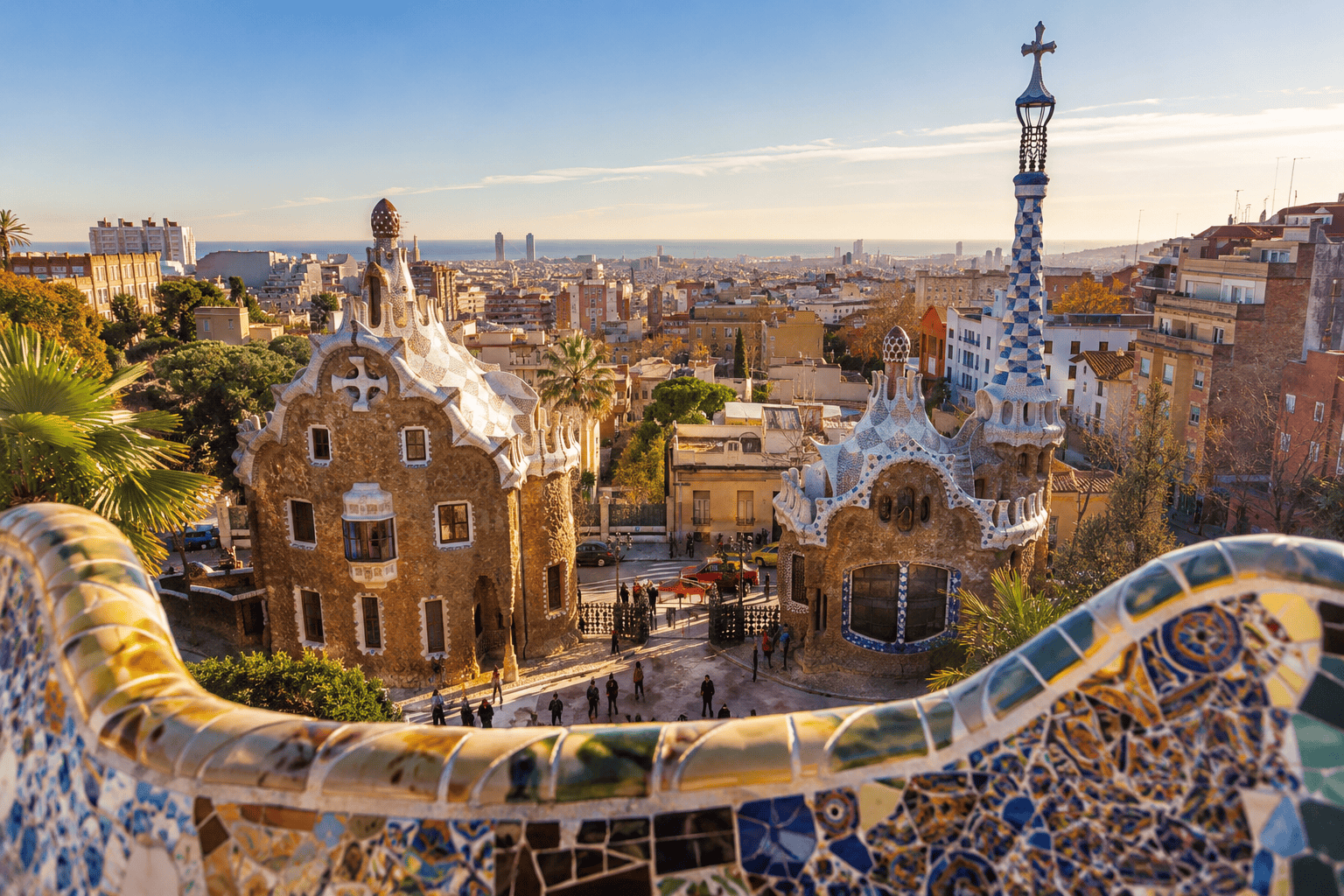
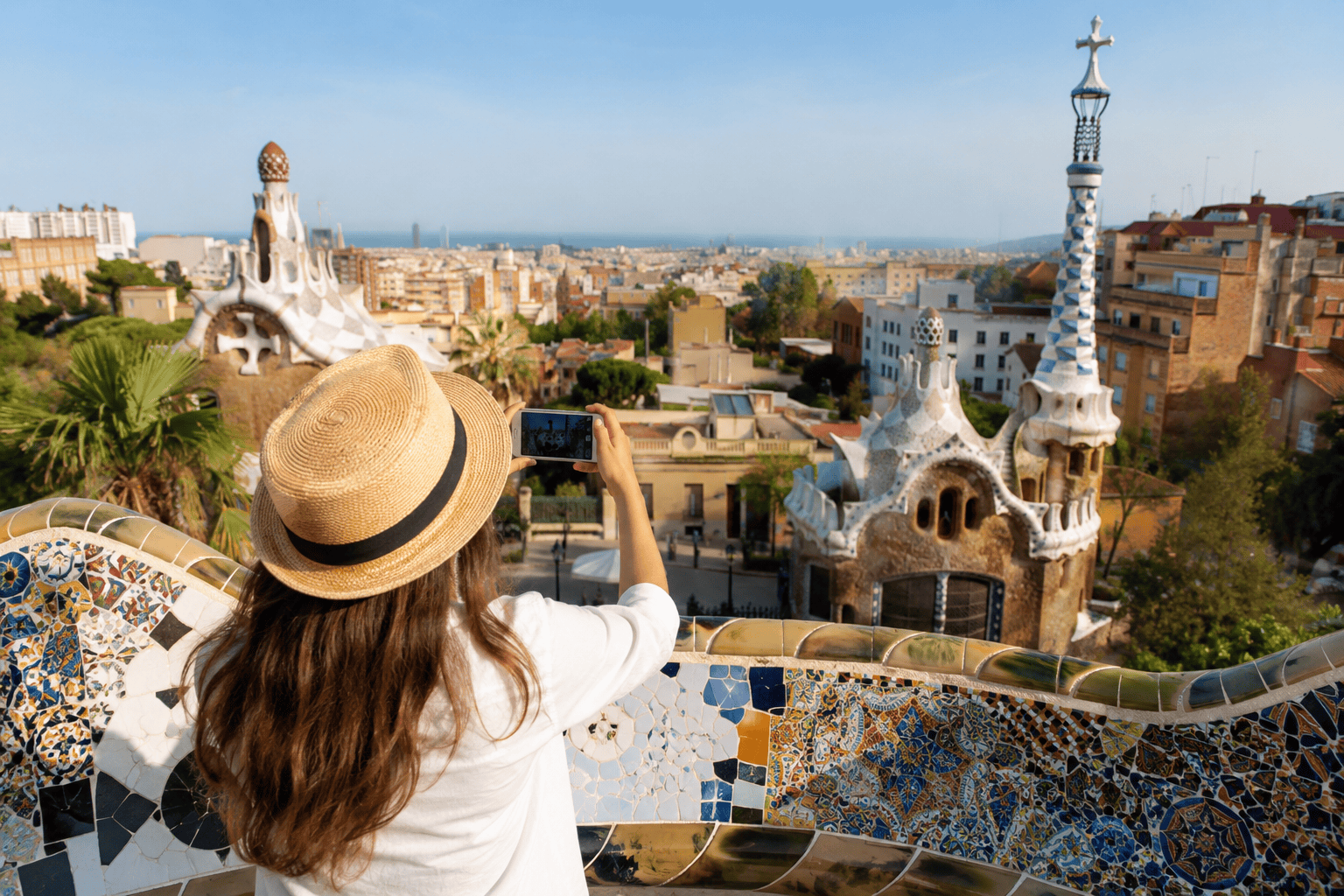
Park Güell Monumental Zone requires timed entry, which can be booked at parkguell.barcelona. The free zones of the park outside the ticketed terrace area are accessible without the Monumental Zone ticket, but the iconic mosaic terrace and Hypostyle Room require entry. Book the 9am or 10am slot if possible, because the terrace gets extremely crowded by mid-morning, especially in summer.
Casa Batlló is the premium choice if your budget allows. The dragon-scale roofline and theatrical interior are unlike anything else on Passeig de Gràcia. It sells out in peak season but usually less aggressively than the Sagrada Família. If you can only afford one of the Passeig de Gràcia buildings in addition to the Sagrada Família, choose between Casa Batlló, which is more theatrical and visually spectacular, and Casa Milà, also known as La Pedrera, with its rooftop chimneys and organic interior.
Getting Around Barcelona
Barcelona is easy to navigate by metro, bus, tram and on foot. A multi-journey transport card is usually better value than buying single tickets if you plan to use public transport two or three times per day. Buy transport cards from the blue TMB machines at metro stations and check current fares before you travel.
Eixample is one of the most walkable districts in Barcelona. The Cerdà grid was designed with pedestrian movement in mind: wide pavements, chamfered octagonal block corners that create small plazas, and consistent block spacing. The walk from central Eixample to the Sagrada Família is around 25–30 minutes. The Gothic Quarter and El Born are best explored on foot, and Barceloneta is around 30–35 minutes from the Gothic Quarter along the waterfront.
Cycling has expanded significantly across Barcelona. Dedicated cycle lanes make the seafront and Parc de la Ciutadella especially pleasant by bike. Cycling is less straightforward in the Gothic Quarter’s medieval streets, where pedestrians and cyclists share narrow lanes. Visitors can rent from private bike shops near the waterfront.
Local Friction Notes
La Boqueria market on Las Ramblas is visually impressive but now heavily tourist-facing. Walk through it if you are nearby, but do not build your food day around it. For a more useful market stop, go to Mercat de Santa Caterina in El Born, which has a striking wave-tiled roof, better everyday prices, and is used by people who live in the neighbourhood. For produce shopping, Mercat de l’Abaceria in Gràcia is another strong option.
The Eixample grid creates a spatial illusion. On a map, the Sagrada Família looks close to the Gothic Quarter. It is not especially close. The walk from the Sagrada Família, near Avinguda de Gaudí, to the Cathedral in the Gothic Quarter is around 25–30 minutes at a comfortable pace. This matters for itinerary planning. Trying to do Sagrada Família at 9am, the Gothic Quarter at 11am and Park Güell at 1pm is not realistic. Space out major sights by day, not by hour.
Dinner before 9pm puts you in early service at many restaurants. The staff know it, the menu can be shorter, and the energy is different. Eating late is not just a cultural affectation; it is when many good restaurants are running at full capacity with local customers. If 9pm dinner is too late, use a 2pm lunch as your main meal and have a lighter early dinner.
Build the Trip Around Your Travel Style
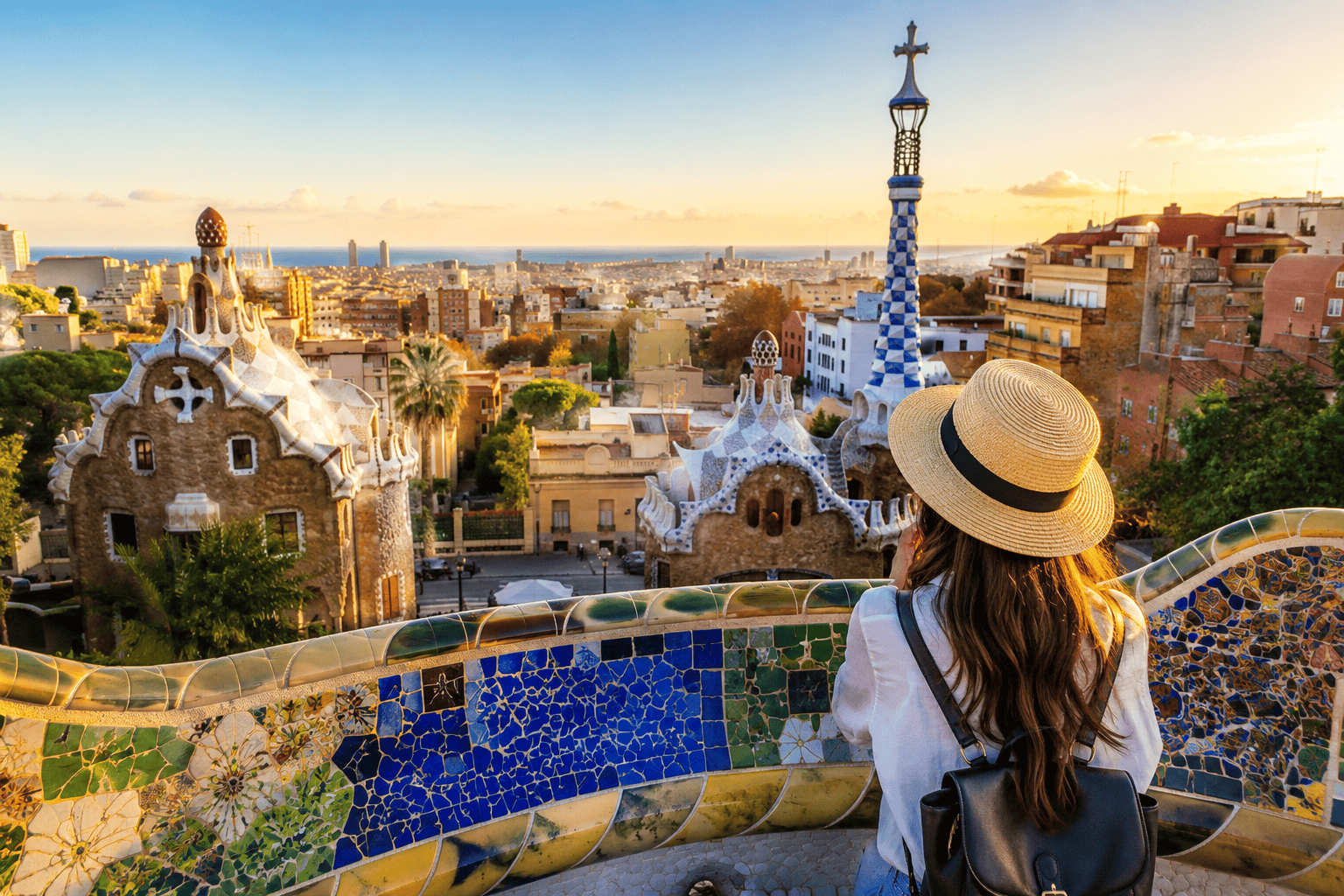
Architecture focus: Pre-book Sagrada Família for day one at 9am. In the afternoon, visit the Gothic Quarter for medieval architectural contrast. On day two, book Park Güell in the morning, then walk down through Gràcia to Passeig de Gràcia. In the afternoon, see Casa Batlló from outside and choose either Casa Batlló or Casa Milà for an interior visit.
Beach and neighbourhood focus: Sagrada Família on day one still belongs in the plan. On day two, visit Barceloneta beach in the morning, ideally before 11am in summer, then spend the afternoon in El Born. Add Santa Maria del Mar basilica for a moving Gothic interior and dinner in El Born. On day three, explore Gràcia, including Plaça del Sol and Plaça de la Vila de Gràcia, then spend the evening on Carrer de Blai in Poble Sec.
Food and culture focus: Start mornings at a standing bar with a café solo or cortado and a simple pastry. Visit Mercat de Santa Caterina, use menú del día lunches as the anchor of each day, and consider the Picasso Museum or MACBA depending on your interests. In the evening, try pintxos in Poble Sec or vermouth hour in Gràcia. Order a vermut with olives and chips at an old-fashioned local bar.
Barcelona First-Time Visitor Planning Table
| Trip Length | Best For | Suggested Priority |
|---|---|---|
| 3 days | First-timers with limited time | Sagrada Família, Gothic Quarter, Park Güell, Barceloneta and Passeig de Gràcia |
| 4 days | A more comfortable city break | Add Casa Batlló or Casa Milà, plus deeper time in Gràcia or Poble Sec |
| 5 days | City plus day trip | Add Montserrat after the main Barcelona sights |
Mara’s Planning Shortcut
Mara is Eurly’s AI travel planning assistant. If you want a day-by-day itinerary built around your travel dates, travel style and budget, you can ask her directly. She can help you sequence the 9am Sagrada Família slot, group neighbourhoods sensibly, and avoid walking back and forth across the Eixample grid. This Barcelona travel guide gives you the framework; Mara turns it into a specific plan.
FAQ
Is Barcelona worth visiting?
Yes. Barcelona has more genuinely world-class architecture per square kilometre than almost anywhere in Europe, a working beach within walking distance of the medieval centre, an extraordinary food culture, and two thousand years of layered history. Tourist pressure on Las Ramblas and around the Sagrada Família is real but manageable. The city beyond those corridors is one of the most liveable and interesting in Europe.
How much does Barcelona cost per day?
A realistic mid-range budget for a first-timer is around €110–160 per night for accommodation, €13–16 for a menú del día lunch, €25–40 for dinner at a decent restaurant, and additional spending for transport and Gaudí tickets. Expect around €80–120 per day on top of accommodation for a comfortable but not extravagant visit. Budget travellers using hostels, pintxos, menú del día lunches and free attractions can spend much less.
Do I need to pre-book things in Barcelona?
Yes. Pre-book the Sagrada Família as soon as your dates are fixed. Park Güell is strongly recommended, and Casa Batlló or Casa Milà should be booked in peak season. The Gothic Quarter, beaches, Barceloneta, Gràcia, and most neighbourhood wandering can be done on arrival. The critical mistake is arriving without Sagrada Família tickets and discovering they are sold out.
Is Barcelona safe?
Yes, with standard urban awareness. Pickpockets operate on Las Ramblas and crowded metro cars, especially around major tourist stops. The rest of the city, including the Gothic Quarter at night, is ordinary European-city safe. Do not carry your passport unnecessarily, use a crossbody bag, and watch for distraction techniques such as someone spilling something on you or pointing at your shoes. Violent crime targeting tourists is rare.
What language do people speak in Barcelona?
Both Catalan and Spanish, often interchangeably. Street signs, official signage and many menus are in Catalan first. Most people in the service industry speak both fluently, plus varying levels of English. Speaking a few words of Catalan, such as gràcies for thank you and bon dia for good morning, is received warmly. Spanish works everywhere. English works in tourist-facing contexts but less reliably in neighbourhood bars and markets.
Last verified: 2026-04-27