
This Ireland travel guide helps first-time visitors build a memorable itinerary across the country. Explore Dublin, scenic coastal routes, and charming towns at a relaxed pace. Ireland rewards travelers who take time to enjoy both iconic sights and local experiences.
For more on this part of the trip, also see our 3 Days in Dublin: A Realistic Itinerary for First-Time Visitors.
Ireland Travel Guide: Planning a First Trip to Ireland
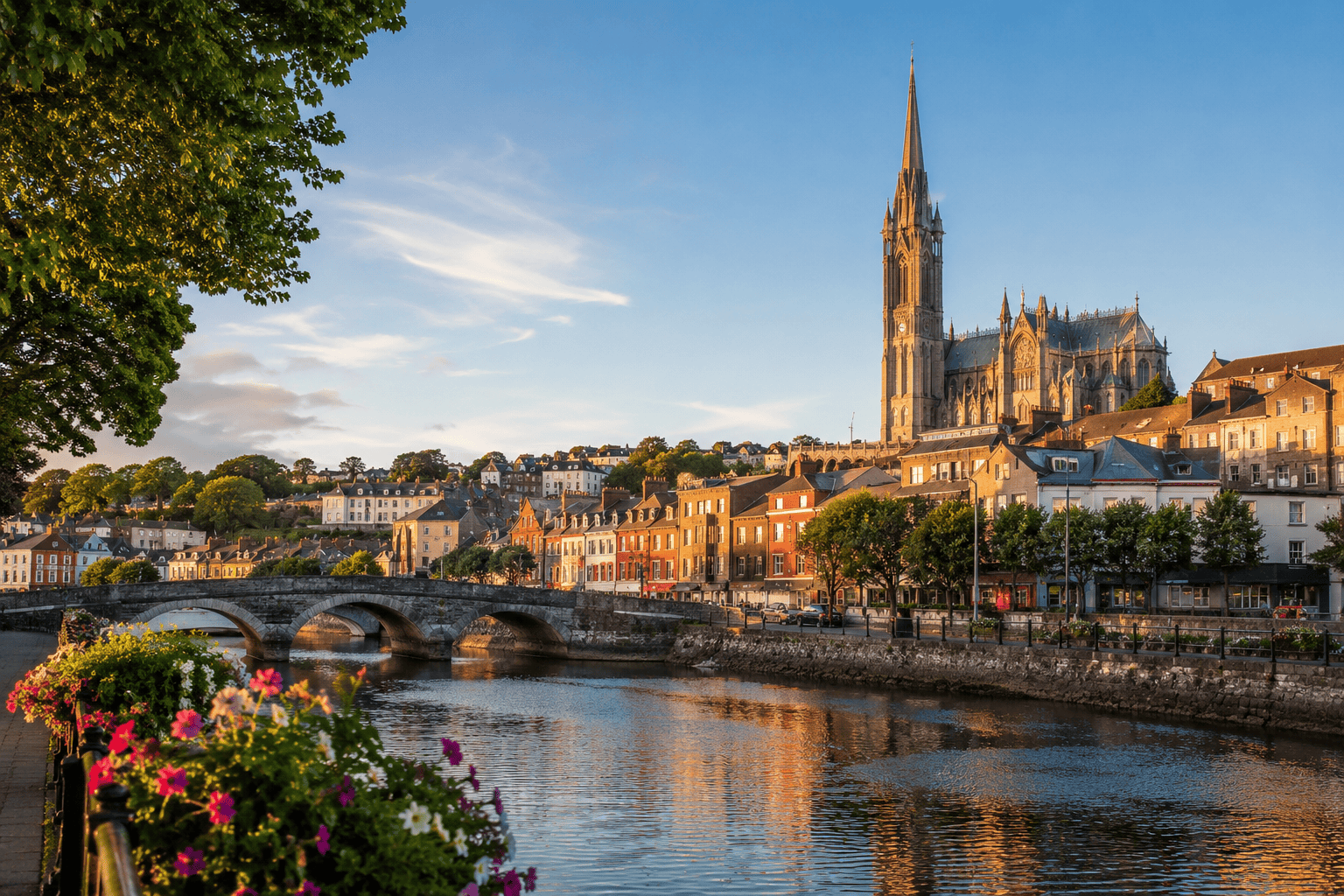
A first visit to Ireland usually works best with at least 5 to 7 days. Many travellers spend 2 days in Dublin, then use the remaining time to explore one or two regions outside the capital.
The most popular destinations beyond Dublin include:
- Wild Atlantic Way: Galway, the Cliffs of Moher, the Burren, and the Aran Islands
- Ring of Kerry: Killarney, coastal viewpoints, and the Iveragh Peninsula
- Causeway Coast: Giant’s Causeway and Carrick-a-Rede Rope Bridge in Northern Ireland
Renting a car is usually the most flexible option for rural Ireland. Public transport works reasonably well between major cities, but routes to smaller towns, coastal areas, and countryside viewpoints can be limited.
Best Time to Visit Ireland
May through September is the main travel season in Ireland. During midsummer, daylight can stretch from early morning until late evening, which makes longer driving days and outdoor sightseeing easier.
July and August are the busiest months, especially around major tourist sites. May and June often provide the best balance of mild weather, lower prices, and fewer crowds. The west coast is particularly beautiful in early summer, when the countryside is green and long daylight hours make scenic drives more rewarding.
October and November can bring lower accommodation prices and attractive autumn scenery. However, some smaller rural hotels and bed-and-breakfasts may close or reduce availability later in the season.
Ireland Travel Budget
Ireland is one of the more expensive countries in Western Europe for travellers. A realistic daily budget is approximately €100 to €140 per person, including accommodation, meals, and attractions, although costs can rise quickly in Dublin and during peak summer months.
| Expense | Typical Cost |
|---|---|
| Hostel or budget hotel | €80–130 per night in Dublin |
| Rural bed-and-breakfast | €70–110 per night with breakfast |
| Pub lunch | €12–18 |
| Dinner | €20–35 |
| Car hire | €40–70 per day |
Many of Ireland’s best experiences are free or low cost. Coastal walks, city parks, scenic drives, and viewpoints near the Cliffs of Moher and the Burren can all be enjoyed without building a high daily attraction budget.
Driving in Ireland
Driving gives travellers the flexibility to experience Ireland’s smaller villages, coastal scenery, and rural landscapes. Roads outside cities can be narrow, especially in western counties, so first-time visitors should allow extra time and avoid overloading each day.
Distances in Ireland may look short on a map, but travel times are often longer than expected because of winding roads, village traffic, and frequent stops for scenery. Planning fewer destinations with more time in each place usually creates a better trip than rushing across the country.
Top Places to Visit in Ireland
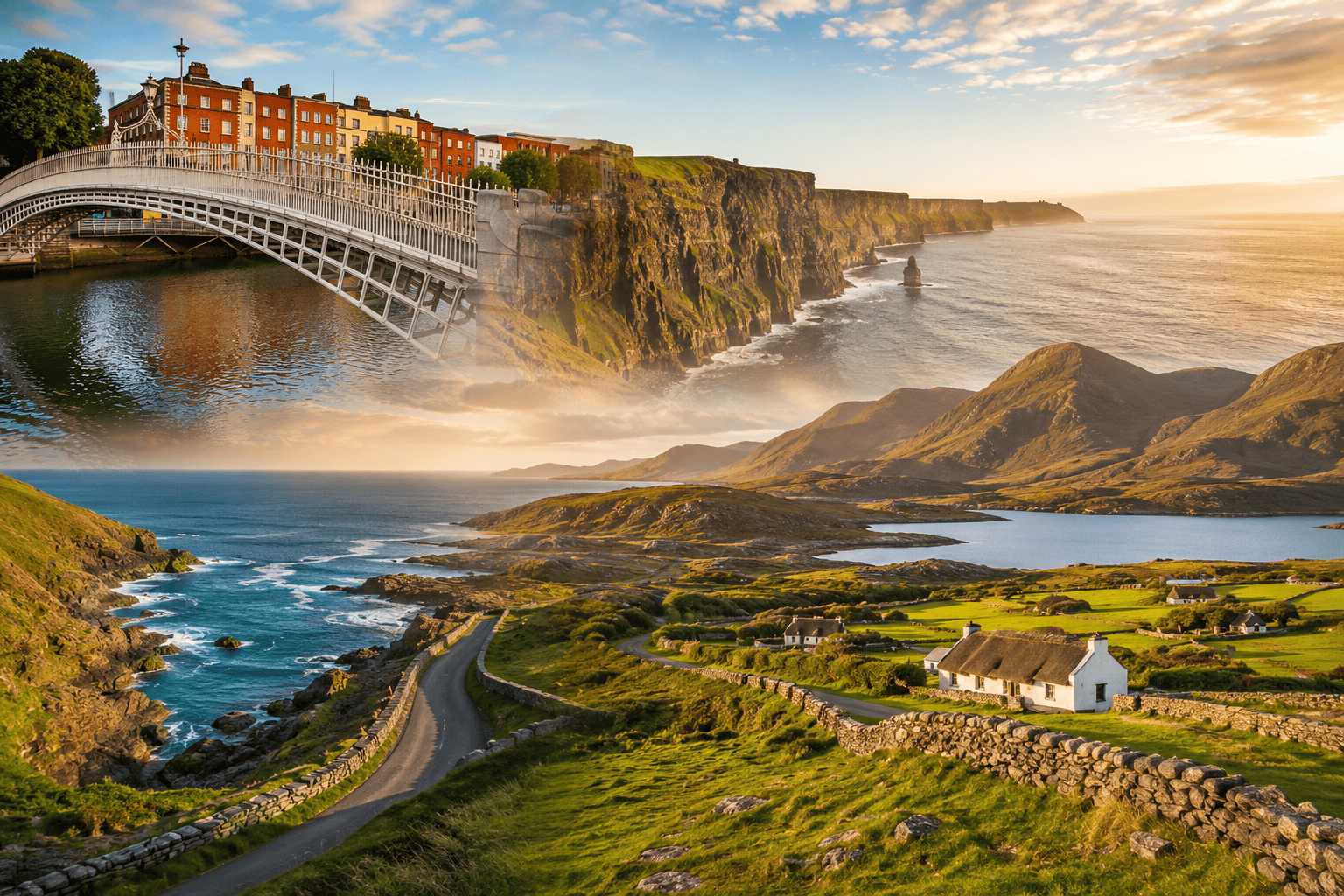
Many travellers begin in Dublin before heading west toward Galway and the Atlantic coast. Killarney is a common base for exploring the Ring of Kerry, while Belfast and the Causeway Coast are popular additions for longer itineraries.
Highlights across the country include:
- Dublin’s historic streets, museums, and traditional pubs
- The Cliffs of Moher and the Burren landscape
- Galway’s live music and compact city centre
- The scenic drives of County Kerry
- The Giant’s Causeway on the north coast
Travellers who slow down and spend time in smaller towns often experience the most memorable side of Ireland. Leave space in your itinerary for short walks, local food stops, and unplanned coastal viewpoints.
Suggested Ireland Itinerary
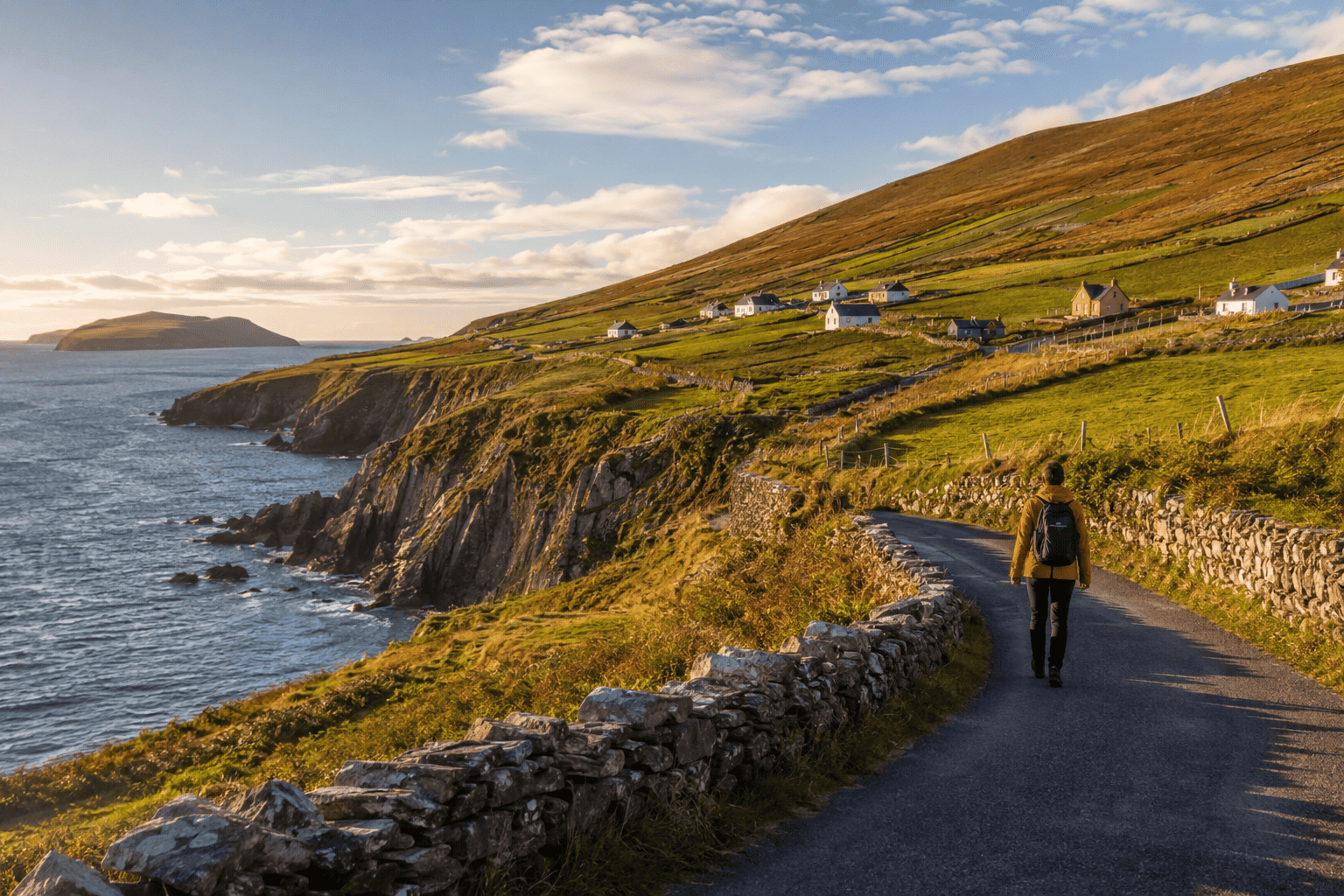
For a balanced first trip, use Dublin as the starting point, then choose either the west coast or the southwest rather than trying to see everything at once. A simple 7-day Ireland itinerary could look like this:
| Day | Route | Main Focus |
|---|---|---|
| 1–2 | Dublin | Historic centre, museums, pubs, and city walks |
| 3–4 | Galway and the Cliffs of Moher | Wild Atlantic Way scenery and live music |
| 5–6 | Killarney and the Ring of Kerry | Coastal drives, lakes, and mountain views |
| 7 | Return to Dublin | Final sightseeing or departure |
This route gives a first-time traveller a strong mix of city culture, Atlantic scenery, and classic Irish road-trip landscapes without making the schedule too rushed.
Final Ireland Travel Tips
Book accommodation early for summer trips, especially in Dublin, Galway, and Killarney. Pack layers and waterproof outerwear even in warmer months, because Ireland’s weather can change quickly throughout the day.
When building your route, focus on fewer stops and better pacing. A slower Ireland itinerary gives you more time for scenic detours, traditional music sessions, and the countryside roads that make the trip memorable.
For more destination comparisons and trip ideas, browse more travel guides on this site. For broader trip-planning context, you can also check additional travel background on Wikivoyage.
You can explore authoritative background and references on Wikipedia.

Mara Vale
Mara Vale writes Eurly travel guides for first-time Europe visitors who want practical routes, realistic pacing, and fewer avoidable planning mistakes.
Eurly guides are written to help readers make confident travel decisions, but opening hours, ticket rules, transit disruptions, and local conditions can change. Always verify key reservations and official schedules before you travel.