
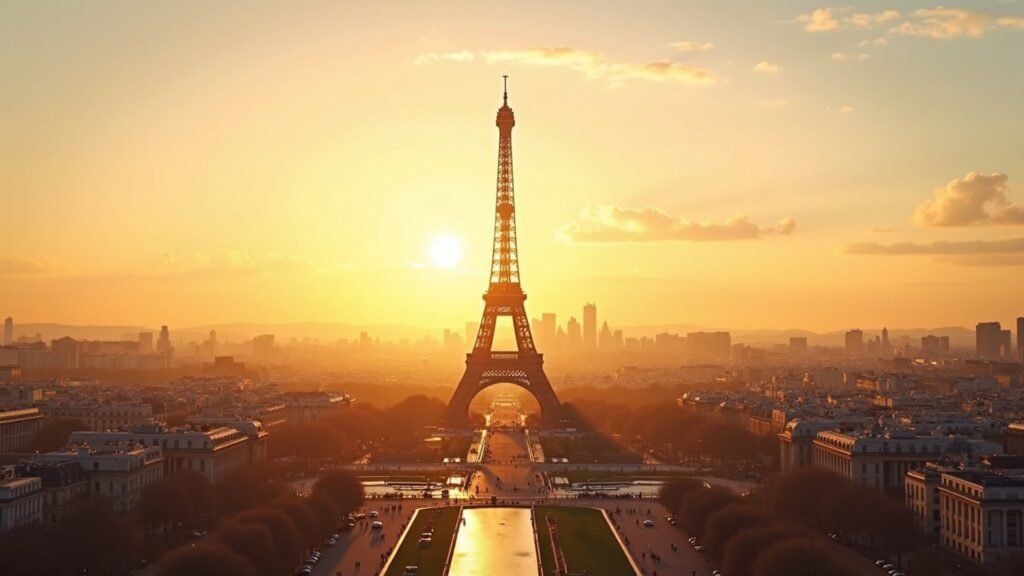
The best Paris photography spots 2026 travelers seek are spread across the city. Timing and light matter as much as location. Knowing where to go can transform your photos.
For more on this part of the trip, also see our 3 Days in Paris: A Realistic Itinerary for First-Time Visitors (2026).
This guide covers 20 of the best Paris photography spots for 2026, with practical advice on timing, positioning, and realistic expectations once you arrive. Whether you are shooting architecture, street scenes, portraits, or skyline views, these locations consistently deliver some of the strongest photo opportunities in the city.
The recommendations below are based on repeated visits in different lighting conditions and focus on what is useful when you are actually standing there with a camera.
Best Paris Photography Spots 2026: Best Paris Photography Spots Map and Planning Notes
Most of these locations are concentrated around the Eiffel Tower, the Seine, Montmartre, and central Paris. You can combine nearby spots into half-day routes, but avoid trying to photograph all 20 in one day. Paris rewards slow walking, early starts, and time left for unexpected street scenes.
- Best overall light: sunrise, golden hour, and blue hour.
- Best crowd strategy: visit famous landmarks first and quieter streets later.
- Best lenses: a wide-angle lens for architecture, a standard zoom for street scenes, and a longer lens for Eiffel Tower compression shots.
1. Trocadéro
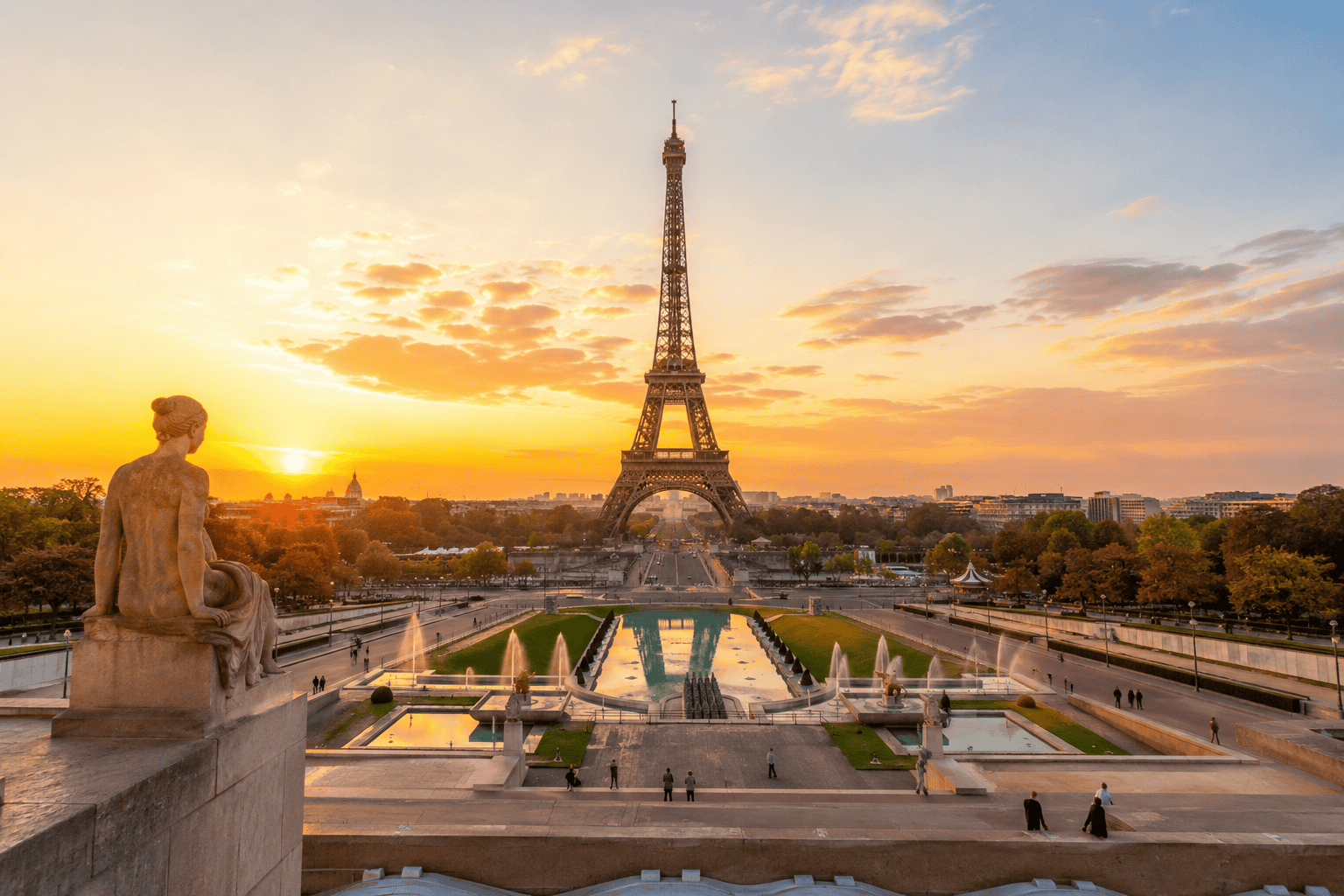
Trocadéro remains one of the most iconic Paris photography spots for Eiffel Tower views. Sunrise is usually the best time to shoot here because the plaza becomes extremely crowded later in the day.
Use the elevated terrace for wide compositions or move closer to the staircases for leading lines. Morning light can create softer shadows around the fountains while keeping the Eiffel Tower composition clean.
2. Rue de l’Université
Rue de l’Université offers one of the most recognisable framed Eiffel Tower views in Paris. Early morning works best before traffic, parked delivery vans, and other photographers interrupt the composition.
A longer lens helps compress the street perspective and isolate the tower between the Haussmann-style buildings. Be patient with passing cars and avoid blocking residents or entrances.
3. Pont Alexandre III
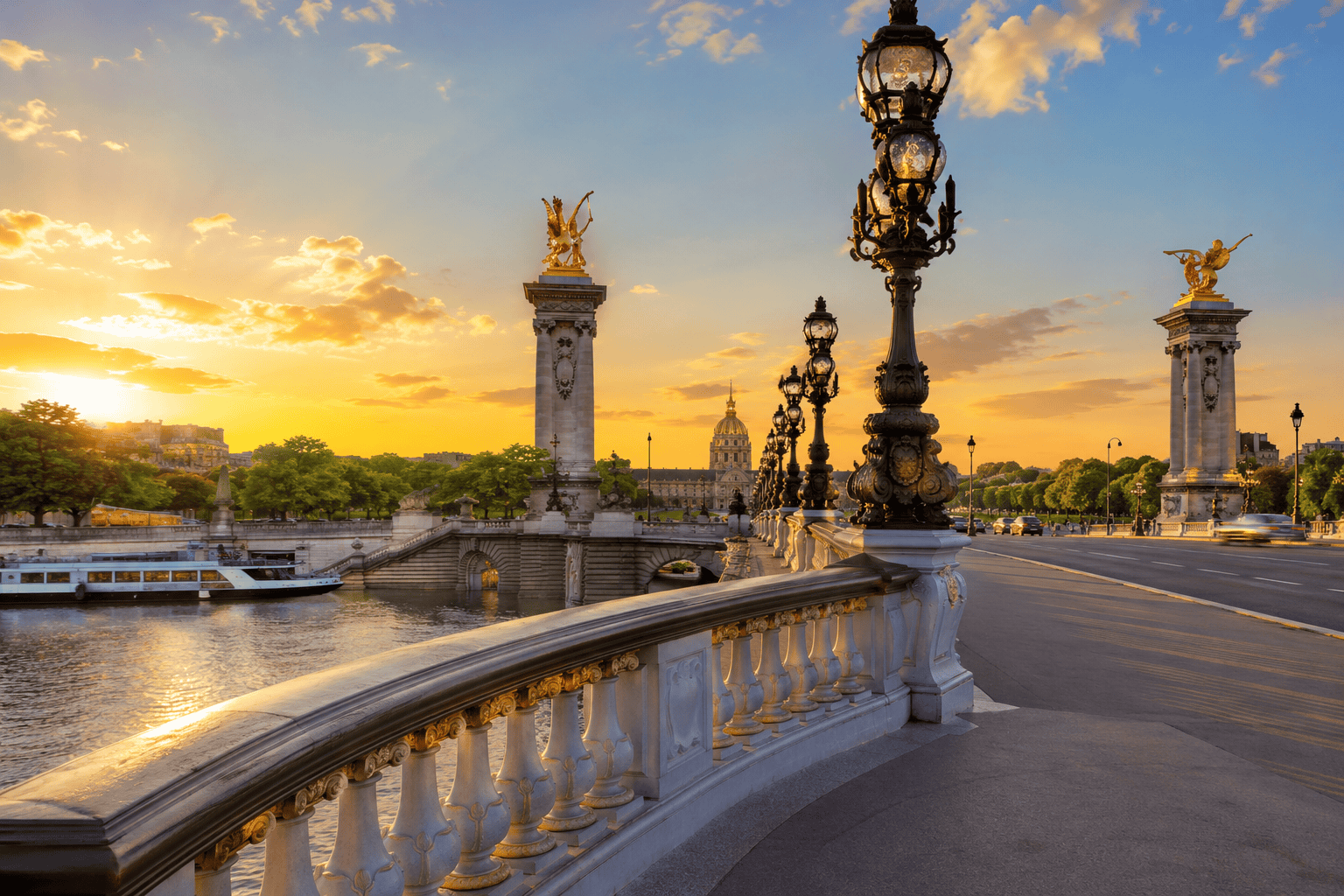
Pont Alexandre III is ideal for photographing ornate Parisian architecture with the Eiffel Tower in the background. Golden hour provides warm light across the bridge details, lamps, sculptures, and river reflections.
The bridge also works well for portrait photography because of its decorative features and symmetrical layout. For cleaner results, shoot from both ends of the bridge and from the riverbank below.
4. Louvre Pyramid
The Louvre Pyramid photographs best at sunrise or after dark, when the glass structure contrasts with the historic palace buildings. Reflections after rain can create especially strong foreground compositions.
Arriving early is important because the central courtyard becomes busy during the day. At night, use a tripod only where permitted and keep your setup compact to avoid obstructing visitors.
5. Palais Royal
Palais Royal is known for the black-and-white striped columns, clean geometry, and architectural symmetry. Morning light creates cleaner shadows and fewer distractions.
This location works especially well for fashion photography, travel portraits, and minimalist compositions. Try low angles, centred framing, and repeating patterns to make the scene feel more graphic.
6. Montmartre Streets
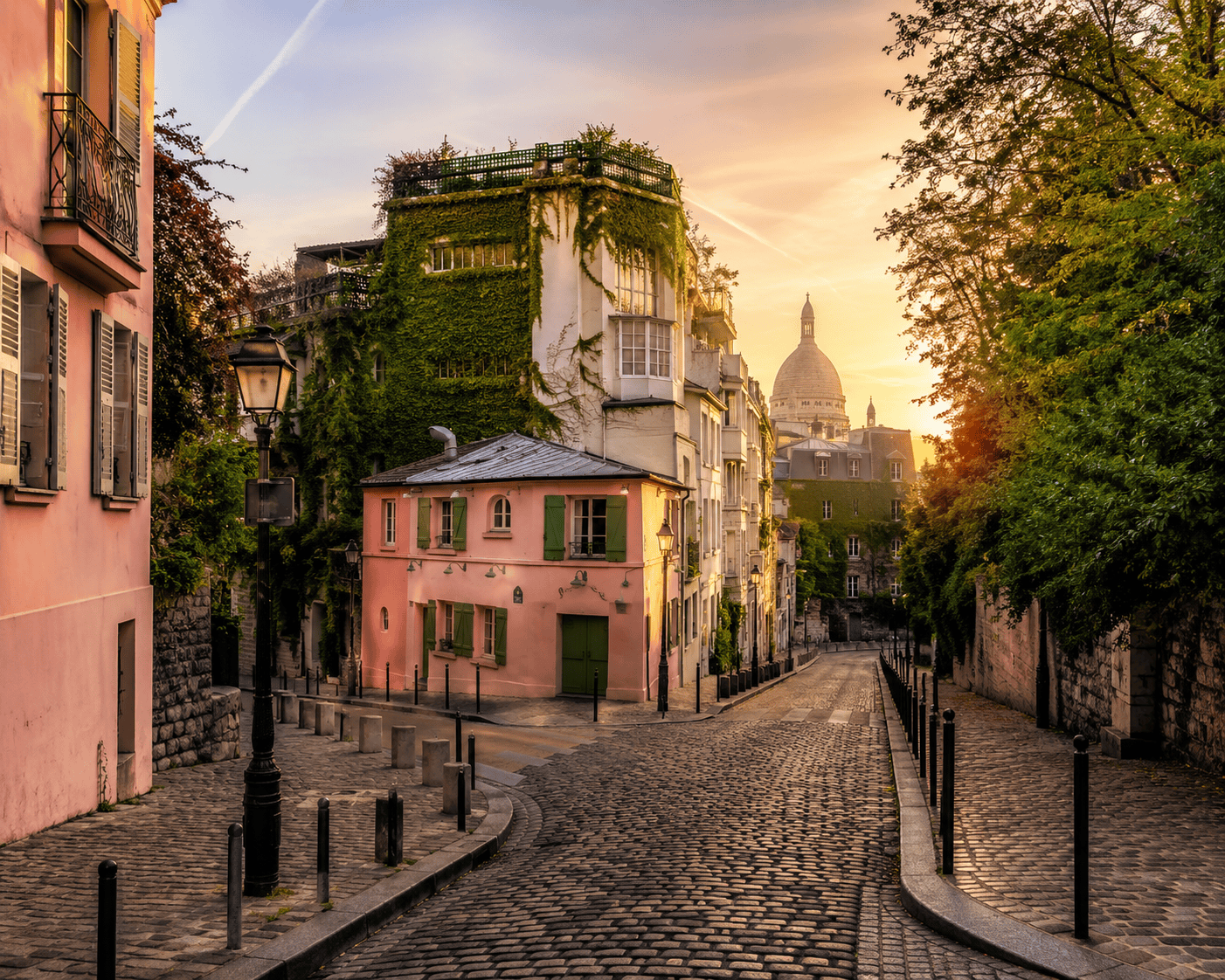
Montmartre combines narrow streets, staircases, cafés, artists, and elevated city views. Early morning is the best time to photograph the neighbourhood before the busiest tourist hours.
Look beyond the main attractions to capture quieter residential corners and authentic Paris street scenes. The most useful approach is to wander slowly, watch the light, and let layers form naturally in the frame.
7. Sacré-Cœur Basilica
The steps below Sacré-Cœur provide sweeping skyline views over Paris. Sunset creates dramatic city light, although crowds are common during peak seasons.
For cleaner compositions, explore the side streets around the basilica instead of shooting only from the main staircase. These smaller lanes often provide better foregrounds and fewer distractions.
8. Seine River Banks
The Seine offers countless photography opportunities, especially during blue hour when bridges and riverside buildings begin to illuminate. It is one of the most reliable areas for classic Paris travel photography.
Wide-angle lenses work well for capturing the scale of the river and surrounding architecture. A longer lens can also be useful for compressing bridges, boats, and riverside façades.
9. Pont Bir-Hakeim
Pont Bir-Hakeim is famous for its repeating metal columns and Eiffel Tower alignment. Early morning provides softer light, fewer pedestrians, and more time to work with the bridge symmetry.
The bridge is frequently used for portrait shoots and cinematic photography because of its strong lines. Keep an eye on cyclists and pedestrians when setting up a shot.
10. Jardin du Luxembourg
Jardin du Luxembourg is ideal for photographing fountains, statues, tree-lined paths, and seasonal colour. Spring and autumn are especially photogenic.
Morning light works best for softer tones and calmer scenes around the central fountain. This is also a good location for relaxed lifestyle portraits and detail shots between major landmarks.
11. Place Vendôme
Place Vendôme offers elegant Parisian architecture with symmetrical façades and luxury storefronts. Evening light creates a refined atmosphere as the square becomes illuminated.
This location works particularly well for editorial-style travel photography. Use the central column and surrounding architecture to build balanced compositions.
12. Galeries Lafayette Rooftop
The rooftop terrace at Galeries Lafayette provides panoramic views across Paris, including the Eiffel Tower and Opéra Garnier. It is a practical option if you want an elevated view without a long detour.
Late afternoon and sunset usually provide the best balance of light and atmosphere. Expect crowds at popular times and allow extra time to find a clean position along the railing.
13. Arc de Triomphe
The top of the Arc de Triomphe delivers one of the strongest elevated perspectives over Paris, especially looking down the Champs-Élysées and across the radiating avenues.
Blue hour is ideal once the city lights begin to appear and traffic creates light trails below. A small travel tripod may not always be practical, so prepare to raise ISO or use image stabilisation.
14. Avenue de Camoëns
Avenue de Camoëns offers a quieter Eiffel Tower composition compared with Trocadéro. Sunrise or early morning usually provides the cleanest conditions.
The elevated perspective, stone staircase, and classic Parisian balconies make it popular for portrait sessions. Arrive early and take turns if other photographers are already working there.
15. Shakespeare and Company Area
The streets around Shakespeare and Company combine bookstores, cafés, historic architecture, and views toward Notre-Dame. It is a strong area for atmospheric street photography rather than only landmark shots.
Overcast conditions work especially well here because soft light suits the narrow streets and bookshop details. Look for reflections, window displays, and quiet moments around nearby cafés.
16. Notre-Dame Surroundings
The area around Notre-Dame remains highly photogenic for architecture, bridges, river views, and street scenes. Access conditions can change around major monuments, so check the immediate surroundings when planning a specific shot.
Blue hour often creates the most atmospheric lighting conditions around the cathedral and nearby bridges. The riverbanks also provide strong compositions if the main square is crowded.
17. Rue Crémieux
Rue Crémieux is known for its colourful houses and quieter residential atmosphere. Early morning is essential because the street becomes crowded later in the day.
Please remain respectful of residents when photographing here. Keep noise low, avoid doorways and windows, and do not use private homes as props.
18. Opéra Garnier
Opéra Garnier offers dramatic architectural interiors and elegant exterior details. Interior photography benefits from a wide-angle lens and careful exposure settings.
Morning visits usually provide more manageable crowd levels. Outside, the façade works well with traffic movement, reflections, and evening light from the surrounding streets.
19. La Défense
For modern architecture photography, La Défense provides a completely different visual style from historic central Paris. The district is useful for glass reflections, strong lines, and large-scale urban compositions.
Sunset and blue hour create strong reflections across the glass buildings and urban plazas. It is especially effective when you want variety beyond classic Paris landmarks.
20. Eiffel Tower from Champ de Mars
Champ de Mars remains one of the most accessible locations for classic Eiffel Tower compositions. Arrive early for sunrise or stay through blue hour for illuminated night photography.
The open lawns provide flexibility for both wide landscape shots and portrait sessions. Because the area is popular, keep valuables secure and avoid leaving camera bags unattended.
Best Time of Year for Paris Photography
Spring and autumn generally offer the best combination of comfortable weather, softer light, and manageable crowd levels. Summer provides longer daylight hours but significantly larger tourist crowds, especially around major landmarks.
Winter can produce atmospheric street scenes and dramatic skies, although shorter daylight hours require more careful planning. Rain is not always a problem; wet pavements can add reflections around the Louvre, the Seine, and central boulevards.
Best Time of Day to Photograph Paris
| Time of day | Best for | Example locations |
|---|---|---|
| Sunrise | Low crowds and soft light | Trocadéro, Rue de l’Université, Avenue de Camoëns |
| Golden hour | Warm architecture and portraits | Pont Alexandre III, Montmartre, Jardin du Luxembourg |
| Blue hour | City lights and reflections | Seine River Banks, Arc de Triomphe, Louvre Pyramid |
| Overcast daylight | Street scenes and softer colours | Shakespeare and Company Area, Rue Crémieux, Palais Royal |
Paris Photography Tips
- Arrive early at major landmarks to avoid crowds.
- Use sunrise for softer light and cleaner compositions.
- Carry a wide-angle lens for architecture and narrow streets.
- Use a longer lens for Eiffel Tower compression shots.
- Blue hour is ideal for city lights and river reflections.
- Watch for temporary construction barriers, closures, or access changes around major monuments.
- Respect residential streets, especially Rue Crémieux and smaller Montmartre lanes.
- Wear comfortable walking shoes because many of the best Paris photography spots are easiest to connect on foot.
Final Thoughts
The best Paris photography spots are not only about famous landmarks. Timing, light direction, weather, and patience often matter more than the location itself. Exploring quieter streets between the major attractions frequently leads to the most memorable images.
With careful planning and early starts, Paris continues to reward photographers with some of the most visually consistent city scenes in Europe.
For more trip-planning context, also see our Best Photography Spots in Paris: 20 Locations With Practical Info.
For broader trip-planning context, you can also check additional travel background on Wikivoyage.
Mara Vale
Mara Vale writes Eurly travel guides for first-time Europe visitors who want practical routes, realistic pacing, and fewer avoidable planning mistakes.
Eurly guides are written to help readers make confident travel decisions, but opening hours, ticket rules, transit disruptions, and local conditions can change. Always verify key reservations and official schedules before you travel.