

The best time to visit Paris depends on your budget, preferred weather, and travel style. Whether you want blooming gardens, long summer evenings, fewer crowds, or lower hotel prices, each season offers a different experience. This month-by-month guide explains the best time to visit Paris based on weather, crowds, prices, sightseeing, and your travel priorities.
Last updated: April 25, 2026
Quick Answer: What Is the Best Time to Visit Paris?
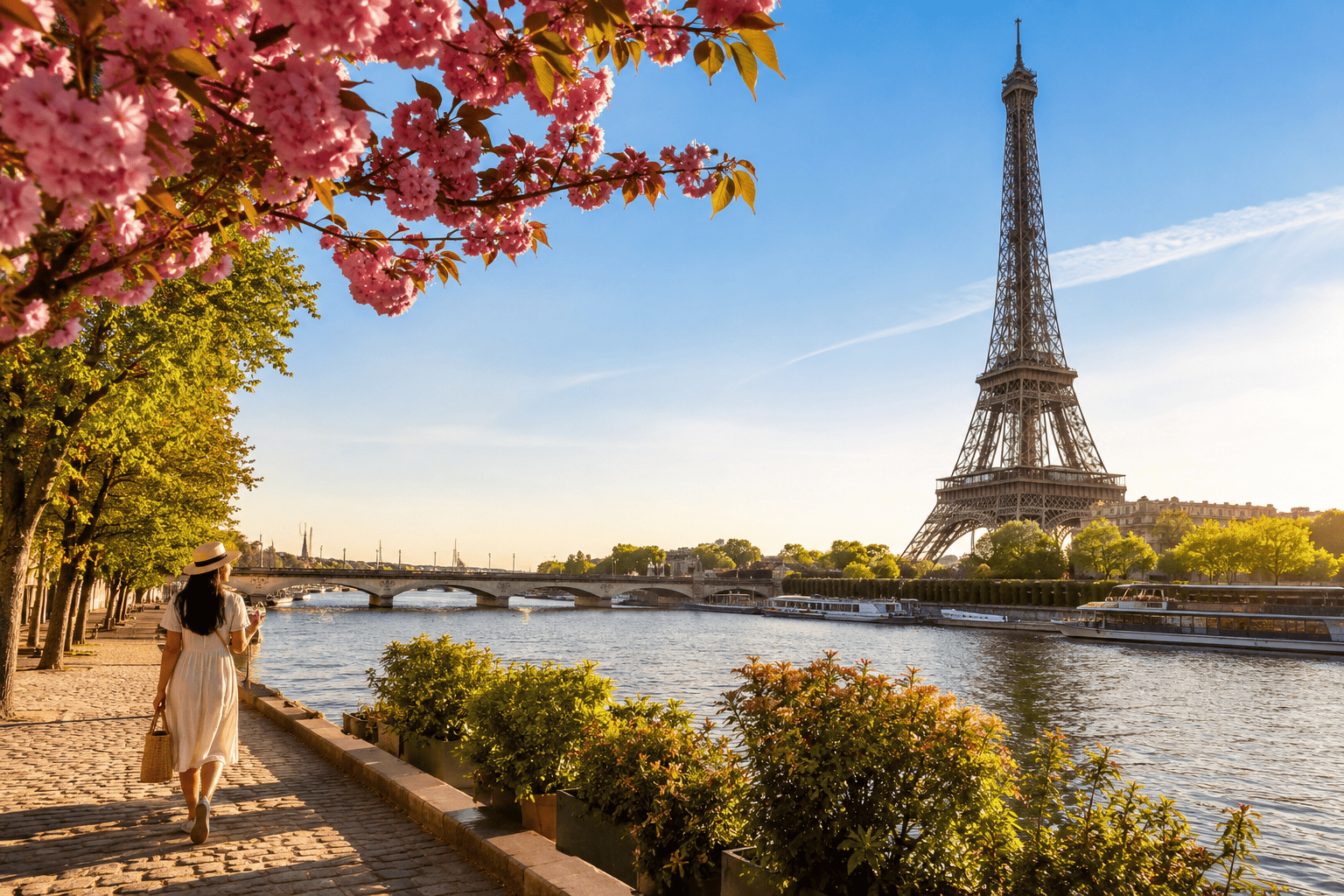
For most travelers, the best time to visit Paris is between April and June or September and October. These months usually offer pleasant temperatures, comfortable sightseeing conditions, outdoor café culture, and manageable visitor numbers.
If warm weather is your priority, visit in June, July, or August. If you prefer quieter museums and potentially lower accommodation prices, January, February, March, and November are often better choices. December stands out for festive lights and a romantic winter atmosphere.
| Travel Goal | Best Months |
|---|---|
| Best overall balance | April, May, June, September, October |
| Fewest crowds | January, February, November |
| Warmest weather | June, July, August |
| Best museum trip | January, February, March, November |
| Best for first-time visitors | May, June, September |
| Best romantic winter trip | December |
Paris by Month: Full Breakdown
Paris changes noticeably throughout the year. Weather, daylight, attraction queues, hotel prices, and outdoor activities all influence the overall experience.
January: Quiet Museums and Winter Prices
January is among the quietest months in Paris, making it a good choice for museum visits, cafés, galleries, and travelers seeking lower demand. Expect cold temperatures, shorter days, and limited outdoor dining.
Best for: Museums, budget-conscious travelers, repeat visitors, quieter streets.
February: Romantic but Still Cold
February remains chilly but offers a romantic atmosphere with fewer crowds than summer. Visitor numbers can increase around Valentine’s Day.
Best for: Couples, food lovers, museums, lower crowd levels.
March: Early Spring and Better Value
March marks the beginning of spring, with increasing daylight and improving weather while often remaining less expensive than peak season.
Best for: Flexible travelers, early spring walks, value-focused trips.
April: Spring Atmosphere Without Full Summer Crowds
April is one of the strongest contenders for the best time to visit Paris thanks to blooming gardens, comfortable walking weather, and lively neighborhoods such as Saint-Germain-des-Prés, Le Marais, and Montmartre.
Best for: First-time visitors, couples, spring photography, walking tours.
May: One of the Best Months Overall
May combines pleasant temperatures, long daylight hours, and vibrant outdoor life while generally avoiding the busiest summer crowds.
Best for: First-time visitors, outdoor cafés, Seine walks, balanced weather.
June: Long Days and Peak Paris Energy
June offers long sightseeing days, lively parks, rooftop views, and outdoor dining, although popular attractions become busier.
Best for: Long sightseeing days, outdoor dining, summer atmosphere, first-time visits.
July: Warm, Busy, and Expensive
July brings classic summer weather together with larger crowds and higher accommodation demand. Booking hotels and major attractions well in advance is recommended.
Best for: Families, summer travelers, outdoor sightseeing, long evenings.
August: Quieter Local Rhythm, Still Tourist-Heavy
Some local businesses close for annual holidays during August, although major attractions remain busy. Checking restaurant opening hours before your visit is worthwhile.
Best for: Flexible travelers, summer holidays, neighborhood exploration.
September: Excellent Weather and Strong Overall Value
September is widely regarded as one of the best months to visit Paris because temperatures remain pleasant while peak summer crowds begin to ease.
Best for: First-time visitors, couples, photography, walking tours, food-focused trips.
October: Autumn Color and Cultural Travel
October combines cooler weather with autumn colors and excellent conditions for museums, cafés, bookstores, and photography. Occasional rain makes flexible planning useful.
Best for: Autumn travel, photography, museums, relaxed sightseeing.
November: Lower Crowds and Indoor Paris
November is quieter than spring and summer and often offers better value for accommodation. It is well suited to museum visits, shopping, and restaurants.
Best for: Lower crowds, museum-focused trips, value-focused travel.
December: Festive Lights and Winter Atmosphere
December features seasonal decorations, festive markets, and a cozy atmosphere. Cold temperatures and shorter days are balanced by the city’s holiday charm.
Best for: Festive trips, couples, shopping, winter photography.
For more planning advice, see our 3 Days in Paris: A Realistic Itinerary for First-Time Visitors (2026), Paris Travel Guide for First-Time Visitors, and Where to Stay in Paris.
Best Time to Visit Paris for Good Weather

If weather is your top priority, the best time to visit Paris is generally from May through September. These months are ideal for walking, terrace dining, picnics, river cruises, and exploring the city’s parks and outdoor attractions.
For the best balance between pleasant weather and manageable crowds, May, June, and September are usually the strongest choices.
Best Time to Visit Paris to Avoid Crowds
The quietest months are usually January, February, and November. These periods are ideal for museums, neighborhood walks, and a more relaxed sightseeing experience.
The trade-off is cooler weather, shorter daylight hours, and a greater chance of rain.
Best Time to Visit Paris for First-Time Visitors

For a first trip, choose May, June, or September whenever possible. These months provide comfortable weather, long daylight hours, and excellent conditions for visiting the Eiffel Tower, the Louvre, Notre-Dame, Montmartre, the Seine, Le Marais, Saint-Germain-des-Prés, and Versailles.
Best Time to Visit Paris on a Budget
Travelers looking for better value should consider January, February, March, and November, when demand is often lower than during spring and summer.
To stretch your budget further, compare weekday and weekend hotel rates, stay near convenient Metro stations, and reserve major attractions in advance.
Best Time to Visit Paris for Couples
Paris is romantic throughout the year, but April, May, September, and October are particularly appealing for scenic walks, outdoor cafés, and comfortable temperatures. December adds festive lights and seasonal charm for a cozy city break.
Frequently Asked Questions
What is the cheapest month to visit Paris?
January and February often offer lower hotel prices than spring and summer, although weather is colder and daylight hours are shorter.
When is Paris busiest?
July and August are typically the busiest months for tourism, especially around major attractions and popular neighborhoods.
Is Paris worth visiting in winter?
Yes. Winter is an excellent choice for museums, cafés, festive lights in December, and travelers who prefer fewer crowds over warm weather.
Best Time to Visit Paris: Final Recommendation
For most travelers, the best time to visit Paris is May, June, September, or October. These months offer an excellent combination of weather, daylight, atmosphere, and sightseeing comfort.
Choose January, February, or November for fewer crowds and potential savings. Choose July or August for warm-weather travel, and December for festive lights and winter romance.
Ultimately, the best month depends on your travel style: spring for blooming parks, summer for long evenings, autumn for balanced conditions, and winter for quieter museums and seasonal charm.
For broader planning information, you can also read Paris on Wikivoyage.

Mara Vale
Mara Vale writes Eurly travel guides for first-time Europe visitors who want practical routes, realistic pacing, and fewer avoidable planning mistakes.
Eurly guides are written to help readers make confident travel decisions, but opening hours, ticket rules, transit disruptions, and local conditions can change. Always verify key reservations and official schedules before you travel.