

Paris vs London which to visit first is one of the most common questions for first-time Europe travellers. Your starting city can influence your budget, travel confidence, logistics, and overall experience.
This guide compares London and Paris based on ease of travel, costs, trip length, transport connections, and practical considerations to help you choose the best city to visit first.
For more planning advice, see our Paris vs London: Which Is Better for a First-Time Europe Trip? and How to Travel from Paris to London: Best Options (Time, Cost, Convenience).
Paris vs London Which to Visit First: The Core Difference

London operates in English and uses the British pound, while Paris primarily operates in French and uses the euro. For many international travellers, especially those arriving from North America, India, or East Asia, this difference can affect the first few days of a trip.
After a long-haul flight, travellers often need to adjust to jet lag, unfamiliar transport systems, currency exchange, and local travel routines. London is often easier to navigate initially because signs, menus, ticket machines, and transport information are in English.
Paris remains highly accessible for tourists. The Paris Métro is efficient, and English is widely spoken in major visitor areas. However, London generally presents fewer adjustment challenges for first-time visitors.
For many travellers visiting Europe for the first time, London is the smoother starting point before continuing to Paris.
Which City Should You Visit First Based on Trip Length?
3 Days Total
If you only have three days, London is often the easier choice because you can spend less time adjusting and more time sightseeing.
7–10 Days
Either order works well, but London first still offers a slight advantage for travellers unfamiliar with European transport systems and travel routines.
10+ Days
For longer trips, the order matters much less. Flight prices, route efficiency, and personal interests should have a greater influence on your decision.
Budget Comparison: London vs Paris
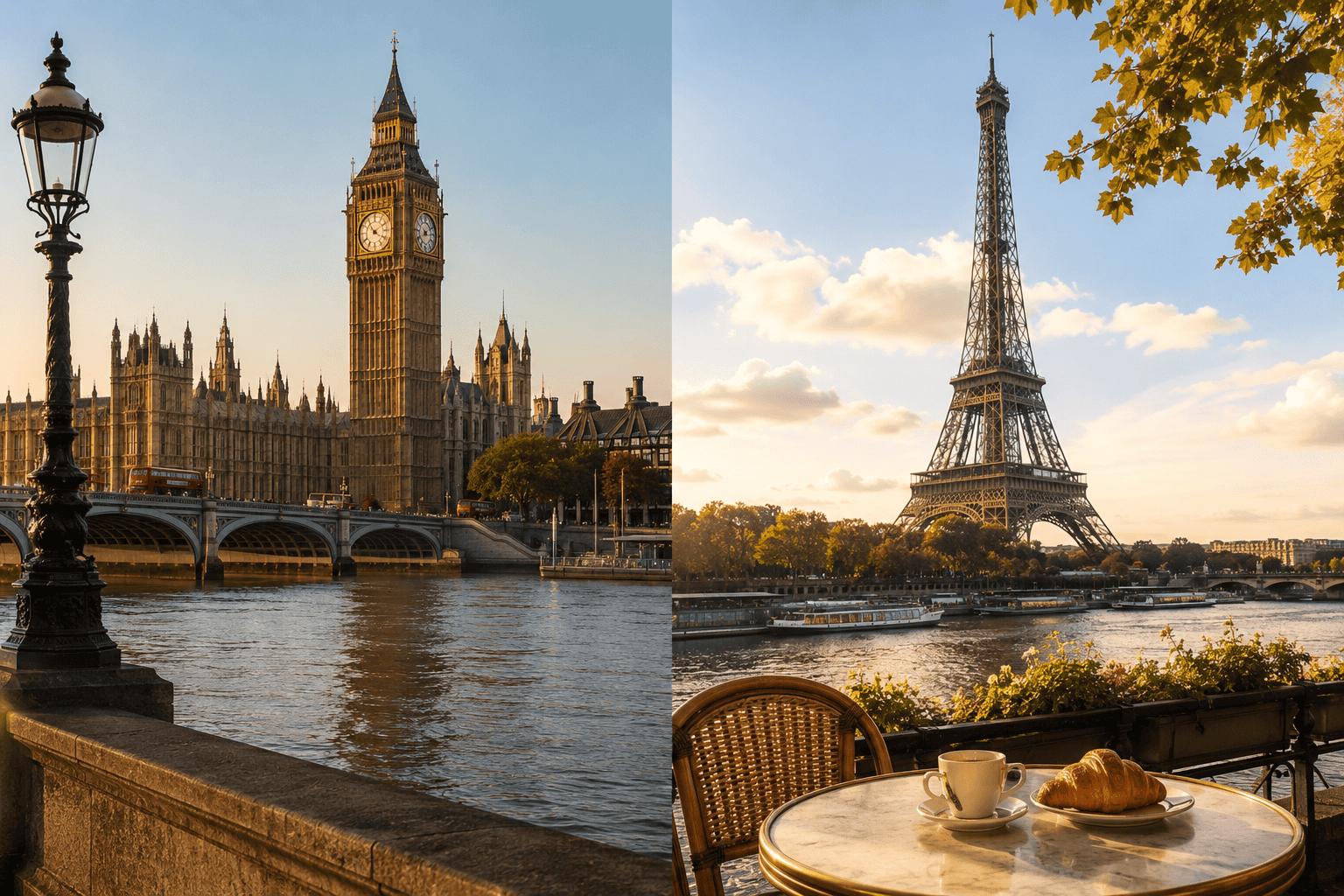
London is generally more expensive than Paris, particularly for accommodation. However, London also offers several world-class attractions with free entry, helping offset some daily costs.
| Category | London | Paris |
|---|---|---|
| Budget hotel (central) | £90–130 | €80–120 |
| Hostel dorm | £28–45 | €25–40 |
| Casual lunch | £12–18 | €12–18 |
| Mid-range dinner | £20–35 | €18–30 |
| Major museum entry | £20–30 | €17–26 |
| Daily transport | £8.10 daily cap | €16.90 day pass |
| Coffee | £3.50–5 | €2.50–4.50 |
Paris is often slightly cheaper for food, cafés, and accommodation. London’s higher costs are partly balanced by free attractions such as the British Museum, National Gallery, Victoria and Albert Museum, and Natural History Museum.
Start in London if: you prefer to spend more at the beginning of your trip while your budget feels flexible.
Start in Paris if: you want slightly lower daily costs from day one.
Eurostar Travel Between London and Paris

The Eurostar connects London St Pancras International and Paris Gare du Nord in approximately 2 hours 16 minutes. Standard fares commonly range from £39 to £100 depending on season and booking date.
For most travellers, the Eurostar is the most convenient way to travel between the two cities. Although flights may appear faster, airport transfers and security procedures often make flying slower overall.
Booking directly through Eurostar four to eight weeks in advance usually provides the best balance of price and availability.
Should You Fly Into London or Paris First?
Many long-haul travellers find it easier to arrive in London first and depart from Paris. Heathrow Airport offers extensive international connections, while London’s English-speaking environment can simplify the first days of a Europe trip.
A common itinerary is:
- Fly into London
- Spend 3–5 days in London
- Take the Eurostar to Paris
- Spend 3–5 days in Paris
- Fly home from Paris Charles de Gaulle Airport
This route avoids backtracking and keeps travel straightforward.
If You Only Have Time for One City
Choose London If:
- You want minimal language barriers.
- You enjoy history, theatre, and museums.
- You want access to major free attractions.
- You are interested in British culture or royal history.
Choose Paris If:
- You are most interested in art, architecture, and food.
- You want a classic European atmosphere.
- You plan to visit the Louvre, Versailles, or take a Seine cruise.
- You enjoy café culture and neighbourhood exploration.
Practical Tips for Visiting Both Cities
Luggage on the Eurostar
The Eurostar allows generous luggage allowances without airline-style baggage fees. Bags can be stored in overhead racks or dedicated luggage areas.
Passport Control
Since Brexit, UK border procedures differ from travel within the European Union. Passport checks for Paris-bound Eurostar services take place before boarding in London. Arriving 30–45 minutes before departure is usually sufficient.
How Many Days Per City?
- 3–4 days per city covers the main attractions.
- 5–6 days allows time for day trips such as Versailles or Windsor.
- Less than 3 days per city can feel rushed.
Final Verdict: Should You Visit London or Paris First?
For most first-time visitors arriving from outside Europe, London is the easier and more practical place to start. The English-speaking environment reduces travel friction and can make the transition into European travel smoother before continuing to Paris.
That said, starting in Paris can be equally rewarding if lower daily costs, French culture, food, or specific attractions are your top priorities.
Ultimately, the best order depends on your flights, budget, travel style, and the experiences you value most.
Frequently Asked Questions
Is Paris or London cheaper?
Paris is usually slightly cheaper overall, particularly for accommodation and dining. London compensates with many free museums and attractions.
Can you visit London and Paris in one week?
Yes. A popular itinerary is three days in London, travel by Eurostar, and three days in Paris.
What is the fastest way to travel between London and Paris?
The Eurostar is generally the fastest and most convenient city-centre-to-city-centre option, taking around 2 hours 16 minutes.
Should first-time visitors start in London?
For many travellers arriving from outside Europe, yes. London’s English-speaking environment makes the first days of a trip easier to manage.
Last verified: 2026-04-27
For more destination comparisons and itinerary ideas, browse more travel guides on this site.
For additional travel background, see Wikivoyage resources.

Mara Vale
Mara Vale writes Eurly travel guides for first-time Europe visitors who want practical routes, realistic pacing, and fewer avoidable planning mistakes.
Eurly guides are written to help readers make confident travel decisions, but opening hours, ticket rules, transit disruptions, and local conditions can change. Always verify key reservations and official schedules before you travel.