

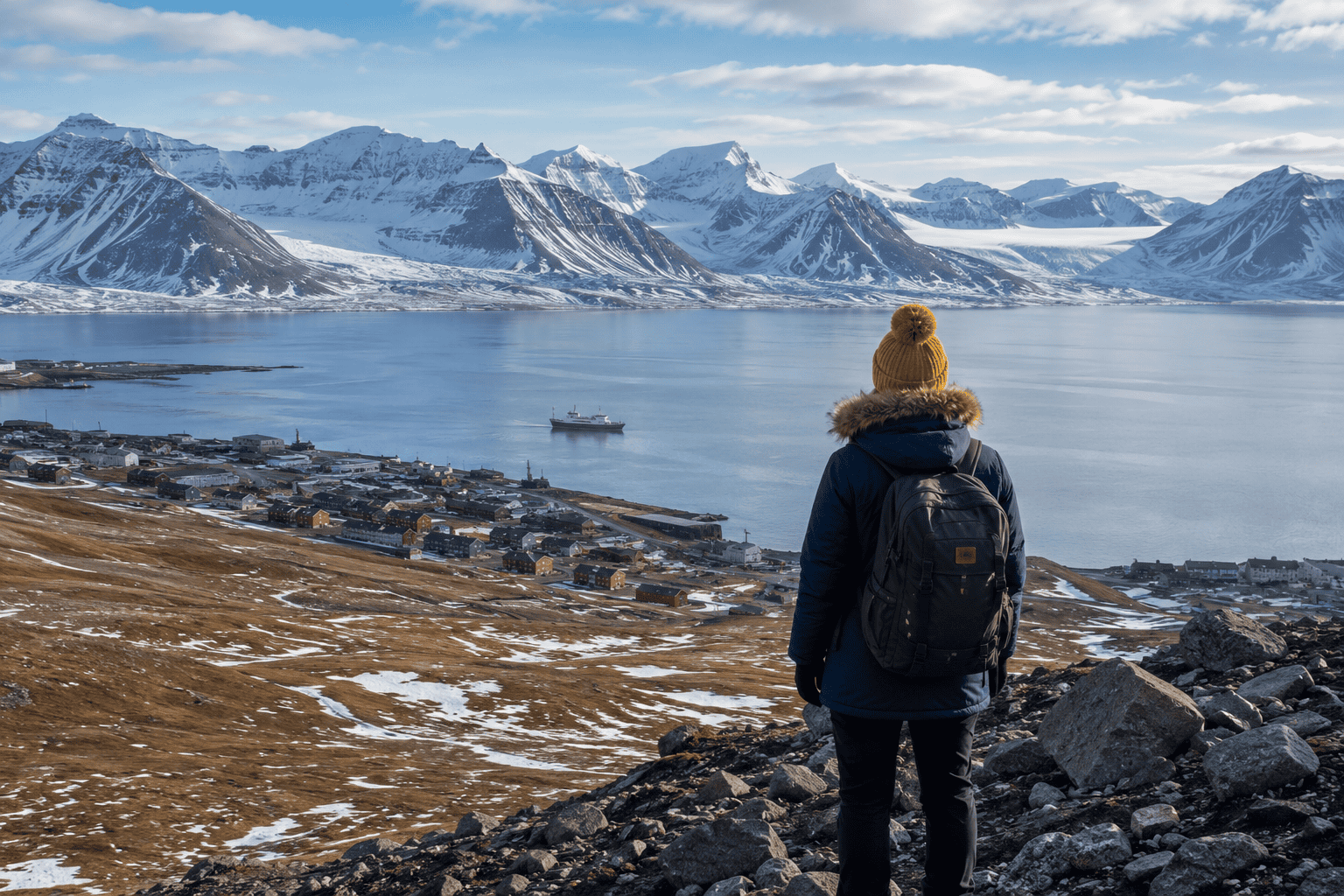
Svalbard Norway is a remote Arctic destination halfway between mainland Norway and the North Pole, known for glaciers, polar bears, and abandoned mining towns. Travelers visit for unforgettable experiences like the midnight sun, northern lights, and exploring one of the world’s northernmost settlements. With rugged landscapes and unique Arctic culture, Svalbard offers an adventure unlike anywhere else.
But Svalbard is not a place where you improvise everything on arrival. It is expensive, weather-dependent, heavily regulated, and surprisingly easy to get wrong without solid planning. Get it right, and it delivers one of the most unforgettable travel experiences in Europe.
This guide covers what you actually need to know before visiting Svalbard Norway: when to go, what to budget, how to choose tours, what mistakes to avoid, and how to experience the Arctic responsibly.
Where Is Svalbard?
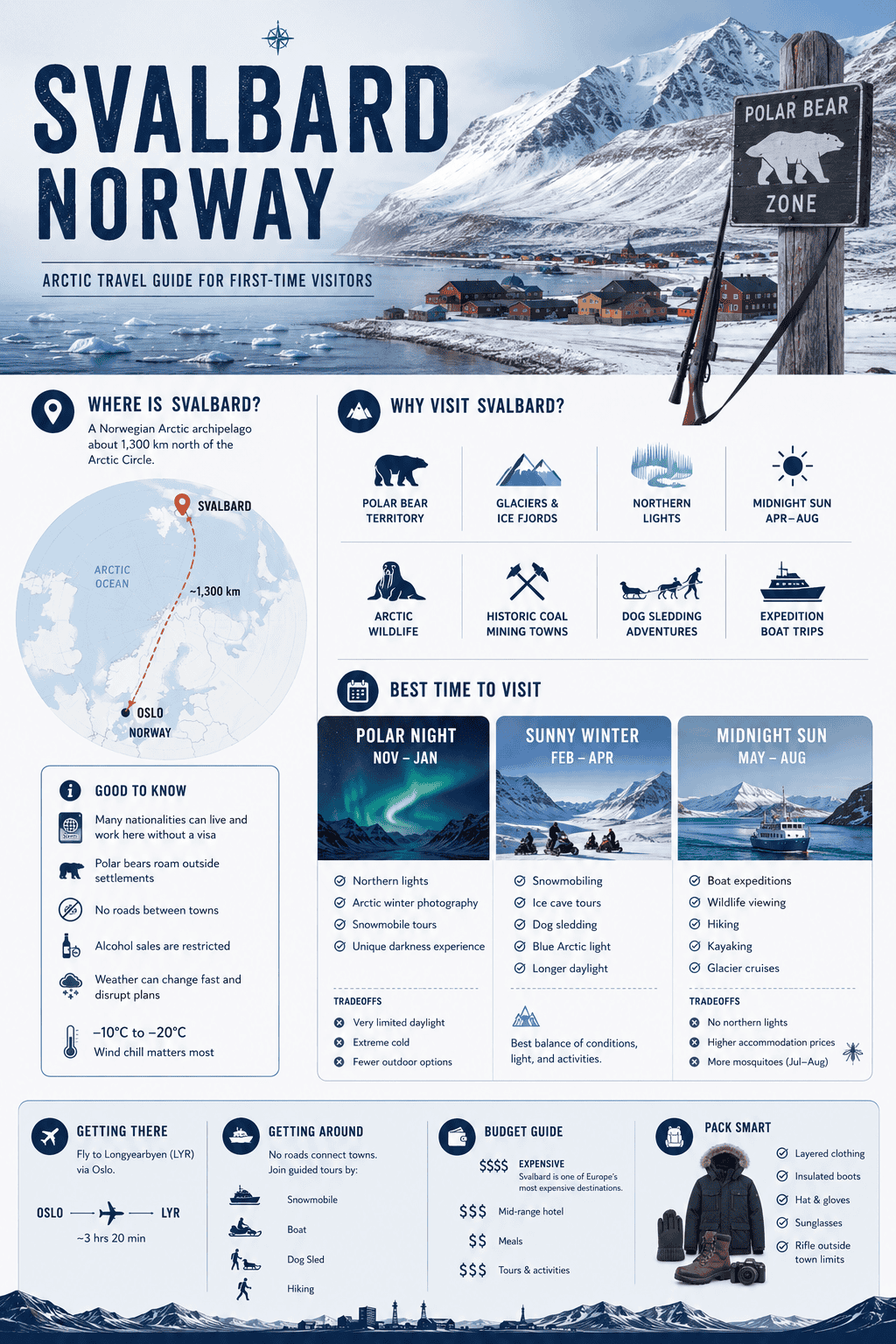
Svalbard is a Norwegian Arctic archipelago located around 1,300 km north of the Arctic Circle. The main settlement, Longyearbyen, holds the distinction of being the world’s northernmost town with a significant permanent population. For the vast majority of visitors, Svalbard means basing yourself in Longyearbyen and joining guided excursions by snowmobile, boat, dog sled, or hiking expedition from there.
Although Svalbard belongs to Norway, it operates under special treaty rules that make it distinctive even by Nordic standards:
- Many nationalities can live and work there without a visa
- Polar bears roam freely outside settlement boundaries
- There are no roads connecting the archipelago’s scattered settlements
- Alcohol sales are restricted and price-controlled
- Weather can shut down plans without warning
Why Visit Svalbard?
Svalbard attracts travelers looking for experiences that feel genuinely remote and unlike anything available in mainland Europe. Unlike Iceland or northern Norway, Svalbard has not been softened into an Arctic-themed tourism product. You are entering a functioning high-Arctic environment where nature still dictates the terms.
Highlights include:
- Polar bear territory — one of the few places on Earth where they roam near human settlements
- Massive glaciers and ice fjords accessible by boat or snowmobile
- Northern lights during weeks of total polar darkness
- Midnight sun from April through August
- Arctic wildlife including walrus, reindeer, and Arctic fox
- Historic coal mining settlements, including the eerily preserved Soviet town of Pyramiden
- Dog sledding across frozen valleys
- Expedition-style boat trips through remote fjords
Best Time to Visit Svalbard Norway
The experience changes dramatically by season. Rather than one objectively “best” time, the right visit depends on what you want to do.
Polar Night — November to January
The darkest and most atmospheric season, with temperatures regularly ranging between −10°C and −20°C (wind chill matters more than the number). This period suits travelers drawn to the otherworldly experience of total Arctic darkness.
- Best for: Northern lights, winter photography, snowmobile tours, atmospheric isolation
- Tradeoffs: Very limited daylight, extreme cold, fewer outdoor activity options
Sunny Winter — February to April
Many experienced Arctic travelers consider February to April the single best overall window for visiting Svalbard. Snow-covered landscapes combine with returning daylight, making activities both more accessible and more visually rewarding.
- Best for: Snowmobiling, ice cave tours, dog sledding, blue Arctic light, glacier excursions
- Tradeoffs: Still cold, and popular tours book out well in advance
Midnight Sun — May to August
The sun does not set during summer, creating a surreal 24-hour daylight environment. This is the season for open-water exploration, wildlife sightings, and hiking.
- Best for: Boat expeditions, wildlife viewing, hiking, kayaking, glacier cruises
- Tradeoffs: No northern lights, higher accommodation prices, wetter and muddier conditions
How to Get to Svalbard
Nearly all visitors fly into Longyearbyen Airport (LYR) via mainland Norway. The two main departure points are Oslo and Tromsø, with flights operated primarily by SAS and Norwegian Air.
Common routes:
- Oslo (OSL) → Longyearbyen (LYR)
- Tromsø (TOS) → Longyearbyen (LYR)
The most important planning point for getting to Svalbard is buffer time. Weather delays are routine, particularly in winter, and storms can ground flights for extended periods. Avoid booking tight same-day international connections. A safer approach:
- Overnight in Oslo or Tromsø before your northbound flight
- Build at least one buffer day into your return itinerary
This matters more in Svalbard than almost anywhere else in Europe. Missing a connecting flight home because a Longyearbyen departure was cancelled is a common and expensive mistake.
How Many Days Do You Need?
Minimum: 3 Nights
Enough time for one major excursion, basic town exploration, and some flexibility if weather disrupts a day. Travelers who arrive with only two nights often spend much of that time recovering from travel delays and rushing to fill gaps.
Ideal: 5–7 Nights
Long enough to cover multiple activities, give yourself real wildlife and weather opportunities, and adopt the slower, more patient pace that Svalbard rewards. The extra days are not padding — they are what allow you to actually experience the place rather than survive it.
What Svalbard Costs
Svalbard Norway is expensive even by Scandinavian standards. Everything is imported, logistics are extreme, guided excursions are mandatory for most areas, and accommodation supply is tightly limited. Budget accordingly before you go.
Typical daily spend per person (accommodation, meals, and one excursion):
| Travel Style | Estimated Daily Cost |
|---|---|
| Budget | €150–250 |
| Mid-range | €300–500 |
| Comfort | €600+ |
Common individual prices to factor into your planning:
| Item | Approximate Cost |
|---|---|
| Airport transfer (shared bus) | €10–20 |
| Hotel room per night | €120–400 |
| Restaurant meal | €25–50 |
| Snowmobile tour | €150–400 |
| Dog sledding | €150–300 |
| Full-day boat trip | €200–500 |
The most common budget mistake is treating excursions as optional extras. In Svalbard, guided tours are the core of the experience. Plan for two to three major excursions per trip and build that into your overall budget from the start.
Where to Stay in Svalbard
Almost all visitors base themselves in Longyearbyen, which offers the full range of accommodation from guesthouses to boutique Arctic hotels.
Central Longyearbyen
The most convenient area for restaurants, tour pickups, and walking access to the main street. Best for first-time visitors who want easy logistics.
Nybyen
A quieter hillside district a short walk from the centre, with budget guesthouses and better elevated views. A good option if central hotels are full or out of budget.
Boutique Arctic Hotels
Ideal for winter trips focused on northern lights, honeymoons, or simply wanting more comfort after cold days outdoors. Well-regarded properties in Longyearbyen include Funken Lodge, Radisson Blu Polar Hotel, and Coal Miners’ Cabins.
Book well in advance for both the winter peak (February to April) and the summer midnight sun season. Last-minute availability in Longyearbyen is limited and expensive.
The Best Things to Do in Svalbard
Snowmobile Across the Arctic
Snowmobiling is one of Svalbard’s defining experiences. Routes typically cross frozen valleys, pass glacier viewpoints, visit remote trapper cabins, and occasionally include ice cave access. This is not a gentle sightseeing ride — temperatures are serious, weather can deteriorate quickly, and tours require physical engagement. Most operators provide full Arctic suits, boots, and helmets, but proper base layers remain your responsibility.
Boat Expeditions to Glaciers and Pyramiden
Summer boat trips open up access to parts of Svalbard impossible to reach in winter. Itineraries typically include towering glacier ice fronts, seabird cliffs, walrus colonies, and — on longer trips — Pyramiden, a Soviet coal mining settlement abandoned in 1998 and left almost entirely intact. Walking through Pyramiden with a guide is one of the strangest and most memorable things you can do in the entire Arctic.
Dog Sledding
Svalbard’s dog sled culture has genuine roots here — the huskies are working animals adapted to Arctic conditions, not a theatrical tourist attraction. Tours run on snow in winter and on wheeled carts during summer. Even travelers who are usually skeptical of animal tourism often find this experience more authentic than expected.
Northern Lights Hunting
Svalbard offers unusual northern lights conditions during Polar Night because total darkness lasts around the clock — there is no need to stay awake until midnight hoping for a clear window. That said, auroras depend on solar activity and sky conditions, and are never guaranteed anywhere. Come for the Arctic environment first; treat the northern lights as a welcome bonus.
Svalbard Museum
Small but genuinely excellent, the Svalbard Museum covers polar exploration history, coal mining, Arctic wildlife ecology, and climate research. Visit early in your trip to give context to everything else you encounter.
Polar Bear Safety: What Visitors Need to Know
Outside settlement boundaries, polar bears represent a real and serious risk. This is the element of Svalbard travel that visitors most commonly underestimate, especially if they are used to wildlife experiences in places like Iceland or mainland Scandinavia.
The basic rules:
- Never hike alone beyond the town boundary
- All guided excursions outside Longyearbyen include armed guides — this is not optional
- Respect local warnings and boundary signage
- Do not treat any wildlife encounter casually
Most travelers naturally rely on guided tours for their Arctic activities, which handles the safety compliance side automatically. The important thing is not to assume you can wander independently the way you might in Iceland or the Alps.
Common Mistakes in Svalbard Norway
Booking too few nights. Weather disruptions happen regularly. Travelers with only two nights often spend the trip scrambling rather than experiencing.
Treating it like mainland Norway. Svalbard is significantly more remote, more expensive, more regulated, and more physically demanding than any Norwegian mainland destination.
Underpacking for conditions. Waterproof outer layers, insulated mid-layers, thermal base layers, grip boots, and good gloves matter even in summer. Wind matters as much as temperature.
Choosing the cheapest tours without research. Some low-cost operators reduce group experience quality or limit guide expertise. Read recent reviews and prioritise operators with strong safety records over rock-bottom prices.
Ignoring physical demands. Snowmobile touring and multi-hour winter excursions are physically tiring in Arctic conditions. Know what you are signing up for before you book.
What to Pack for Svalbard
Even summer can feel cold and persistently windy. Most tour operators provide outer Arctic suits, boots, and helmets for specific activities, but you still need proper clothing underneath.
- Waterproof jacket and trousers
- Insulated mid-layer jacket
- Thermal base layers (top and bottom)
- Warm gloves and a hat that covers your ears
- Polarized sunglasses (essential in winter and summer)
- Sturdy boots with good grip and ankle support
Eating and Drinking in Longyearbyen
For such a remote settlement, Longyearbyen’s restaurant scene punches well above its weight. Expect Arctic char, reindeer, locally-caught seafood, and well-sourced imported produce. Alcohol is available but price-controlled and expensive. Well-regarded dining spots include Huset, Gruvelageret, and Kroa. Reservations are advisable during peak winter and summer seasons.
Suggested 5-Day Svalbard Itinerary
This itinerary works for both winter and summer trips — simply swap the activity type to match your season.
Day 1 — Arrive and Orient
- Fly into Longyearbyen; allow time for possible delays
- Visit Svalbard Museum for context
- Arctic dinner in town
Day 2 — Major Winter or Summer Excursion
- Winter: full-day snowmobile tour or dog sledding expedition
- Summer: full-day glacier boat trip or wildlife fjord cruise
Day 3 — Second Activity
- Winter: ice cave tour or guided glacier hike
- Summer: kayaking, hiking, or Pyramiden boat excursion
Day 4 — Flexibility Day
- Wildlife or photography excursion if conditions allow
- Explore Longyearbyen on foot; backup day if weather cancelled Day 2 or 3 activities
Day 5 — Depart
- Relaxed morning; do not overbook this day
- Buffer time built in for any flight disruptions
- Fly south via Oslo or Tromsø
The buffer day is not wasted time. In Svalbard, it is practical insurance.
Is Svalbard Worth It?
For travelers looking for beaches, city nightlife, or effortless sightseeing, no — Svalbard is not the right trip.
But for travelers drawn to extreme landscapes, genuine wildlife encounters, Arctic culture, expedition-style travel, and places where nature still clearly dominates human activity, Svalbard Norway can become a once-in-a-lifetime trip unlike anything else available in Europe. The best visitors here arrive flexible, patient, and genuinely curious about the Arctic rather than simply trying to tick it off a list.
Frequently Asked Questions About Svalbard Norway
Can you visit Svalbard independently without a guide?
You can explore Longyearbyen independently, but most meaningful excursions outside the settlement boundary require a licensed guide. This is partly for polar bear safety and partly due to strict environmental protection regulations covering most of the archipelago. Attempting to hike into polar bear territory alone is both dangerous and illegal.
Do you need a visa to visit Svalbard?
Svalbard itself is visa-free for most nationalities under the 1920 Svalbard Treaty. However, you will transit through mainland Norway, which is part of the Schengen Area. Check whether your nationality requires a Schengen visa before booking, as transit requirements apply even though your final destination is visa-free.
When is the best time to see the northern lights in Svalbard?
The Polar Night period from November to January offers the most reliable conditions, since darkness lasts around the clock and you do not need clear skies at a specific hour. February and early March also offer northern lights combined with improving temperatures and slightly longer usable daylight for other activities.
Is Svalbard safe for travelers?
Longyearbyen is very safe as a settlement. The risks associated with Svalbard are environmental rather than social: polar bears outside town, severe weather, extreme cold, and the physical demands of Arctic excursions. Follow guide instructions, respect safety rules beyond the settlement boundary, and dress appropriately for conditions.
Can you see polar bears on a visit to Svalbard?
Possibly, particularly on boat expeditions that reach more remote fjords. Polar bear sightings are never guaranteed, and operators who promise sightings should be viewed with scepticism. Svalbard’s polar bear population is relatively healthy, but encounters depend on location, season, and luck.
Is Svalbard a good destination for families?
Older children who enjoy outdoor adventure and can handle cold, physical excursions often find Svalbard genuinely exciting. Very young children are likely to struggle with the cold, the activity logistics, and the absence of conventional child-friendly infrastructure. Most family visitors bring children aged ten or above.
By Mara Vale for Eurly
Last verified: May 2025. Prices, flight routes, and tour availability change seasonally. Always confirm current details with tour operators and airlines before booking.

Mara Vale
Mara Vale writes Eurly travel guides for first-time Europe visitors who want practical routes, realistic pacing, and fewer avoidable planning mistakes.
Eurly guides are written to help readers make confident travel decisions, but opening hours, ticket rules, transit disruptions, and local conditions can change. Always verify key reservations and official schedules before you travel.