

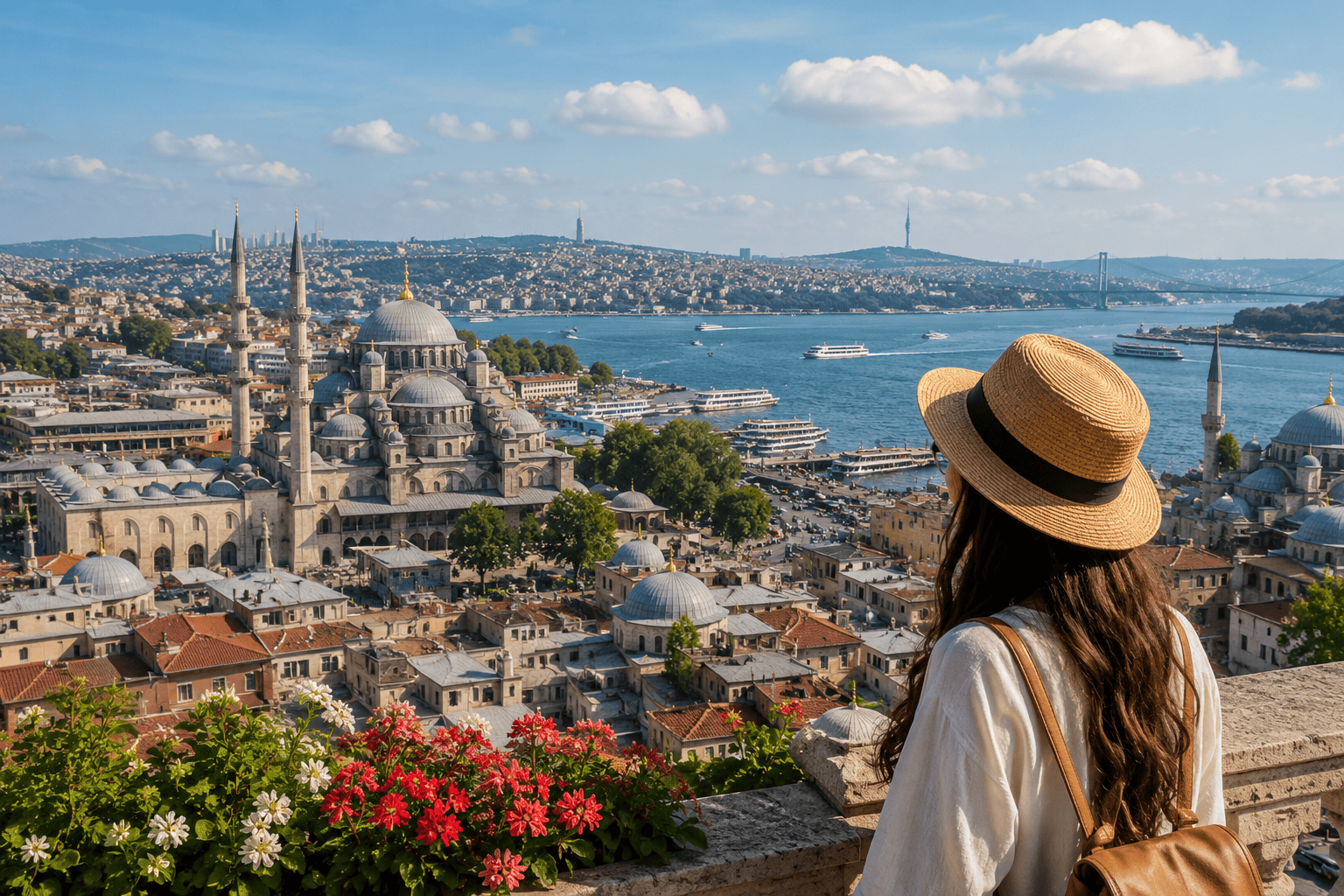
This Istanbul itinerary for 3 days helps first-time visitors explore the city’s top highlights without feeling rushed. You’ll visit iconic landmarks, cruise the Bosphorus, discover both the European and Asian sides, and still have time to enjoy local food and relaxed wandering.
- Duration: 3 days
- Best for: First-time visitors to Istanbul
- Daily budget: €45–300+ depending on travel style
- Highlights: Hagia Sophia, Basilica Cistern, Bosphorus ferry, Kadıköy, Galata, Grand Bazaar
- Transport: Istanbulkart (tram, metro, ferry)
Is 3 Days Enough for Istanbul?
Yes — three days is enough for a first visit to Istanbul. You won’t see everything. Istanbul is one of the world’s largest and most layered cities, with entire neighbourhoods that deserve days on their own. But a well-paced three-day itinerary gives you time to visit the essential historic sights, take a Bosphorus ferry, step onto the Asian side, and experience local life beyond the tourist centre.
The biggest mistake first-timers make is packing too much into each day. Istanbul traffic is heavy, queues at major sites can run long, and attractions are more spread out than many visitors expect. This itinerary is built around walkable clusters, logical geography, and enough breathing room to enjoy the city rather than just survive it.
What to Prioritize as a First-Time Visitor
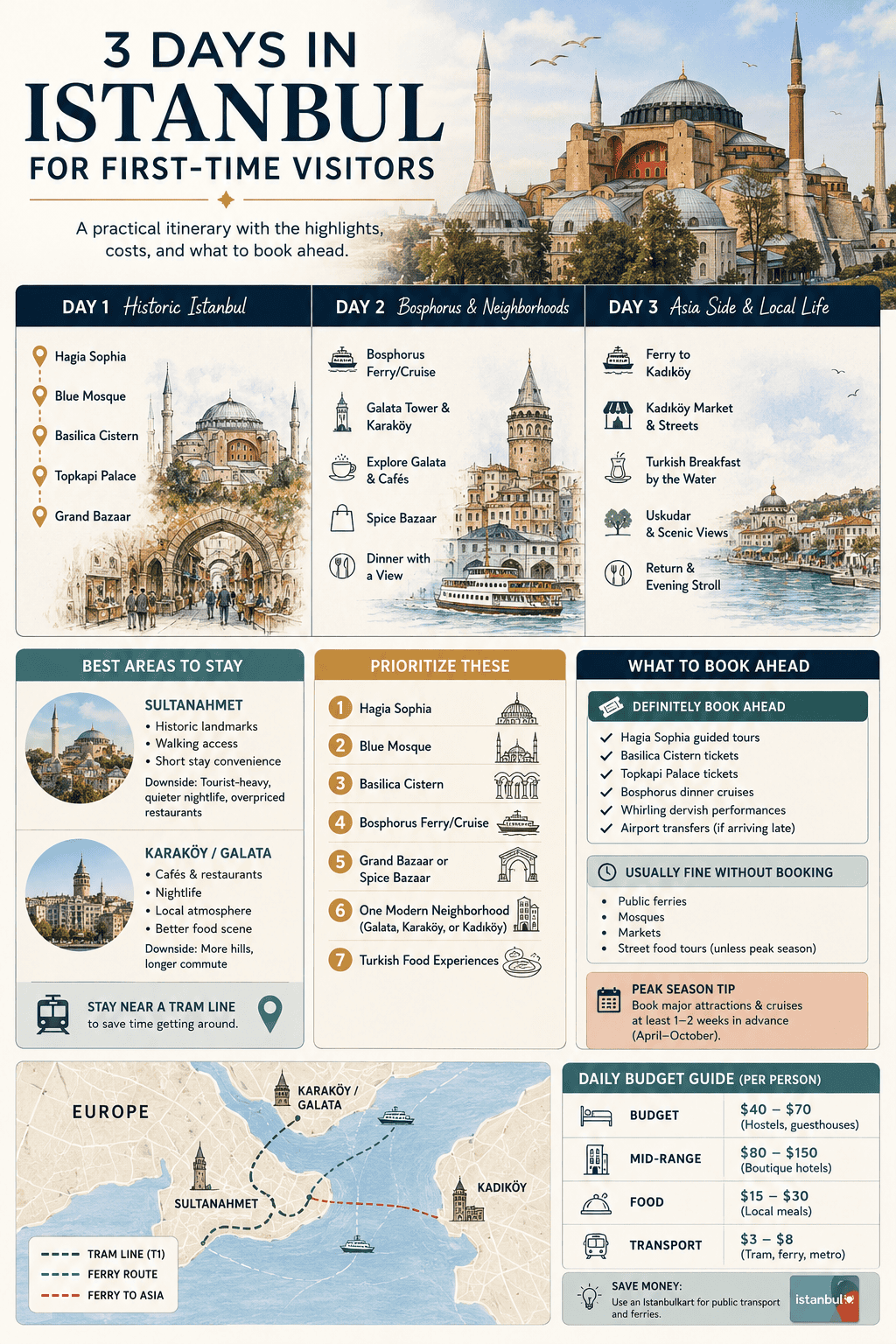
If this is your first visit, these are the experiences that matter most:
- Hagia Sophia
- Blue Mosque
- Basilica Cistern
- A Bosphorus ferry ride
- Grand Bazaar or Spice Bazaar
- At least one neighbourhood beyond Sultanahmet — Galata, Karaköy, or Kadıköy
- A proper Turkish meal (not just street food)
What many visitors don’t realise: you do not need to visit every palace, every mosque, and every market. Istanbul becomes repetitive fast if you overload on monuments. Balance history with neighbourhood time — it’s that mix that makes the city memorable.
What to Book Ahead for Istanbul
Some attractions require advance tickets and others don’t. Knowing which is which saves significant time on the ground.
Book in Advance
- Basilica Cistern — queues can be very long; online tickets let you skip the line
- Topkapı Palace — book the Harem section separately if you plan to visit it
- Bosphorus dinner cruises — popular slots fill quickly, especially in high season
- Guided tours for Hagia Sophia — not essential but useful for context
- Whirling dervish performances — reputable venues sell out
- Airport transfers — worth pre-arranging if arriving late
Usually Fine Without Booking
- Public ferries
- Hagia Sophia and Blue Mosque (entry is free; no ticket needed)
- Mosques generally
- Markets and bazaars
If you’re travelling in April–June or September–October — Istanbul’s peak seasons — book earlier than you think you need to. The same applies during Ramadan and Eid, when domestic tourism surges.
Where to Stay for a First-Time Istanbul Itinerary
For three days, proximity to a tram line matters more than staying somewhere trendy. These two areas work best for first-timers:
Sultanahmet
The most convenient base for sightseeing. Hagia Sophia, the Blue Mosque, Basilica Cistern, and Topkapı Palace are all walkable. The trade-off: it’s heavily tourist-facing, restaurants can be overpriced, and the area quietens down at night.
Karaköy or Galata
A more lived-in feel, with a better food and café scene and easy access to the nightlife around Istiklal Street. Both neighbourhoods are on the T1 tram line and have regular ferry connections. The area is hilly, so comfortable shoes are essential, and the commute to Sultanahmet adds 15–20 minutes. Worth it for the better atmosphere.
Day 1: Historic Istanbul Essentials
Spend your first day in Sultanahmet. Keep everything walkable — crossing the city on Day 1 wastes time and energy.
Morning: Hagia Sophia and the Blue Mosque
Start before 9 AM to beat the queues. Hagia Sophia is the right place to begin: a Byzantine cathedral turned Ottoman mosque turned museum turned active mosque again, it encapsulates Istanbul’s layered identity better than anywhere else. The scale, the gold mosaics, and the sheer atmospheric weight of the interior are what catch visitors off guard.
Practical notes: Dress modestly; women should bring a headscarf. Entry is free, but airport-style security adds time. Plan for 1–1.5 hours inside.
Walk across the square to the Blue Mosque immediately after. It’s an active mosque and closes to non-worshippers during prayer times, so check the schedule before you go. The interior tilework and light make it worth more than a quick look. Allow 30–45 minutes.
Late Morning: Basilica Cistern
A five-minute walk from both mosques, the Basilica Cistern is one of Istanbul’s most unusual experiences. An underground Roman reservoir supported by hundreds of columns, with dim lighting, shallow water reflections, and carved Medusa heads at the base of two pillars — it’s genuinely atmospheric. Book tickets online in advance; the cistern is compact and queues can stretch long. Allow 45 minutes.
Lunch: Sultanahmet
Sultanahmet Köftecisi, one of the area’s oldest meatball restaurants, is a reliable and straightforward lunch stop — touristy but honest. Order the Turkish meatballs, bean salad, and a glass of ayran. Budget €8–15 per person. If you’d rather explore, walk a few streets back from the main square for better value.
Afternoon: Topkapı Palace
If you visit one palace in Istanbul, make it Topkapı. Unlike European royal palaces, it feels less like a showroom and more like a small city — open courtyards, pavilions, gardens, and views over the Bosphorus. The Imperial Treasury and Harem sections require separate tickets. If you’re museum-fatigued by the afternoon, skip the Harem and spend the time in the outer courtyards instead. Plan for 2–3 hours.
Evening: Eminönü at Sunset
Walk down toward Eminönü along the waterfront as the light changes. This is some of the best street food in the city: balık ekmek (grilled fish sandwiches served from boats), simit, and glasses of Turkish tea. There’s no better way to end Day 1 than watching ferries cross the Bosphorus while the city slows down around you.
Day 2: Bosphorus, Galata, and Modern Istanbul
Day 2 pulls you out of the historic centre and into a version of Istanbul that feels lived-in and contemporary. By the end of it, the city will feel like more than a museum.
Morning: Bosphorus Ferry Ride
One of the best answers to the question of what to do in Istanbul in 3 days doesn’t involve a famous building. It involves the water. Take a public ferry from Eminönü or Karaköy for one of the most rewarding and affordable experiences in the city. The Bosphorus is central to understanding Istanbul — geographically, culturally, and visually. From the water, you’ll see Ottoman waterfront mansions, mosque silhouettes, palace walls, and the point where Europe and Asia face each other across a strait.
Public ferries cost around €1–3 per journey. Longer organised Bosphorus cruises run €15–30 and cover more ground if you want a structured sightseeing option. Both work; the public ferry is the more authentic experience.
Late Morning: Galata Tower Area
Walk up from Karaköy into the Galata neighbourhood. The tower itself offers panoramic views across the city, but the streets around it — steep, narrow, full of cafés, vintage shops, and rooftop terraces — are often more rewarding than the tower itself. If the queue is long, skip the tower and explore the area on foot instead. Allow 1–1.5 hours in the neighbourhood.
Lunch: Karaköy
Karaköy has developed into one of Istanbul’s best areas for eating well without trying hard. Look for restaurants serving meze plates, grilled meats, or fresh fish. Baklava shops and good Turkish coffee are easy to find. Budget €10–20 per person for a sit-down lunch.
Afternoon: Istiklal Street and Taksim
Take the historic tram or walk the length of Istiklal Street toward Taksim Square. The experience is the contrast: European-influenced architecture, contemporary shopping, music venues, dessert shops, and the ordinary daily noise of a major city. You don’t need the full afternoon here. An hour or two captures the point — that Istanbul is not a single city, but several layered on top of each other.
Evening Options
Option 1 — Rooftop dinner: Istanbul’s rooftop restaurants are tourist-facing, but the view of the Bosphorus and the city at dusk is worth doing once. Reserve ahead for sunset seating. Expect €20–50+ per person.
Option 2 — Whirling dervish performance: A Sema ceremony (the Mevlevi whirling dervish ritual) is one of Istanbul’s most distinctive cultural experiences and takes around 90 minutes. Book tickets through a reputable venue in advance; quality varies significantly between operators.
Day 3: The Asian Side and a Slower Pace
Most first-time visitors to Istanbul never cross to the Asian side. It’s one of the most common itinerary mistakes. Even a half day in Kadıköy changes your understanding of the city entirely.
Morning: Ferry to Kadıköy
Take a public ferry from Eminönü or Karaköy across to Kadıköy. The crossing takes around 20 minutes and costs under €2. The ferry itself — Istanbul commuters, tea glasses, sea air, and the European skyline receding behind you — is part of the experience. Kadıköy is more local in atmosphere, less pressured with tourism, and has arguably the best food scene in the city.
Turkish Breakfast in Kadıköy
A proper Turkish breakfast deserves time. It’s not a quick meal: eggs, white cheese, olives, fresh bread, honeycomb, jams, sliced cucumber and tomatoes, and a steady supply of tea. Many Kadıköy cafés do extended brunch spreads. Budget €8–20 per person and allow an hour at minimum — this is as much about sitting down as it is about eating.
Explore the Market Streets
Wander Kadıköy’s market neighbourhood without a specific plan. Look for spice shops, bakeries, small coffee roasters, street art, and the covered produce market. This is a good moment to slow the pace of the itinerary down before a final afternoon.
Afternoon: Choose Your Closing Scene
Option A — Moda walk: If the weather is good, walk south toward Moda along the coastline. It’s one of Istanbul’s most pleasantly liveable-feeling neighbourhoods, good for a coffee stop with sea views and a relaxed final afternoon.
Option B — Spice Bazaar and last shopping: Take the ferry back to the European side and visit the Spice Bazaar in Eminönü. It’s smaller and easier to navigate than the Grand Bazaar. Good things to take home include Turkish tea, dried spices, Turkish delight, and ceramics.
Final Evening: Dinner by the Water
End your trip without overplanning. A table somewhere near the water — meze, grilled fish, Turkish wine or rakı — is the right close. Don’t fill every hour of the last evening. Istanbul is best experienced with some room to wander.
Estimated Budget for 3 Days in Istanbul
Budget Traveller — €45–80 per day
- Hostel or basic hotel
- Istanbulkart for all transport (tram, ferry, metro)
- Street food and casual sit-down meals
- Free or low-cost attractions (Hagia Sophia, Blue Mosque, markets)
Mid-Range Traveller — €100–220 per day
- Boutique hotel in Sultanahmet or Karaköy
- Restaurant meals for lunch and dinner
- Paid attraction tickets (Basilica Cistern, Topkapı, Bosphorus cruise)
- Occasional taxi or transfer
Higher-End Traveller — €300+ per day
- Design hotel or heritage property
- Fine dining and rooftop restaurants
- Private tours and transfers
- Dinner cruise and cultural performances
Common First-Timer Mistakes
Trying to do too much in one day
Three major attractions plus one neighbourhood exploration per day is a realistic ceiling. Going beyond that usually means rushing, and rushing Istanbul makes it worse, not better.
Relying on taxis instead of public transport
Istanbul’s traffic can be severe, particularly between the historic peninsula and Taksim. The T1 tram, metro lines, and ferries are faster for most journeys and far cheaper. Get an Istanbulkart on arrival — it covers trams, metro, buses, and ferries on a single top-up card.
Never leaving Sultanahmet
Sultanahmet is convenient but not representative of Istanbul as a whole. At minimum, make time for Karaköy, Galata, and the Asian side. The difference in atmosphere is significant.
Skipping the ferries
Public ferries are not just a way to get from A to B — they’re one of the best experiences the city offers. Use them as often as you can.
Underestimating the hills
Galata, Karaköy, and much of the Beyoğlu district are steep. Wear comfortable, flat-soled shoes regardless of what else you pack.
Practical Tips
Transport Card
Pick up an Istanbulkart at the airport or any major transit stop. It covers all public transport and gives a small discount on each journey compared to single tickets.
Cash and Cards
Cards are accepted widely in restaurants, hotels, and shops. Carry some cash for street food stalls, smaller cafés, markets, and public toilets.
Dress Code for Mosques
Both Hagia Sophia and the Blue Mosque require covered shoulders, covered knees, and shoes removed at the entrance. Women should bring a scarf for their hair. Modest layers packed near the top of your bag will save time.
Safety
Istanbul is generally safe for tourists in the areas covered by this itinerary. Be aware of meter-less taxis and negotiate fares in advance where possible. In crowded bazaars and transport hubs, watch your belongings and step away from overly insistent vendors.
Useful Resources
- Turkish Museums official site — ticket booking for Topkapı Palace and other state-run museums
- Istanbul Public Transport (IETT) — official route maps, Istanbulkart information, and ferry schedules
- Istanbul official tourism portal — event listings, neighbourhood guides, and seasonal travel info
Frequently Asked Questions
Is 3 days enough for Istanbul?
Yes. Three days is enough for first-time visitors to see the major landmarks, take a Bosphorus ferry, and explore at least two distinct neighbourhoods without feeling constantly rushed. You won’t cover everything — Istanbul is too large and layered for that — but you’ll leave with a real sense of the city rather than a surface-level impression.
What should first-time visitors prioritize in Istanbul?
Prioritise Hagia Sophia, the Blue Mosque, and the Basilica Cistern as your historic core, add a Bosphorus ferry ride, and spend meaningful time in at least one neighbourhood beyond Sultanahmet — Karaköy, Galata, or Kadıköy on the Asian side. A good first-time Istanbul itinerary balances famous landmarks with everyday city life; one without the other misses what makes the city distinctive.
What should I book ahead for Istanbul?
Book the Basilica Cistern, Topkapı Palace, and any Bosphorus dinner cruise or cultural performance in advance — these sell out or have long queues during peak periods. Hagia Sophia and the Blue Mosque are free to enter and don’t require tickets. Public ferries and most mosques can be visited without any pre-booking.
What is the best area to stay in Istanbul for first-timers?
Sultanahmet is the most practical base for sightseeing — all the major historic attractions are walkable. Karaköy and Galata offer a more contemporary atmosphere with a better food scene and easier access to nightlife, at the cost of a 15–20 minute tram ride to the main landmarks. Both work; proximity to the T1 tram line matters more than the specific neighbourhood.
How do I get around Istanbul efficiently?
Use the Istanbulkart for trams, metro, buses, and ferries — it’s the fastest and cheapest way to navigate the city. The T1 tram connects Sultanahmet to Karaköy, Eminönü, and the Grand Bazaar. Ferries handle Bosphorus crossings to Kadıköy and the Asian side. Reserve taxis for airport transfers or specific situations; Istanbul traffic makes them unreliable for sightseeing days.
What is the best time of year to visit Istanbul for 3 days?
April–May and September–October offer the most comfortable weather and manageable crowds, though these are also the busiest periods for tourism and the best time to book ahead. June through August is hot and crowded but lively. November through March is quieter and cheaper, with mild but occasionally rainy winter weather.
By Mara Vale for Eurly
Last verified: May 2025

Mara Vale
Mara Vale writes Eurly travel guides for first-time Europe visitors who want practical routes, realistic pacing, and fewer avoidable planning mistakes.
Eurly guides are written to help readers make confident travel decisions, but opening hours, ticket rules, transit disruptions, and local conditions can change. Always verify key reservations and official schedules before you travel.