
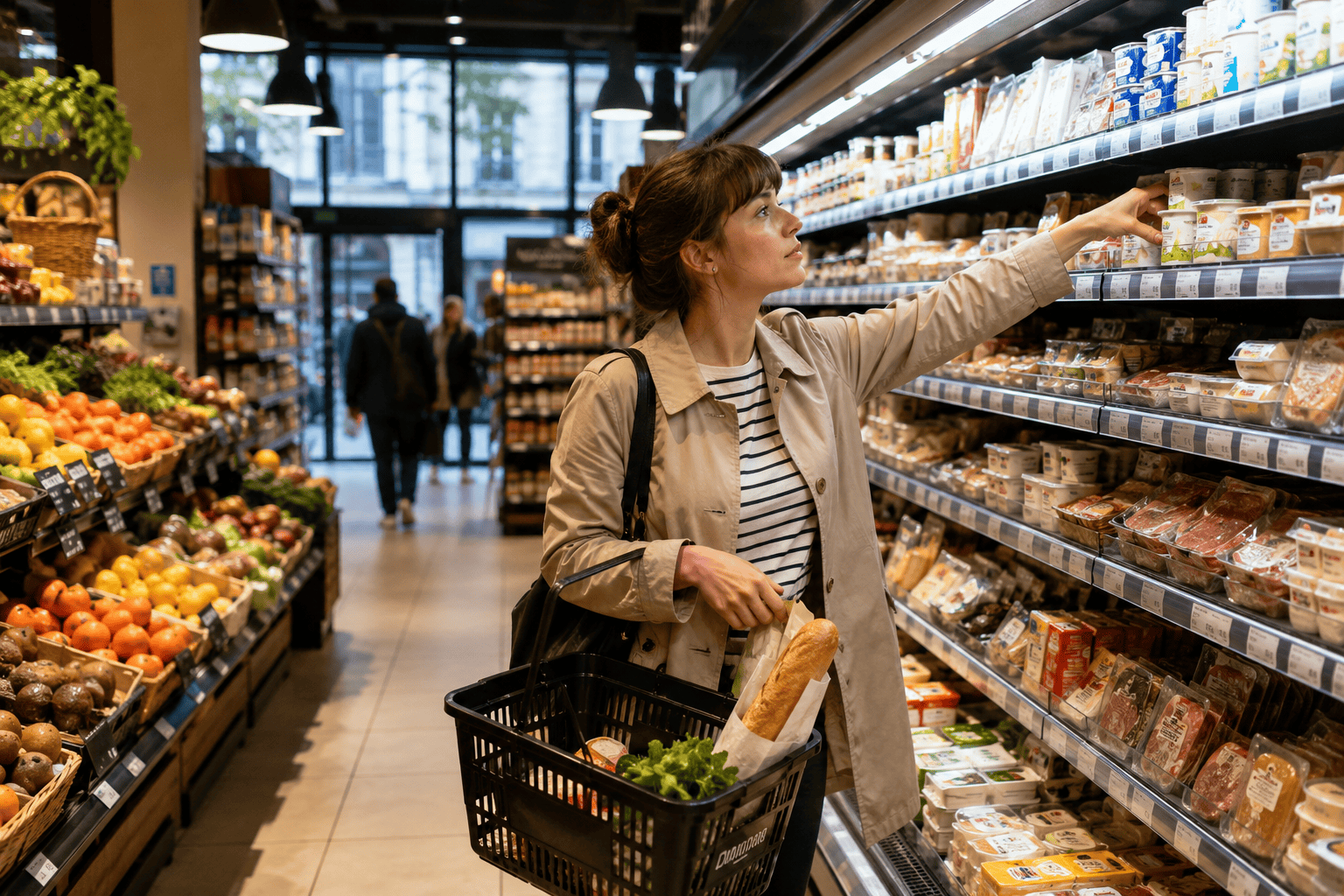
Supermarkets in Paris France are a smart way for travelers to save money on food, drinks, and daily essentials during their trip. Whether you’re planning a picnic by the Seine, stocking your Airbnb kitchen, or avoiding overpriced tourist shops near the Louvre, shopping like a local can make your stay more affordable and convenient. This guide also shares where to shop and simple tips to save even more in Paris.
This guide covers the main chains, realistic prices, which neighborhoods have the most useful stores, what to buy, and the practical quirks that catch first-timers off guard.
Quick Takeaways
Start here: Supermarkets in Paris France are a smart way for travelers to save money on food, drinks, and daily essentials during their trip.
Planning note: This guide covers the main chains, realistic prices, which neighborhoods have the most useful stores, what to buy, and the practical quirks that catch first-timers off guard.
Why Supermarkets Matter in Paris
Eating every meal at a café or brasserie is a perfectly valid way to see Paris — but it adds up fast. A sit-down lunch in a tourist-heavy area easily costs €25–35 per person. A supermarket lunch assembled from the same building blocks (bread, cheese, charcuterie, something cold to drink) typically runs under €10.
The main reasons travelers end up shopping in supermarkets:
- Picnic supplies for Luxembourg Gardens, Champ de Mars, or the Canal Saint-Martin banks
- Affordable breakfast when hotel breakfast costs €15–25 per person
- Wine and cheese bought at grocery prices rather than restaurant markups
- Bottled water, toiletries, and travel basics
- Ready-to-eat food before or after a long train journey
- Snacks that don’t drain the budget on a long sightseeing day
For families, slow travelers, and anyone staying in a self-catering apartment, supermarkets are one of the most effective budget tools in the city.
The Main Supermarket Chains in Paris
Carrefour
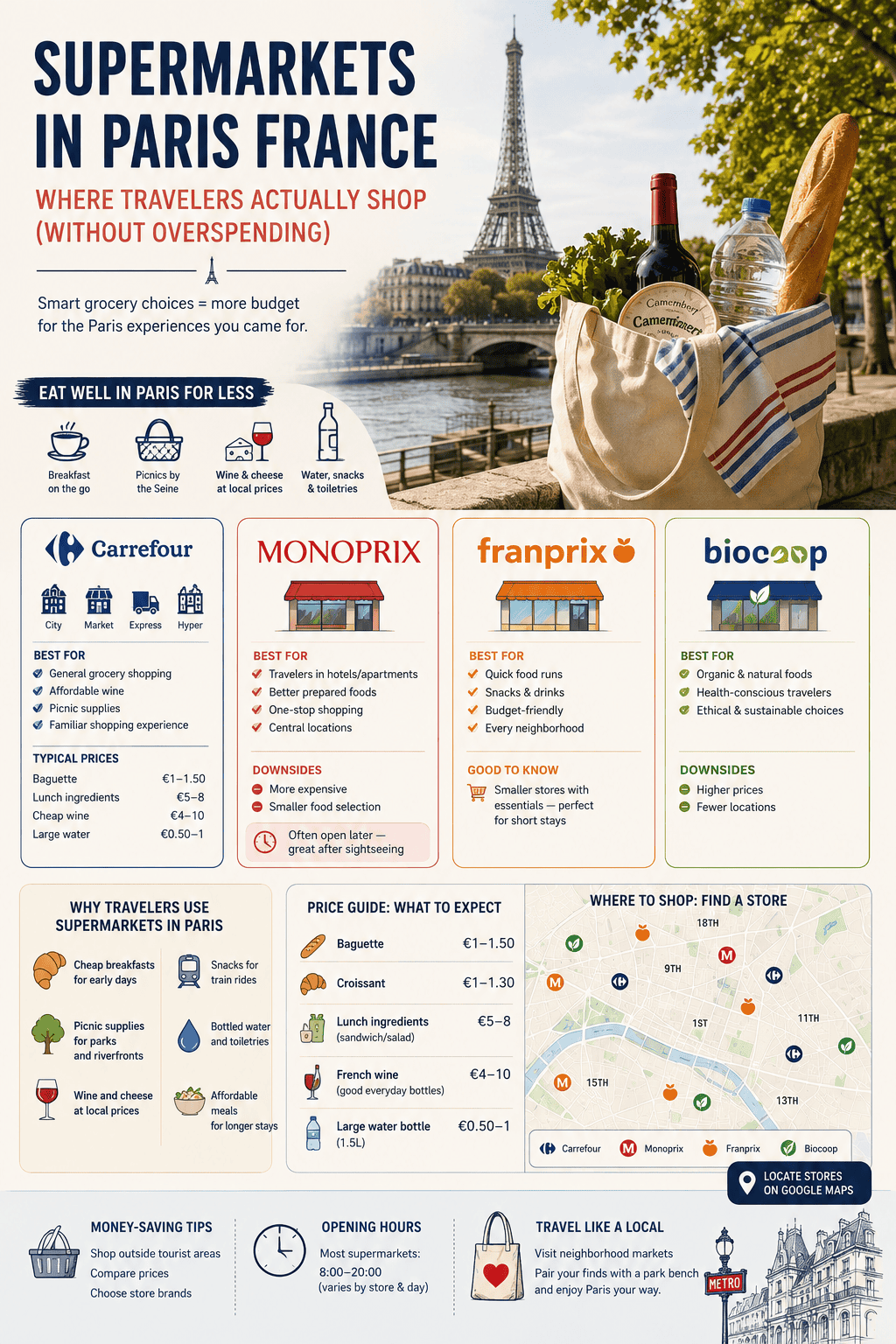
Carrefour is France’s largest and most recognisable grocery chain, and for most visitors it’s the default starting point. In Paris you’ll encounter several formats rather than one uniform store:
- Carrefour City — small convenience-style shops, common in dense neighbourhoods
- Carrefour Market — medium-sized neighbourhood supermarkets with a fuller range
- Carrefour Express — compact urban stores for quick stops
- Carrefour hypermarkets — large-format stores mostly outside the Périphérique, not practical for most visitors
Carrefour’s own-brand products are solid quality and notably cheaper than name brands. Good for general shopping, picnic assembly, affordable wine (€4–10 a bottle), and stocking up on water. Expect to pay around €1–1.50 for a baguette and €0.50–1 for a large water bottle.
Monoprix
Monoprix is the most traveler-friendly chain in central Paris. It functions as a hybrid department store — groceries, pharmacy items, toiletries, wine, and basic clothing all under one roof. Locations are often in prime spots: near the Marais, along the grands boulevards, in Saint-Germain. Many stores stay open later in the evening than smaller neighbourhood grocers, which matters when you’re returning from a museum or a day trip.
The trade-off is price. Monoprix costs more than Carrefour or the discount chains, and the food selection skews toward prepared and premium lines rather than bulk basics. It’s ideal for travelers who prioritise convenience and central location over lowest possible cost.
Franprix
Franprix stores are scattered densely across Paris neighbourhoods and function as the city’s reliable everyday grocer. They’re not the cheapest option, but they’re almost always close by, useful for quick top-up shops, and stocked with the basics — drinks, dairy, fresh bread, snacks. Smaller branches can charge noticeably more for the same items than a larger supermarket one arrondissement away, so it’s worth comparing if you have flexibility.
Lidl
Lidl is the best option for travellers watching their budget carefully. Prices on staples — bread, dairy, fruit, pasta, wine — can run 20–30% lower than equivalent products at Monoprix in a tourist-adjacent area. The stores are no-frills, ranges are narrower, and central locations are fewer than Carrefour or Franprix. But experienced multi-day visitors often seek out the nearest Lidl deliberately and build shopping around it.
If you’re staying somewhere like the 13th, 15th, or 19th arrondissement, Lidl becomes far more accessible than it is for someone staying in the 1st or 4th.
Aldi
Aldi has expanded in France but remains less common in inner Paris than Lidl. Where you find one, expect simple layouts, low prices, and a limited but functional range of breakfast items, snacks, and basics. Worth using if one is convenient to your accommodation; not worth going far out of your way for.
Naturalia and Bio C’Bon
Paris has a genuinely strong organic food culture, and both Naturalia and Bio C’Bon are well-established chains with multiple Paris locations. They stock organic produce, plant-based products, natural cosmetics, and specialty items that mainstream chains don’t carry. Prices are significantly higher than standard supermarkets. Useful if you have specific dietary requirements or want a few quality organic items — less practical as your primary grocery stop.
What Paris Supermarkets Are Actually Like
Visitors expecting a large American-style grocery store will need to adjust expectations quickly. Central Paris is dense and space is expensive, which shapes how supermarkets operate.
Smaller stores, narrower aisles
Most supermarkets in inner Paris are compact. Even a busy Carrefour Market in the 10th or 11th arrondissement is a fraction of the size of a suburban hypermarket. Aisles are narrow, trolleys are small, and evening rush hours between 18:00 and 20:00 can be genuinely crowded.
Sunday hours are shorter — or non-existent
This is the thing that catches the most visitors off guard. Many Paris supermarkets have reduced Sunday hours, opening only in the morning and closing by early afternoon. Some close entirely. Always stock up on essentials before Sunday evening, particularly if you’re in a less-central neighbourhood.
Bags cost extra
Single-use plastic carrier bags are not free and are increasingly unavailable at checkout. Bring a reusable bag or pick one up for a small fee at the till. This is standard across France, not a store-specific policy.
Self-checkout is widespread
Larger stores rely heavily on self-service checkouts. If your French is limited, a few words help: carte means card payment, espèces means cash, ticket means receipt. Most machines have an English-language option if you look for it.
What to Buy (and What It Costs)
Picnic ingredients
Building a picnic from a Paris supermarket is one of the best-value food experiences the city offers. A complete setup — baguette, a wedge of cheese, some charcuterie, fruit, a small dessert, and a bottle of wine — typically costs €10–20 for two people. The same spread at a café or restaurant terrace might cost three to five times more.
Popular spots to take your picnic: the Champ de Mars with the Eiffel Tower in view, Luxembourg Gardens in the 6th, the banks of the Canal Saint-Martin, or the quais along the Seine between the bridges.
Breakfast supplies
Hotel breakfasts in Paris are often priced at €15–25 per person. Supermarket alternatives — yogurt, fruit, juice, pastries, instant coffee or a small coffee machine setup — can cut that cost by 70–80% for an apartment stay. Over a week-long family trip, this difference is substantial.
Wine
French supermarkets are excellent places to buy everyday wine at honest prices. A reliable bottle of French table wine starts at around €3–5; a step up to €8–12 gives you something genuinely good. There is no need to spend more unless you want to. Avoid the wine at tourist-facing kiosks and convenience stores near major monuments — the markup is significant.
Ready-to-eat meals
Most medium and large Paris supermarkets carry a prepared food section: salads, sandwiches, sushi, pasta dishes, and sometimes hot food. These are practical for eating before a long train journey from Gare de Lyon or Gare du Nord, for a quick lunch between museums, or for a late arrival when restaurants are winding down.
Toiletries and pharmacy basics
Monoprix is particularly strong here. Carrefour also carries a reasonable pharmacy and personal care range. Buying sunscreen, paracetamol, or shampoo at a supermarket is significantly cheaper than buying from a dedicated pharmacie or hotel mini-bar.
Where to Shop by Neighbourhood
Le Marais (3rd and 4th arrondissements)
Well-served by Monoprix and Franprix, with organic stores and specialty food shops mixed in. Good for apartment stays in the historic centre. Prices reflect the central location but are not excessive.
Latin Quarter (5th arrondissement)
Student density keeps prices more honest here than in ultra-touristy zones. Several small supermarkets and grocers operate alongside the street food options. Worth exploring if you’re based on the Left Bank.
Canal Saint-Martin (10th arrondissement)
A genuine local neighbourhood feel. Good for food shopping without tourist-area markups, and convenient if you’re planning a picnic along the canal.
Near the major train stations
Around Gare du Nord, Gare de Lyon, and Montparnasse, you’ll find supermarkets that are particularly useful for stocking up before departing Paris by train. Pick up supplies here rather than paying inflated prices inside the station concourses.
Grocery Budget Guide for Paris
- Budget traveller (supermarket-heavy): €10–20 per day — picnic meals, simple breakfasts, snacks, occasional café coffee
- Mid-range traveller (mixed approach): €20–40 per day — supermarket breakfasts and lunches, one restaurant dinner
- Family travel: €40–80 per day — supermarkets absorb the cost of breakfasts, drinks, and snacks, saving the budget for meals out that actually matter
Mistakes Worth Avoiding
Shopping only near tourist attractions
Convenience stores directly adjacent to the Eiffel Tower, Notre-Dame, or the Louvre charge considerably more than stores two or three blocks away on a regular residential street. A short walk makes a noticeable difference.
Assuming late closing hours
Paris is not a 24-hour city for groceries. Most standard supermarkets close between 20:00 and 22:00, sometimes earlier. Plan your shopping before evening activities rather than after.
Buying water from street vendors
Bottled water from a tourist-zone kiosk or street cart can cost several times what a supermarket charges. A large 1.5-litre bottle at Carrefour or Franprix typically costs €0.50–1. Buy from a supermarket, refill a reusable bottle from Paris tap water (which is safe to drink), and move on.
Ignoring store-brand products
French supermarket own-brands are generally good quality. Carrefour’s own-label wine, dairy, and pantry staples represent strong value. Monoprix’s store brand tends slightly upmarket. Don’t default to name brands when the cheaper alternative is often just as good.
Supermarkets vs Outdoor Food Markets
Paris has a network of excellent outdoor food markets — Marché d’Aligre in the 12th, Marché Bastille on Thursday and Sunday mornings, Marché Raspail for organic produce on Sundays. They are worth visiting for the experience and for fresh seasonal produce, cheese bought directly from a fromager, and the atmosphere of everyday Parisian life.
That said, outdoor markets and supermarkets serve different needs:
- Supermarkets are better for: budget efficiency, packaged and ambient goods, drinks, toiletries, consistent opening hours, and quick stops
- Outdoor markets are better for: fresh fruit and vegetables, quality cheese and charcuterie, seasonal specialties, and the experience itself
Many visitors do both — a market visit once or twice for produce and cheese, supermarkets for everything else.
Helpful French Grocery Terms
| French | English |
|---|---|
| Eau | Water |
| Pain | Bread |
| Fromage | Cheese |
| Vin | Wine |
| Fruits et légumes | Fruit and vegetables |
| Caisse | Checkout |
| Ouvert | Open |
| Fermé | Closed |
| Carte | Card (payment) |
| Espèces | Cash |
| Sac | Bag |
Are Supermarkets in Paris Expensive?
By the standards of most European capitals, Paris supermarket prices are reasonable — particularly for staples like bread, dairy, wine, yogurt, and fresh produce. Imported goods, specialty items, and anything sold in a convenience store near a monument are where prices climb. The overall cost of dining out in Paris is what makes it feel expensive; grocery shopping is generally good value by comparison.
The practical summary: buy what you can from a supermarket, eat out for the meals that are worth it, and treat the rest as budget you’ve freed up for experiences that matter more.
Frequently Asked Questions
Which supermarket chain is most common in central Paris?
Carrefour (in its City and Market formats) and Franprix are the most widely distributed across central Paris arrondissements. Monoprix has strong coverage in tourist-friendly areas. Lidl and Aldi are less common in the inner city but appear more frequently in outer arrondissements.
Do Paris supermarkets open on Sundays?
Some do, but hours are usually reduced — often mornings only, closing by early-to-mid afternoon. A number of smaller branches close entirely on Sundays. Always check before you rely on Sunday shopping, and stock up on Saturday evening if you’re not sure.
Is it safe to drink tap water in Paris instead of buying bottled?
Yes. Paris tap water is safe to drink and is tested regularly. Carrying a reusable bottle and refilling it from the tap — or from one of the city’s free public drinking fountains — is a simple way to stop spending money on water entirely.
Can I buy good French wine cheaply at Paris supermarkets?
Yes, and it’s one of the genuine pleasures of shopping in France. A bottle in the €5–12 range from Carrefour or Monoprix can be genuinely good. There’s no need to spend more for an everyday bottle. Avoid wine sold at tourist kiosks or convenience stores near the major monuments, where the same bottle costs considerably more.
What time do supermarkets close in Paris?
Most standard supermarkets close between 20:00 and 22:00 on weekdays. Some close earlier. Hours vary by chain and individual store location. Monoprix branches in central areas often have slightly later closing times than smaller neighbourhood stores. Always check the specific store’s hours rather than assuming late availability.
Useful links:
Carrefour France — store locator and offers
Monoprix — Paris locations and opening hours
City of Paris — tap water quality information
By Mara Vale for Eurly
Last verified: June 2025. Opening hours, prices, and store locations change — check directly with individual stores before visiting.

Mara Vale
Mara Vale writes Eurly travel guides for first-time Europe visitors who want practical routes, realistic pacing, and fewer avoidable planning mistakes.
Eurly guides are written to help readers make confident travel decisions, but opening hours, ticket rules, transit disruptions, and local conditions can change. Always verify key reservations and official schedules before you travel.