
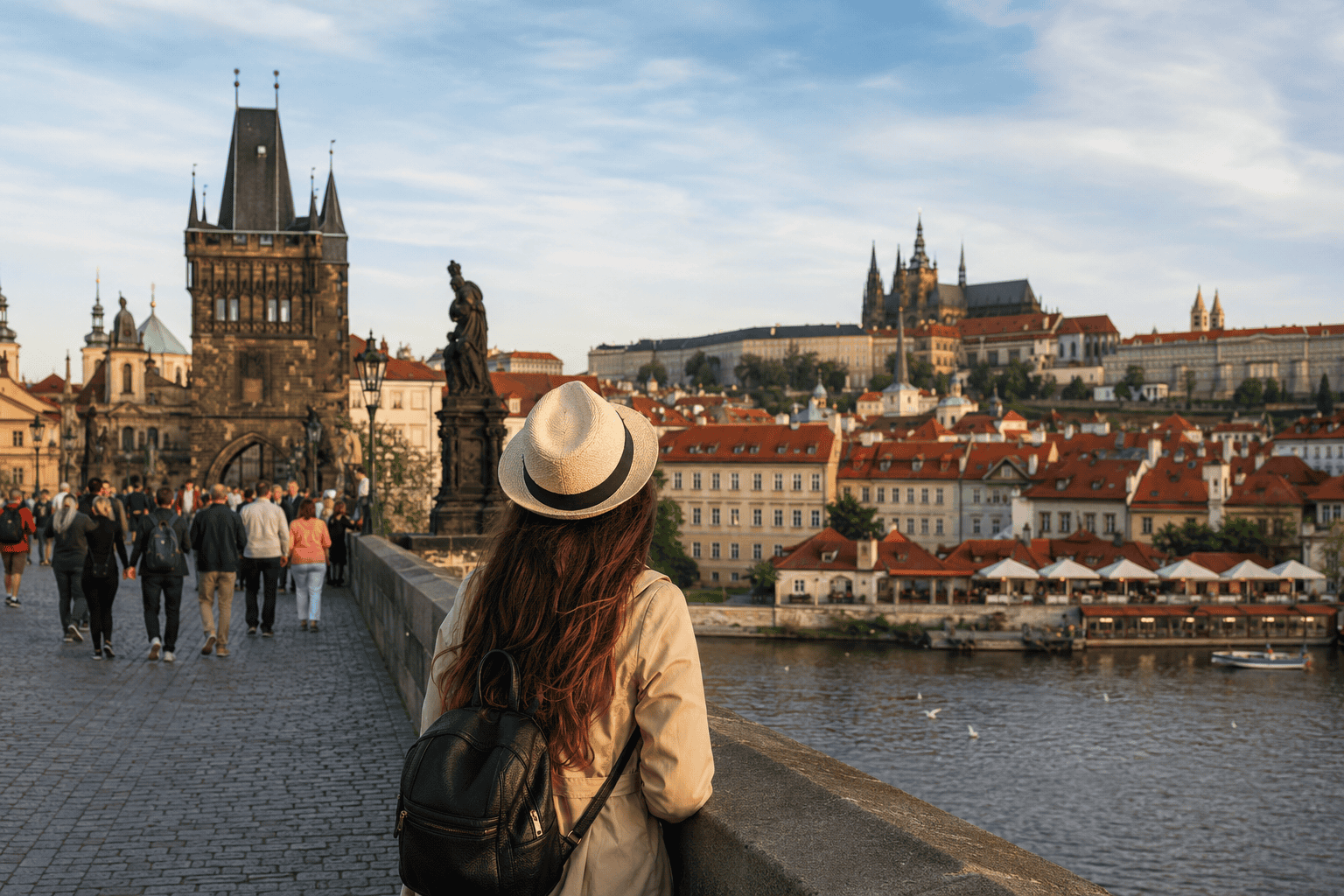
Is Prague safe for tourists? Yes—Prague is one of Central Europe’s safest capital cities and a popular choice for solo travelers, couples, families, and first-time visitors. Violent crime targeting tourists is rare, public transport runs reliably late into the night, and most risks, such as pickpocketing, currency exchange scams, and overpriced taxis, are predictable and easy to avoid with basic awareness.
How Safe Is Prague Overall?
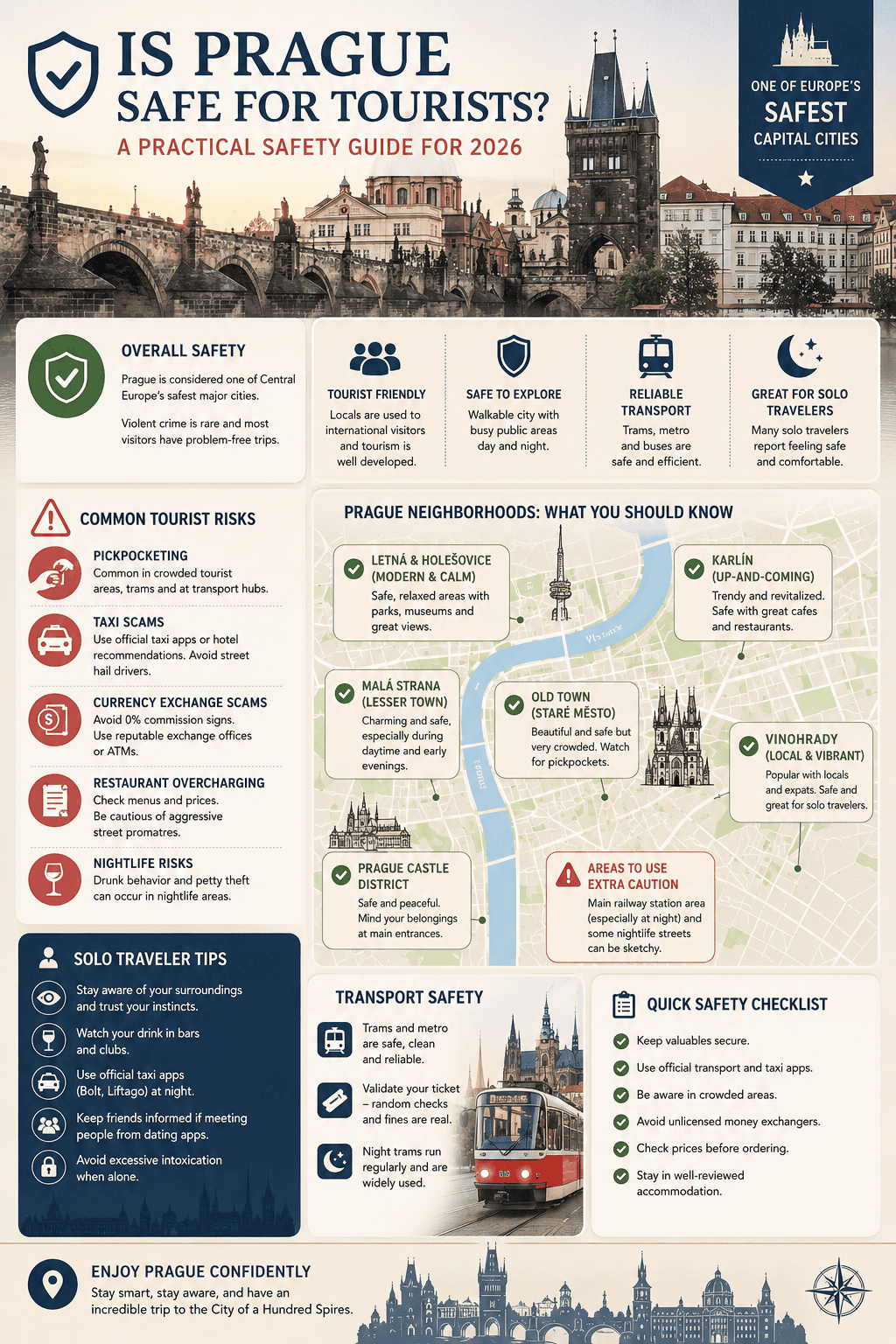
Prague consistently ranks among the safer major capitals in Europe. Visitors accustomed to cities like Rome, Barcelona, or Paris typically find Prague easier to navigate without incident — both during the day and at night. Tourism infrastructure is well-developed, English is widely understood in the center, and local residents are used to international visitors.
The most common problems tourists encounter are nuisance-level rather than dangerous:
- Pickpocketing in crowded tourist zones
- Currency exchange offices with hidden fees
- Taxi overcharging outside app-based services
- Tourist-targeted restaurant overcharging
- Drunk crowds in nightlife districts
Serious crime targeting tourists is uncommon. The vast majority of visitors complete their trip without any meaningful safety incident.
Is Prague Safe for Solo Travelers?
Yes — Prague solo travel safety is genuinely good. The city is compact, walkable, and full of other travelers year-round, which makes it one of Europe’s more comfortable solo destinations. Neighborhoods popular with solo visitors include Old Town (Staré Město), Malá Strana, the Prague Castle district, Vinohrady, Letná, and Karlín.
Solo Female Travelers
Prague is one of the more relaxed European cities for solo female travelers. Harassment is not a common complaint, public transport stays busy late in the evening, and central neighborhoods remain populated after dark. That said, standard city precautions still apply:
- Watch your drink in bars and clubs — spiking does occur occasionally
- Avoid becoming heavily intoxicated when alone in an unfamiliar area
- Use Bolt or Uber rather than accepting rides from strangers or unlicensed drivers
- Let someone know your plans when meeting people from dating apps or travel forums
Solo Travelers at Night
Walking through central Prague after dark is generally safe, particularly in well-populated areas around Old Town Square, the Charles Bridge approaches, Wenceslas Square, and Vinohrady. The main concern at night is intoxicated nightlife crowds, not crime. Stick to lit streets and populated areas, and you will have little reason to feel uneasy.
Prague Safety for Tourists: Common Risks
1. Pickpocketing
Pickpocketing is the single most common crime affecting visitors, and it is concentrated in predictable hotspots. Most thefts happen when tourists are distracted — by a street performer, a photo opportunity, or checking a map.
High-risk locations include:
- Charles Bridge (especially during peak tourist hours)
- Old Town Square
- Prague Castle entrances
- Wenceslas Square
- Trams during rush hour (particularly lines 22 and 23)
- Praha hlavní nádraží (the main railway station)
Simple precautions reduce your risk significantly: use bags with zip closures, keep wallets in front trouser pockets, and avoid leaving your phone visible in an open jacket pocket while moving through crowds.
2. Currency Exchange Scams
Currency exchange scams are Prague’s most notorious tourist trap. Some exchange offices near major attractions advertise eye-catching rates in large font while burying commissions, minimum fees, or unfavorable conversion formulas in small print. You may hand over euros and receive far fewer Czech koruna (CZK) than the posted rate suggested.
The simplest solution: pay by card whenever possible and use ATMs attached to well-known banks (Komerční banka, ČSOB, Česká spořitelna) for cash. Avoid standalone exchange booths on Old Town Square or near Charles Bridge.
3. Taxi Overcharging
Prague’s taxi reputation has improved, but unlicensed drivers and overcharging still occur when tourists hail random cabs on the street. Use Bolt or Uber for transparent pricing and route tracking. Both apps operate reliably across the city and are standard practice for most visitors.
4. Fake Tourist Services and Street Gambling
Be cautious of individuals who approach you aggressively offering unofficial tours, discounted attraction tickets, or street gambling games (particularly three-card tricks near tourist zones). Legitimate operators do not approach tourists on the pavement. Politely decline and keep moving.
What Scams Should Tourists Watch for in Prague?
Scams Reported by Visitors in Prague
- ATM dynamic currency conversion: When an ATM offers to convert your withdrawal into your home currency, always decline and choose CZK. The bank’s conversion rate is almost always worse than your card provider’s rate.
- Inflated restaurant bills: In heavily tourist-facing spots, visitors sometimes find extra items on bills, unexplained service charges, or premium pricing that wasn’t displayed. Read the menu before ordering and review the bill line by line before paying.
- Exchange office misrepresentation: The advertised rate is not always what you receive. Ask for the exact CZK amount you will get before completing any cash exchange — a reputable office will show you upfront.
- Fake petition or charity distractions: Groups may approach tourists with clipboards, petitions, or donation requests while an accomplice attempts to pick pockets. Politely decline and continue walking — do not stop.
- Unsolicited “help” at ticket machines: Strangers offering to help you purchase transit tickets sometimes manipulate the machine or demand a fee. Use the machine yourself or buy tickets via the PID Lítačka app.
Are There Any Areas to Avoid in Prague?
Prague does not have large dangerous districts comparable to those in some major global cities. There are no genuine no-go zones for tourists. However, a handful of areas benefit from extra awareness.
Around Praha hlavní nádraží (Main Railway Station)
The streets immediately surrounding Prague’s main railway station can attract pickpockets, panhandlers, and intoxicated individuals, particularly late at night. The station itself is functional and generally safe, but stay alert when arriving after dark and move purposefully toward your transport or accommodation.
Parts of Wenceslas Square After Midnight
Wenceslas Square is a central tourist landmark and busy throughout the day. Late at night, however, the lower end of the square shifts toward a heavier nightlife crowd — drunk revelers, aggressive club promoters, and occasional tourist-focused scams are more common after midnight. Normal city awareness is all that’s needed; it is not a dangerous area.
Žižkov
Žižkov historically carried a rough reputation, but it has changed significantly over the past decade. Today it is popular with students, expats, and young professionals. Visitors exploring its bars and local restaurants rarely encounter any issues. Žižkov is not an area to avoid — it is simply a working-class neighborhood that looks grittier than the historic center.
Distant Outer Suburbs
Some outer residential districts offer little for tourists and can feel isolated after dark. They are not inherently dangerous, but there is little reason to visit them, and getting back to the center late at night requires more planning.
Safest Neighborhoods to Stay in Prague
| Neighborhood | Best For | Trade-Off | Verdict |
|---|---|---|---|
| Old Town (Staré Město) | First-timers, walkability, top attractions | Crowded and more expensive | Best |
| Malá Strana | Atmosphere, quiet evenings, Castle access | Fewer budget options | Best |
| Vinohrady | Local feel, cafés, solo travelers | Slightly farther from main sights | Good |
| Karlín | Modern restaurants, excellent transport, longer stays | Less historic atmosphere | Good |
For first-time visitors prioritizing ease and safety, Old Town or Malá Strana put you within walking distance of most major sights and keep you in well-populated, well-lit streets at all hours. Vinohrady and Karlín are excellent choices if you want a more local atmosphere without sacrificing safety.
Is Public Transportation Safe in Prague?
Prague’s metro, tram, and bus network is one of the best in Central Europe and is heavily used by locals at all hours — including late at night. The system is safe; the main concern is petty theft, not personal safety.
Practical tips for using public transport safely:
- Always validate your ticket at the yellow machines before boarding — inspectors do check, and fines are issued on the spot
- Keep bags in front of you or between your feet during busy tram rides
- Step away from carriage doors when carrying luggage to avoid being jostled at stops
- Use the official PID Lítačka app for route planning and mobile tickets
Night trams (marked with numbers in the 90s) run through the early hours and are a reliable option after the metro closes around midnight. They are generally safe and well-used.
Walking Around Prague After Dark
One of Prague’s genuine strengths as a city is how walkable and pleasant it feels after sunset. The illuminated castle, the gas-lamp glow of Malá Strana, and the evening atmosphere on Charles Bridge are all part of what makes the city special — and all of them are accessible safely on foot.
Popular and safe evening routes include:
- Old Town Square to Charles Bridge
- Charles Bridge across to Prague Castle viewpoints
- The Vltava riverfront promenades north and south of the bridge
- Letná Park and the beer garden terrace
Still, a few basic habits matter after dark: avoid displaying expensive electronics unnecessarily, don’t leave bags on the back of your chair in bars or restaurants, and try not to walk alone while heavily intoxicated in unfamiliar streets.
Safety Tips for First-Time Visitors to Prague
Before You Go: Key Planning Checklist
- Download Bolt and Uber before you arrive so you are never tempted by an unlicensed taxi
- Install the PID Lítačka app for public transport tickets — it removes any need to interact with ticket-machine helpers
- Notify your bank that you are traveling so your card works smoothly in Czech ATMs
- Buy travel insurance that covers medical emergencies and theft — even in a safe city, it matters
Use Card Payments Where Possible
Cards are widely accepted throughout Prague, including at most restaurants, shops, and transport kiosks. Paying by card sidesteps currency exchange entirely and gives you a clean spending record.
Carry Limited Cash
When you do need CZK, withdraw from ATMs at major bank branches and carry only what you need for the day. Keep your main card and any backup card in separate places.
Book Airport Transfers in Advance
Prague Václav Havel Airport is well connected, but the arrivals hall attracts unofficial drivers. Book Bolt, Uber, or an official airport transfer in advance and ignore anyone approaching you inside the terminal. The airport express bus (AE) to Hlavní nádraží is also a reliable, low-cost option at around €5.
Stay Alert in Crowds
The majority of tourist incidents in Prague involve distraction — a street performer, a group photo, a map check. Keep one hand on your bag whenever you stop in a crowded area.
Safety-Related Costs in Prague
| Item | Approximate Cost |
|---|---|
| Bolt or Uber city ride | €4–12 |
| Airport transfer (app-based or shuttle) | €15–30 |
| Airport Express Bus (AE) | ~€5 |
| 24-hour public transport pass | ~€5–6 |
| Hostel locker rental | Usually included or free |
| Travel insurance (per day, approx.) | €2–8 |
Most safety precautions in Prague cost nothing — they are habits rather than purchases. The main optional expense worth budgeting for is travel insurance.
Common Mistakes Tourists Make in Prague
Avoidable Errors That Catch First-Time Visitors
- Using random exchange offices near major sights — always check the final CZK amount before handing over cash
- Accepting the ATM’s dynamic currency conversion offer — always choose CZK
- Carrying a passport loosely in a backpack outer pocket in tourist crowds
- Hailing a taxi off the street instead of booking via Bolt or Uber
- Leaving a phone or wallet on a restaurant table while distracted
- Assuming every restaurant near Old Town Square offers fair pricing — check that prices are clearly displayed on the menu before sitting down
- Stopping to engage with petition-holders or street gamblers — keep walking
Final Verdict: Is Prague Safe?
For the vast majority of visitors, Prague is an excellent and safe destination. Violent crime targeting tourists is rare. Public transport is reliable at all hours. Central neighborhoods are comfortable to walk independently, including at night. The risks that exist — pickpocketing, currency scams, taxi overcharging — are predictable and avoidable with basic awareness.
Use app-based taxis, pay by card where possible, guard your belongings in tourist crowds, and decline any ATM offer to convert currency for you. Do those four things and you are unlikely to encounter any meaningful trouble. Whether you are visiting for a weekend, building a longer Central Europe itinerary, or traveling solo, Prague is a city most visitors leave eager to return to.
Frequently Asked Questions
Is Prague safe for solo travelers?
Yes. Prague is widely considered one of Europe’s better cities for solo travel, including for solo female travelers. The city is compact, well-connected, and full of other travelers year-round. Standard precautions around nightlife, transportation choices, and keeping valuables secure are sufficient for most people.
What scams should tourists watch for in Prague?
The most common scams involve currency exchange offices with hidden fees, ATMs offering dynamic currency conversion in your home currency (always choose CZK instead), taxi overcharging by unlicensed drivers, inflated restaurant bills in tourist-heavy areas, and distraction-based pickpocketing. None of these are hard to avoid once you know what to look for.
Are there any areas to avoid in Prague?
There are no genuine no-go zones for tourists. The area around Praha hlavní nádraží (main railway station) warrants extra alertness at night, and the lower end of Wenceslas Square can become rowdy after midnight. Both are manageable with normal city awareness rather than outright avoidance.
Is Prague safe at night?
Most central districts remain well-lit, busy, and safe after dark. Walking between Old Town, Charles Bridge, and Malá Strana in the evening is a popular activity with good reason — it is one of the city’s highlights. The main concern is drunk nightlife crowds rather than crime. Night trams run until the metro resumes and are reliable.
Is Prague safer than other European capitals?
Many travelers find Prague safer than several larger Western European capitals, particularly when it comes to violent crime and street harassment. Petty theft is the most common issue, and it is concentrated in predictable tourist-heavy locations rather than spread across the city.
Which apps should I use for safe transportation in Prague?
Bolt and Uber both operate reliably in Prague and provide transparent pricing with tracked routes. For public transport, the PID Lítačka app handles ticket purchases and route planning. Download all three before you arrive.
Official resources: Prague City Tourism · PID Prague Public Transport · Czech Police — Foreign Police Service
Mara Vale
Mara Vale writes Eurly travel guides for first-time Europe visitors who want practical routes, realistic pacing, and fewer avoidable planning mistakes.
Eurly guides help readers make confident travel decisions, but opening hours, ticket rules, transit disruptions, and local conditions can change. Always verify key reservations and official schedules before you travel.
By Mara Vale for Eurly
Last verified: June 2026
Mara Vale
Mara Vale writes Eurly travel guides for first-time Europe visitors who want practical routes, realistic pacing, and fewer avoidable planning mistakes.
Eurly guides are written to help readers make confident travel decisions, but opening hours, ticket rules, transit disruptions, and local conditions can change. Always verify key reservations and official schedules before you travel.