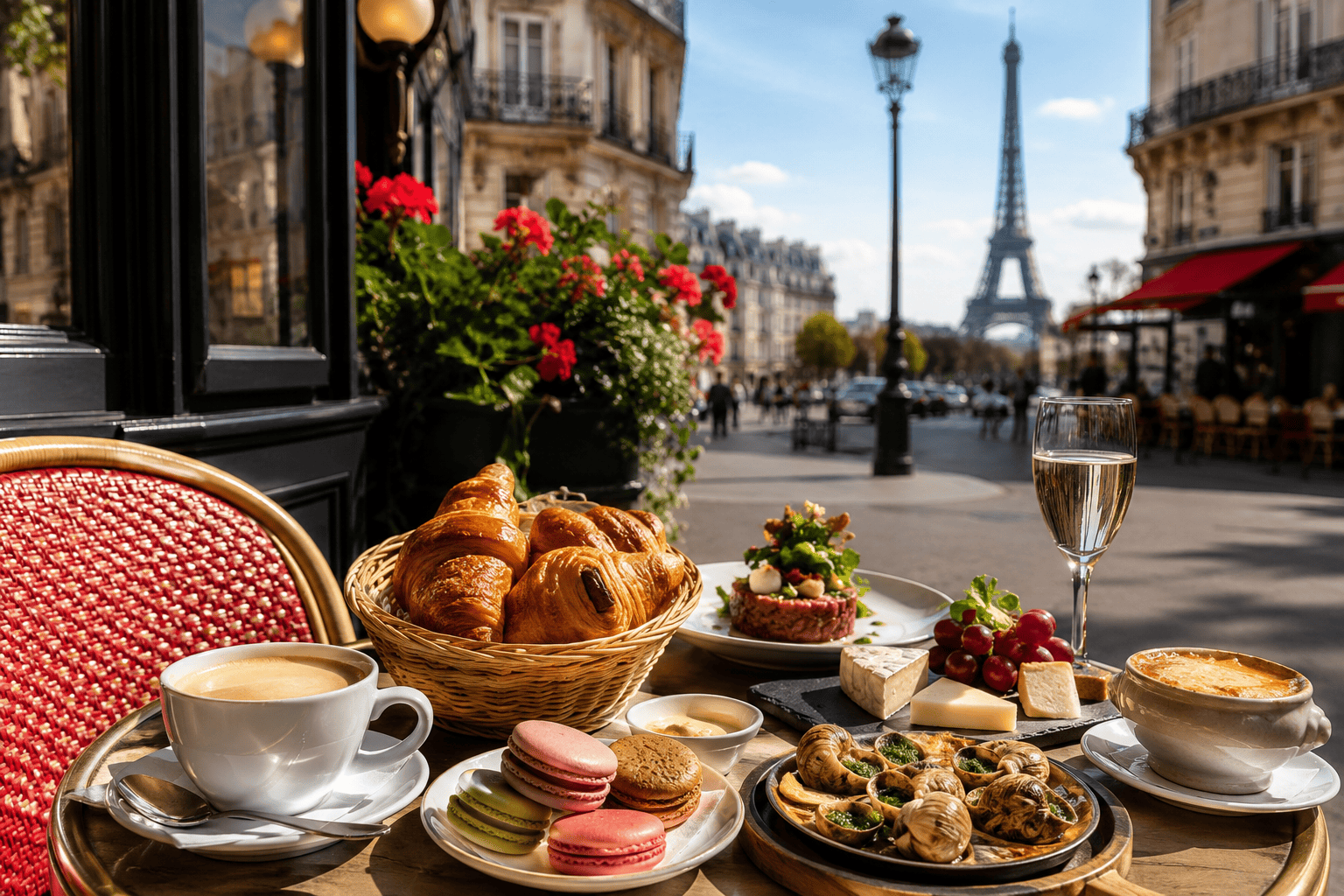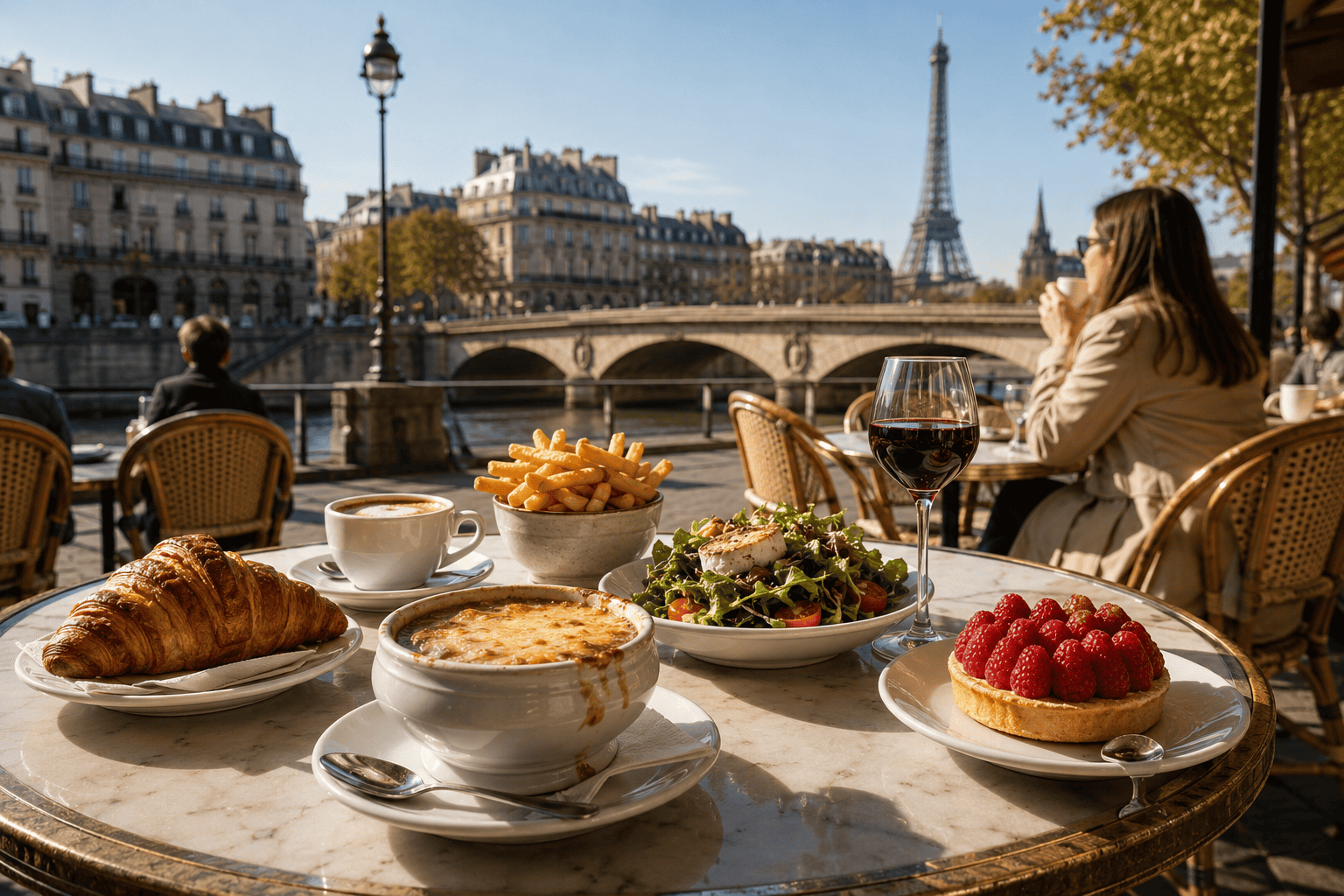
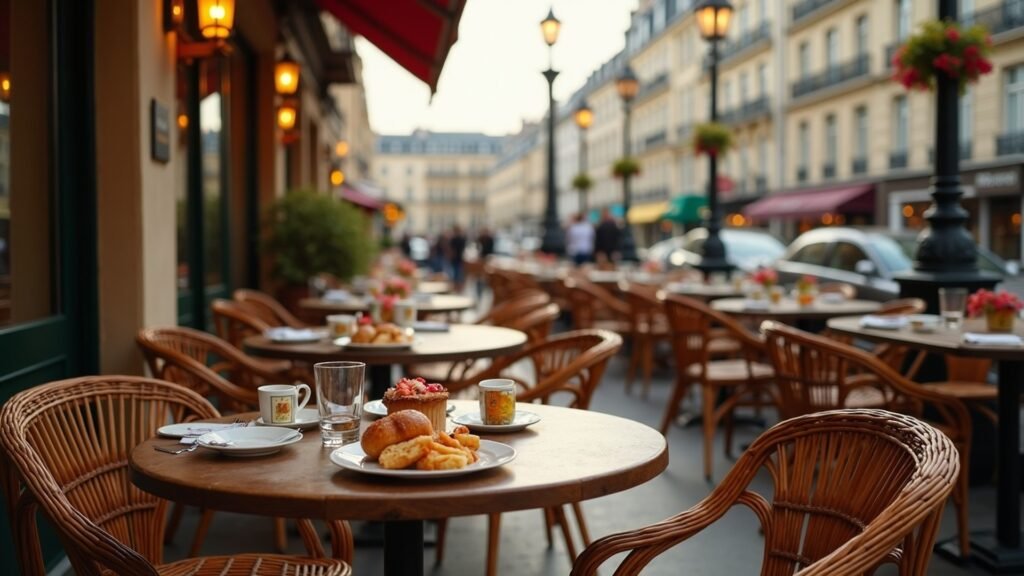
Parisian café terrace, Paris food guide

Paris Food Guide 2026: What to Eat, Where & What to Pay

Paris Food Guide: What to Eat, Where to Go, and What to Pay

Paris has a justified food reputation. It is also harder to navigate than most travel writing admits. The restaurants nearest the Eiffel Tower and along Rue de Rivoli are expensive and mediocre — designed for visitors who will never come back and have no way to compare. The food worth eating is 2–3 streets back from any major sight. This guide closes that gap.

By Mara Vale for Eurly

How this guide was built: neighbourhood recommendations, prices, and venue quality verified through on-the-ground visits in April 2026 and cross-referenced against current opening status.

Last verified: 2026-04-18

Paris food vocabulary

You will see these words on every street and menu. Knowing what each one means makes the decision at any given door much faster.

Boulangerie — bread and pastry shop. The non-negotiable morning stop. Every Paris neighbourhood has one within 200 metres. Croissant: €1.30–1.80. Baguette: €1.10–1.30. Pain au chocolat: €1.50–1.80. Buy here, not at your hotel.

Café — coffee and light snacks, open from around 7am. Espresso: €2.50–3.50. Grand crème (the French equivalent of a café au lait): €3.50–5. Parisians drink coffee standing at the bar — it is cheaper than seated at the terrace. The terrace price premium exists because you are paying for the chair and the view, not better coffee.

Brasserie — large, busy, open all day. Set lunch menu: €16–25 for two courses. Dinner: €30–50 per person. The food is steak frites, moules marinières, croque monsieur, soupe à l’oignon. Reliable and honest. Not fine dining, not a trap.

Bistro — smaller, more personal, often a handwritten blackboard menu that changes daily. Lunch formule (set menu): €14–20. Dinner: €35–55 per person with wine. This is the Paris restaurant experience most first-time visitors are looking for. A good neighbourhood bistro at lunch is the best-value meal in the city.

Restaurant gastronomique — fine dining. €60–150+ per person. Book 2–4 weeks ahead for anything with a name.

Cave à manger — wine bar that serves food. Charcuterie and cheese plates: €15–25. Natural wine by the glass: €7–12. The most relaxed format in Paris eating, and the easiest way to have a good evening with no booking pressure.

What to eat

Traditional French boulangerie window display with baguettes and pastries, Paris
A neighbourhood boulangerie — baguettes, croissants, and pain au chocolat for €1–3

Croissant — eat it at the neighbourhood boulangerie on your morning walk, not at a café where it has been sitting. A good croissant is deeply layered, shatters when you bite it, and leaves crumbs on your shirt. That is what you are looking for.

Steak frites — a properly cooked entrecôte with thin, crispy frites at a bistro. Order it à point (medium). Do not order it well done (bien cuit) — the bistro will cook it correctly only if you let them.

Croque monsieur — toasted ham and cheese with béchamel on top. €8–12 at any café. One of the most satisfying cheap lunches in Paris when done properly.

Soupe à l’oignon — French onion soup. Best in autumn and winter. A classic brasserie order. Sweet, rich, with a gruyère-crusted crouton on top.

Crêpes — sweet crêpes from a street crêperie: Nutella, salted caramel, jam, €4–7. Galettes (savoury crêpes from Brittany, buckwheat flour, ham and egg) at a crêperie restaurant: €8–12. The galette is a better meal.

Falafel — L’As du Fallafel at 34–36 Rue des Rosiers in Le Marais is the Paris institution. €7–8 for a stuffed pita, cash only, queue outside at lunch. Worth the queue.

Macarons — Ladurée (original location on Rue Royale) and Pierre Hermé are the two names. €2.50–3 per macaron, €25–30 for a box. This is more ritual than it is food, but it is a Paris ritual worth doing once.

Cheese — any fromagerie will let you taste before buying. A 200g piece of Comté, Brie de Meaux, or Époisses costs €4–8. Add a baguette and some fruit from the market and you have a better lunch than anything you will find in a tourist restaurant for three times the price.

By neighbourhood

Market stalls on Rue Mouffetard in the Latin Quarter, Paris
Rue Mouffetard in the Latin Quarter: one of Paris’s best food market streets

Le Marais (3rd and 4th arrondissements)

The most food-dense neighbourhood in central Paris that has not been taken over entirely by tourism.

  • Marché des Enfants Rouges (39 Rue de Bretagne) — Paris’s oldest covered market, open Tuesday to Sunday. Moroccan, Japanese, French, and Lebanese stalls. Arrive by 11:30am for a lunch stall before the queues form.
  • L’As du Fallafel (34–36 Rue des Rosiers) — see above. Cash only. Queue at lunch.
  • Breizh Café (109 Rue Vieille-du-Temple) — the best crêperie in Paris. Galettes with serious sourced fillings, buckwheat pancakes cooked properly. Book ahead for dinner.
  • Café de la Mairie (8 Place Saint-Sulpice) — technically in Saint-Germain crossover territory, a genuine neighbourhood café with no tourist markup.

Saint-Germain-des-Prés (6th arrondissement)

Expensive overall but with specific places worth the price.

  • Brasserie Lipp (151 Boulevard Saint-Germain) — the classic literary brasserie. Book ahead. Choucroute, andouillette, sole meunière. This is the version of Paris brasserie dining that has the full ceremony.
  • Bouillon Racine (3 Rue Racine) — art nouveau dining room, honest brasserie food at prices that are fair for the setting. One of the best-value rooms in Paris.
  • Rue de Buci — morning market street, open daily. Good for buying fruit, cheese, and bread before a museum morning.

Montmartre (18th arrondissement)

Rue Lepic is the market street — cheesemakers, butchers, fishmongers. Buy here, eat in the neighbourhood, avoid the overpriced restaurants on Place du Tertre near Sacré-Cœur.

  • Café des Deux Moulins (15 Rue Lepic) — the café from the film Amélie. It is a real, functional neighbourhood café with normal prices. Not a shrine, just a good coffee stop.
  • Paloma (27 Rue Durantin) — natural wine bar, charcuterie and cheese plates, no booking required most evenings. The right format for a Montmartre evening.

Bastille and 11th arrondissement

The best neighbourhood in Paris for affordable, serious bistro cooking. Chefs from established restaurants have been opening their own places here for twenty years. The density of good bistros per street is higher than anywhere else in the city.

  • Rue de Charonne and Rue Oberkampf — walk either street at dinner time and choose by what is on the blackboard.
  • Marché d’Aligre (Place d’Aligre) — open Tuesday to Sunday morning. The best food market in Paris. Cheaper and more local than the famous Rue Mouffetard. Arrive before 12pm.

Near the Louvre and 1st arrondissement

The Louvre neighbourhood is mostly a food desert at the tourist level. The good options require knowing where to look.

  • Café Marly (93 Rue de Rivoli) — expensive, but the terrace looks into the Louvre courtyard. Useful for one drink at the right moment, not for a meal.
  • Verjus (52 Rue de Richelieu) — modern French, serious cooking, book 2–3 weeks ahead for dinner. The bar menu is available without a reservation.
  • Frenchie (5 Rue du Nil, 2nd arrondissement) — one of the most booked bistros in Paris. Book several weeks ahead. The wine bar next door (Frenchie Bar à Vins) takes walk-ins.

What to avoid

  • Any restaurant with photographs of the dishes on the menu near a major tourist sight. These menus are designed for one-time visitors with no frame of reference for pricing.
  • Rue de Rivoli food options between the Louvre and the Marais. The brasseries on this stretch are almost entirely designed around tourist traffic.
  • Cafés directly on the square in front of Notre-Dame charge double the going rate for coffee. Walk one block in any direction.
  • Any restaurant in the Eiffel Tower area with an English-language name implying French food. “La Belle France Bistro” exists to take €35 from someone who will leave Paris the next morning.

Budget reality

Interior of a classic Parisian bistro with zinc bar and tiled floor
A traditional bistro interior — the zinc bar, tiled floor, and chalkboard menu

| Meal type | What you pay |

| — | — |

| Boulangerie breakfast (coffee + croissant) | €4–6 |

| Market picnic lunch (baguette + cheese + fruit) | €7–12 |

| Café lunch set menu (formule, 2 courses) | €14–20 |

| Mid-range bistro lunch | €20–30 |

| Mid-range bistro dinner (3 courses + wine) | €45–70 per person |

| Fine dining | €80–150+ per person |

The picnic lunch deserves special mention. A baguette from the boulangerie, a wedge of cheese from the fromagerie, and fruit from the market or Monoprix costs €7–12 and is the most Parisian lunch you can have. It is also significantly better than a mediocre €25 tourist brasserie meal.

FAQ

What is the most famous Paris food?

The croissant is the most universally recognised Paris food and the easiest one to eat well — buy it from a neighbourhood boulangerie in the morning. For a full meal, steak frites at a bistro is the dish that defines the Paris dining experience for most visitors.

Where do locals eat in Paris?

In their neighbourhood bistro at lunch (set menu, two courses, €14–20), at the local boulangerie for breakfast, and from the market for anything they cook at home. The Bastille and 11th arrondissement has the highest concentration of good neighbourhood bistros accessible to visitors without a literary connection to a specific table.

Is Paris food expensive?

It depends entirely on where you eat. A boulangerie breakfast costs €4–6. A bistro lunch formule is €14–20 — that is a complete two-course meal with good cooking. The expensive version of Paris food (fine dining, tourist brasseries near major sights) is expensive. The affordable version is extremely good value.

What should I eat on my first trip to Paris?

Start with a croissant from a neighbourhood boulangerie on your first morning — it calibrates your expectations correctly. Then: a bistro lunch (set menu), falafel at L’As du Fallafel, a cheese picnic from a fromagerie, crêpes from a street stall, and one proper bistro dinner with wine. That covers the full range of Paris eating without a single fine-dining reservation.

Are Paris restaurants cash or card?

Most Paris restaurants and cafés accept cards, including contactless. L’As du Fallafel is cash only. Some small neighbourhood bistros prefer cash for smaller bills. Carry €20–30 in cash as a backup, but card is accepted almost everywhere.

Official resources

Next reads

Image prompts

  • Prompt: `Close-up of a Paris boulangerie counter in morning light — croissants, pain au chocolat, and a baguette on a wooden surface, warm natural light, no people, editorial food photography style, shallow depth of field`
  • Alt text: `Morning boulangerie counter with croissants and baguettes in a Paris neighbourhood bakery`
  • Suggested filename: `paris-food-boulangerie-morning.jpg`

Schema

“`html

“`

Share This Guide

Send this page to your travel group or save it for your planning notes.

Scroll to Top