Winged Victory of Samothrace, Louvre Museum Paris

Paris Museums Guide 2026: Which to Visit, Costs & How to Book

Paris Museums Guide (2026): Which to Visit, What to Skip, and How to Book

Paris has more than 130 museums. For a first trip, the decision is not which museums to visit but how many in one day, which require advance booking, and which free options are worth your time.

By Mara Vale for Eurly

How this guide was built: Entry prices, opening days, and booking requirements verified against individual museum official sites and in-person visits in April 2026.

Last verified: 2026-04-18


The Winged Victory of Samothrace: one of the Louvre’s three essential works

The Rule of One

Do not visit more than one major museum per day on a first trip. The Louvre alone takes 3–4 hours and will leave most people too tired to do a second major museum justice. The Paris Museum Pass encourages over-booking — resist it. One great museum experience beats two exhausted ones.


The Big Four (Always Book Ahead)

1. Louvre

Cost: €22 (EU) / €32 (non-EU). Book at louvre.fr — timed entry is required.

Closed: Tuesday.

Free: First Sunday of the month (October–March). Friday evenings for EU residents under 26.

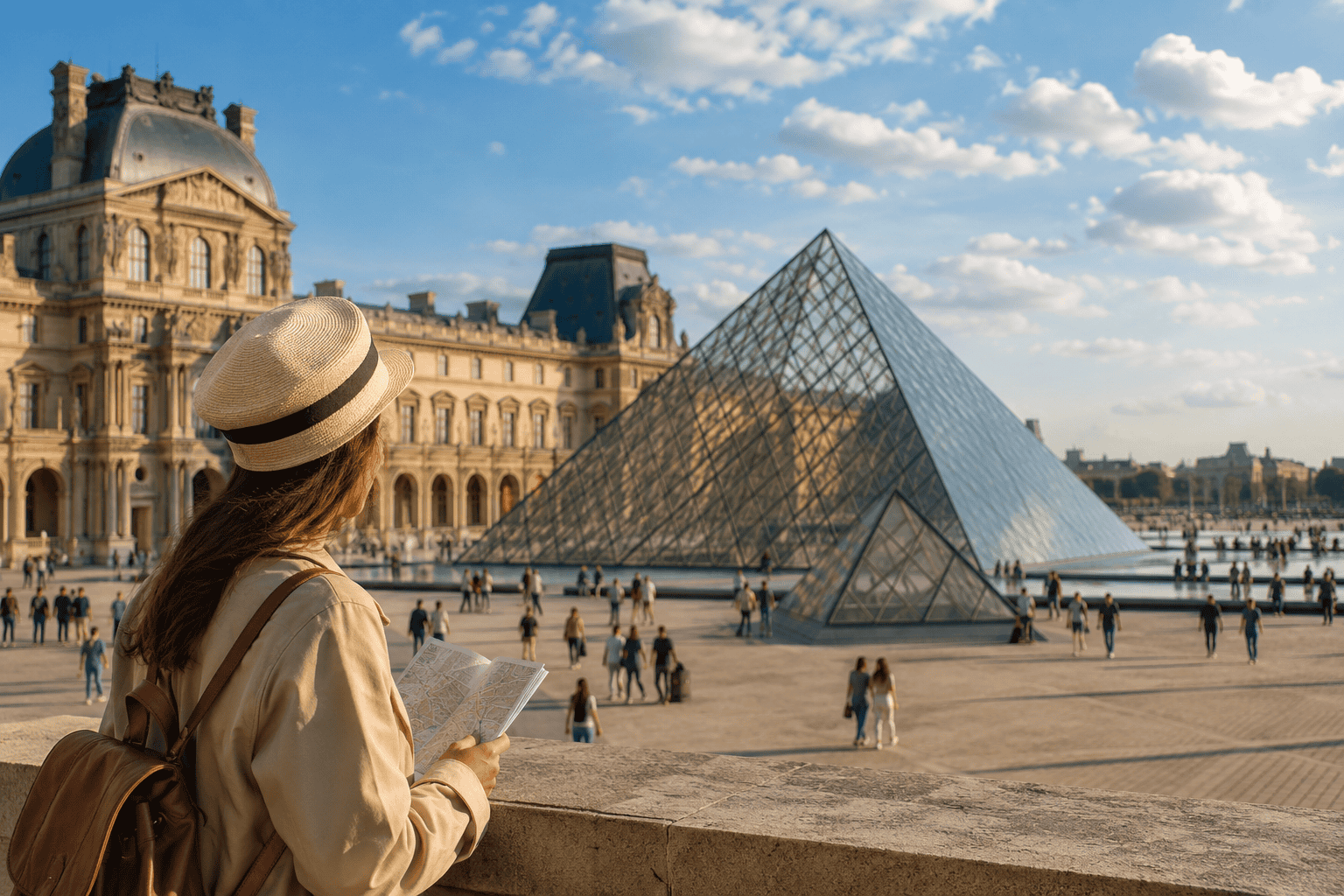
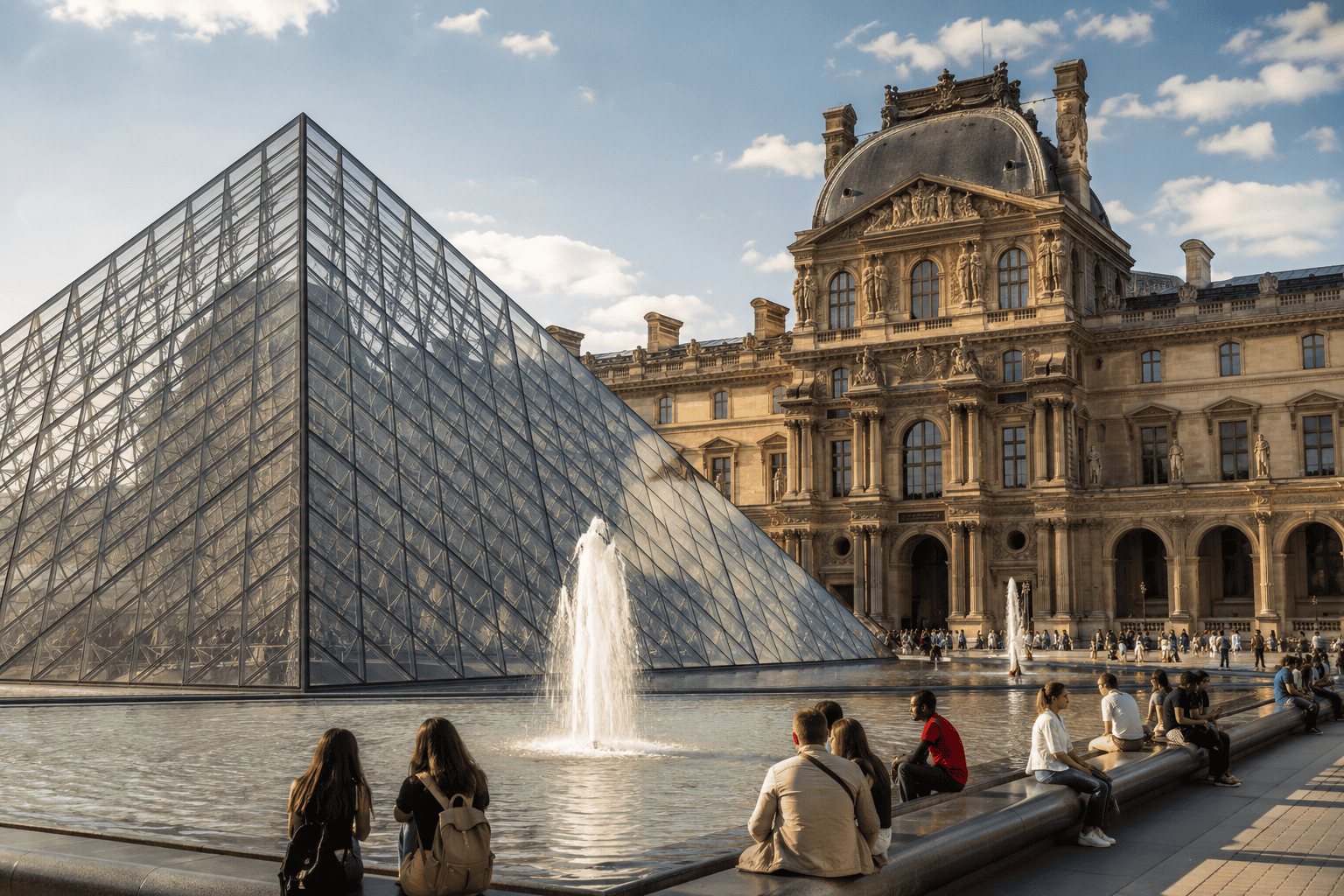
The Louvre is the largest art museum in the world: 72,000 m² of exhibition space across three wings. Do not attempt all of it. The building defeats people who try.

What to prioritise by wing:

  • Denon Wing: Mona Lisa, Venus de Milo, Winged Victory of Samothrace
  • Sully Wing: Egyptian antiquities
  • Richelieu Wing: Dutch masters, French sculpture

The Mona Lisa reality check: The painting is smaller than expected and is always surrounded 3–4 people deep. See it, then move on. The rooms surrounding it — the Grande Galerie with its wall of Italian Renaissance paintings — are less crowded and more beautiful.

Best strategy: Arrive at 9am opening. Go directly to the Winged Victory of Samothrace (top of the Daru staircase, Denon Wing), then Venus de Milo (Sully Wing ground floor), then the Mona Lisa. By the time you reach the Mona Lisa the room is already filling up, but the first two stops will still be quiet.

Allow: 3 hours minimum. 4 hours to see it properly.


2. Musée d’Orsay

Cost: €16. Book at musee-orsay.fr.

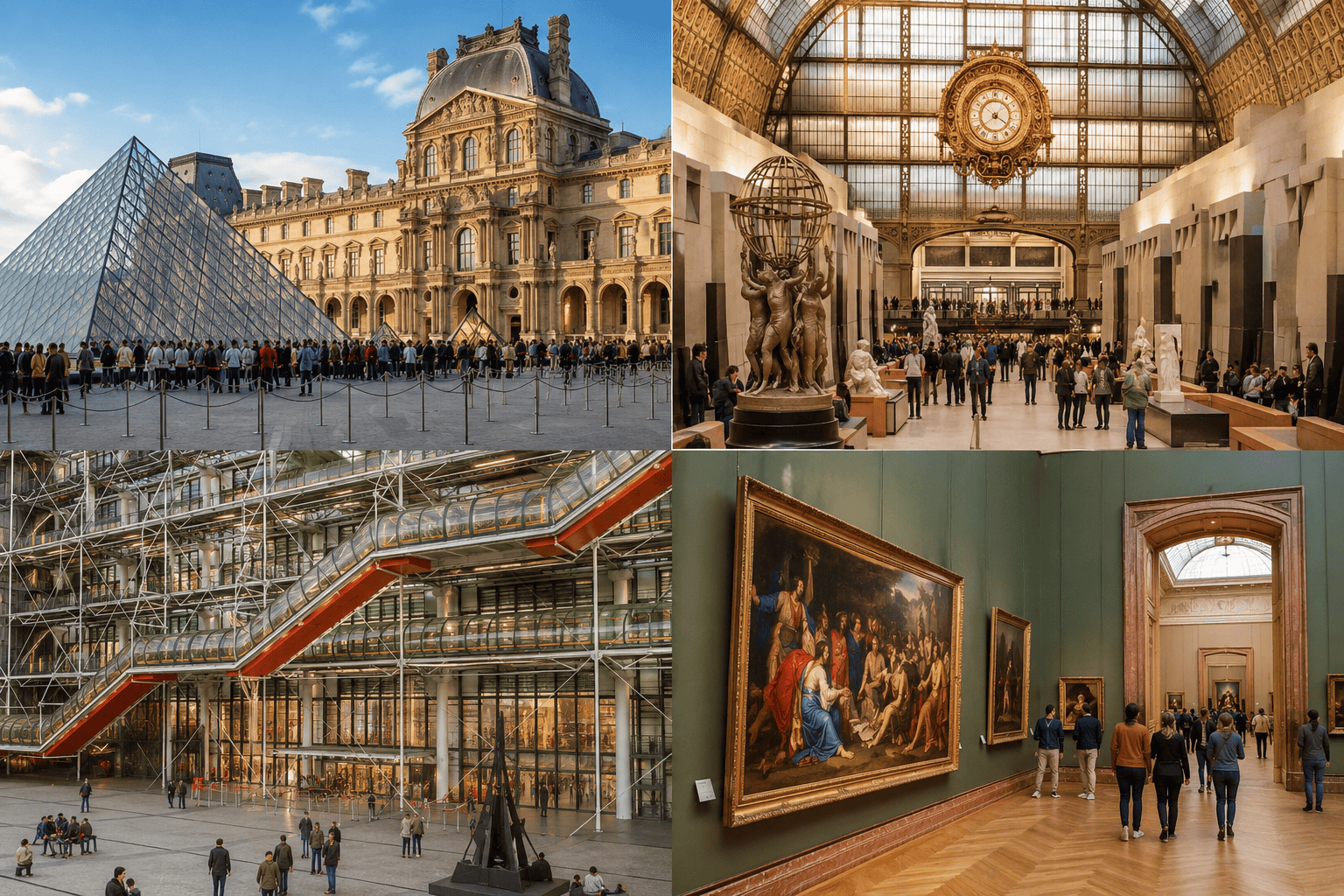
Grande Horloge at Musée d'Orsay, Paris museums guide

Closed: Monday.

Free: First Sunday of the month.

The Musée d’Orsay is a former railway station converted into a museum in 1986. The vaulted glass nave is stunning before you see a single painting — arrive knowing this and look up first.

Collection: Impressionism and Post-Impressionism, 1848–1914. The best Monet series collection in the world. Van Gogh self-portraits. Renoir, Degas, Cézanne, Seurat, Gauguin.

Navigation tip: The major Impressionist rooms are on the top floor. Go there first, before your feet give out.

Allow: 2–3 hours.

Better than the Louvre for: Travellers who prefer painting to ancient objects, anyone on a shorter visit (less overwhelming scale), and anyone looking for more emotional impact per hour spent.


3. [Centre Pompidou](https://www.centrepompidou.fr/en/)

Cost: €15. Book at centrepompidou.fr.

Centre Pompidou exterior, Paris museums guide

Closed: Tuesday.

Free: First Sunday of the month.

The Centre Pompidou shocked Paris when it opened in 1977 — a building with its structure turned inside out, coloured pipes and glass escalators running up the exterior facade. It remains genuinely radical-looking forty years on.

Collection: Modern and contemporary art, 1905 to present. Kandinsky, Matisse, Duchamp, Picasso, Dalí, Warhol, Louise Bourgeois, Sophie Calle, and artists working now.

The plaza is free: The Piazza Beaubourg outside is one of the liveliest public spaces in Paris — street performers, the Stravinsky Fountain (colourful kinetic sculptures by Niki de Saint Phalle and Jean Tinguely), cafés. Worth stopping at even if you don’t go inside.

Allow: 1.5–2.5 hours for the collection. 20 minutes for the building exterior and plaza.


4. Musée de l’Orangerie

Cost: €12.50. Book at musee-orangerie.fr.

Closed: Tuesday.

The reason to come: Monet’s eight enormous Water Lilies panels in two oval rooms that Monet himself designed and oversaw. The scale of the paintings — each panel running to several metres — and the quality of the diffused light through the oval skylights make this one of the most calming and complete art experiences in Paris.

Downstairs: A strong permanent collection including Cézanne, Renoir, Matisse, and Picasso from the 1910s–1930s.

Allow: 45–60 minutes.

Best combined with: A walk through the adjacent Tuileries Garden (free) and a Louvre visit on the same day. The Orangerie is at the western end of the Tuileries; the Louvre is at the eastern end.


The Second Tier (Easy or No Booking Needed)

Grande horloge clock face at the Musée d'Orsay with view of Paris through the glass, Paris
The Musée d’Orsay clock: one of the iconic views inside the former railway station

5. Musée Rodin — €14 (Garden only: €5)

An 18th-century mansion and garden in the 7th arrondissement. The Thinker sits in the garden. The Kiss is inside. One of the most pleasant museum atmospheres in Paris — unhurried, personal, beautiful on a clear day.

The garden-only ticket at €5 is exceptional value on good weather days. Bring a coffee from the café and spend an hour with the sculpture outside.

Allow: 1.5 hours.


6. Musée Picasso Paris — €14

Housed in the Hôtel Salé, a 17th-century mansion in Le Marais. The largest Picasso collection in the world — over 5,000 works including paintings, sculptures, drawings, and ceramics.

Closed: Monday.

Good for: Picasso fans and anyone spending a day in Le Marais. Combine with Marché des Enfants Rouges (Paris’s oldest covered market, free to enter, excellent lunch options) two minutes’ walk away.

Allow: 1.5–2 hours.


7. Musée des Arts Décoratifs — €14

Connected to the Louvre’s Richelieu wing but separately ticketed. The collection covers decorative arts, fashion and textiles, jewellery, toys, advertising, and graphic design from the medieval period to now.

Good alternative: On days when the Louvre feels overwhelming but you still want to be inside the Palais du Louvre building. Far less crowded than the Louvre, and the fashion and design galleries are genuinely world-class.


8. Palais de Tokyo — €12

Contemporary art, experimental and regularly challenging. Closed Tuesday.

The Palais de Tokyo shows work that is current and often unresolved — the opposite of the Louvre’s certainties. One of the few Paris institutions that consistently shows artists working outside established art-world consensus.

Best for: Art-world followers, those who found Pompidou too canonical, anyone who wants to see what European artists are making right now.


Free Museums (Permanent Collections)

Centre Pompidou exterior with coloured pipes and escalators, Beaubourg, Paris
The Centre Pompidou: extraordinary exterior on the Place Georges Pompidou in Beaubourg

9. Musée Carnavalet — FREE

The history of Paris from prehistoric settlements to the 20th century, housed in two linked Renaissance townhouses in Le Marais. Marcel Proust’s reconstructed bedroom is here, along with room-sized installations recovered from demolished Parisian buildings.

One of the best free museums in Europe. Severely undervisited by tourists, which makes it better.


10. Petit Palais — FREE (permanent collection)

Built for the 1900 World Exhibition, the Petit Palais holds a fine arts collection spanning Greek and Roman antiquities, medieval objects, Flemish paintings, and 19th-century French art. The building itself — a jewel-box of mosaics, columns, and a glass-roofed garden courtyard — is worth the visit on its own.

The courtyard café is pleasant and reasonably priced. No reservation needed.


11. Musée Cognacq-Jay — FREE

18th-century decorative arts and painting in Le Marais. Small, deeply personal, almost always quiet. One room holds early Rembrandt drawings that are rarely promoted and almost never crowded. This is the most underrated free museum in Paris.


12. Maison de Victor Hugo — FREE (permanent collection)

Victor Hugo’s apartment on the Place des Vosges, decorated largely as he left it. The rooms Hugo designed and decorated himself — particularly the Chinese salon — are extraordinary and unlike anything else in Paris.


Free Entry on First Sunday (October–March)

Most national museums are free on the first Sunday of the month, including the Louvre, Musée d’Orsay, Pompidou, Musée Rodin, Musée de l’Orangerie, and Musée Picasso Paris. Check individual museum sites — some require a reservation even for free entry days. The Louvre on a free Sunday is genuinely packed; arrive before 9am or accept the crowds.


The Paris Museum Pass — Honest Analysis

Prices: 2-day €55 · 4-day €70 · 6-day €85

Covers: 50+ museums and monuments including the Louvre, Musée d’Orsay, Centre Pompidou, Palace of Versailles, Sainte-Chapelle, Musée Rodin, Musée de l’Orangerie, Musée Picasso Paris, Musée de l’Armée, and more.

Does NOT cover: Eiffel Tower, Notre-Dame tower climb, most temporary special exhibitions.

Does NOT automatically skip queues: You still need timed-entry reservations at the Louvre and Musée d’Orsay even with the pass. The pass covers the cost of admission but not the timeslot. Book your entry times in advance on each museum’s own website, then present the pass at the door.

When the 2-day pass (€55) breaks even:

  • Louvre €32 + Orsay €16 + Sainte-Chapelle €13 = €61 non-EU (EU: €51) — the 2-day pass (€55) pays off with just these three museums for non-EU visitors
  • Add Pompidou €15 = €66 total. Clear winner.
  • Louvre + Orsay only = €38. Pass is a loss.

Who should buy the pass: Anyone visiting 3 or more paid museums within a 2-day window. Museum-focused travellers on 4+ night stays. Anyone planning to include Versailles (€21.50 alone) in their itinerary.

Who should not buy the pass: Travellers visiting one museum per day (cheaper to buy individually). Anyone who was already feeling tired by day 2 of a previous trip — the pass creates psychological pressure to visit museums you don’t actually want to see.

Where to buy: parismuseumpass.fr, FNAC stores, tourist offices, and at participating museums. Do not buy from street touts — counterfeits exist.


FAQ

Which Paris museum is best for a first visit?

The Musée d’Orsay. It is smaller than the Louvre, the collection is more focused (Impressionism and Post-Impressionism only), and the building — a converted railway station — is spectacular. Three hours here will leave most visitors satisfied, not overwhelmed. Visit the Louvre on day two when you have more energy and time.

Do I need to book Paris museums in advance?

The Louvre and Musée d’Orsay require advance timed-entry reservations. Without a reservation you will not be admitted, even with a Paris Museum Pass. Book directly at louvre.fr and musee-orsay.fr. Centre Pompidou, Musée Rodin, and Musée de l’Orangerie also recommend advance booking during peak season (April–August) but are easier to access on the day.

Is the Paris Museum Pass worth it?

Buy it if you are visiting 3 or more paid museums within a 2-day period. Do not buy it if you plan to visit one museum per day — you will spend more than buying tickets individually. The pass does not skip queues at the Louvre or Orsay; you still need a timed-entry reservation from each museum’s website.

What are the free museums in Paris?

The permanent collections at Musée Carnavalet, Petit Palais, Musée Cognacq-Jay, and Maison de Victor Hugo are always free. Most national museums (Louvre, Orsay, Pompidou, Rodin, Orangerie, Picasso) are free on the first Sunday of the month from October to March. Some require a reservation even on free days.

Louvre or Musée d’Orsay — which is better?

They are not interchangeable. The Louvre holds ancient civilisations, Renaissance painting, and sculpture across three enormous wings — plan 4 hours and arrive with energy. The Musée d’Orsay holds French and European art from 1848–1914 — Impressionism, Post-Impressionism, Art Nouveau — in a building that is itself a work of art. Visit the Orsay first on a shorter trip. Visit both if you have 2 full days.

How much do Paris museums cost?

Prices for major Paris museums: Louvre €22 (EU) / €32 (non-EU), Musée d’Orsay €16, Centre Pompidou €15, Musée Rodin €14 (garden only €5), Musée Picasso €14, Musée de l’Orangerie €12.50, Sainte-Chapelle €13. Permanently free: Musée Carnavalet, Petit Palais permanent collection, Musée Cognacq-Jay, Maison de Victor Hugo. The 2-day Paris Museum Pass (€55) covers the Louvre, Orsay, Pompidou, Rodin, and most other paid museums — it pays off if you visit 3+ paid museums in a 2-day window. See the full analysis at our Paris Museum Pass guide.


Official resources


Next reads


Image prompts

  • Prompt: `Interior of Musée d’Orsay vaulted railway station nave, warm golden afternoon light streaming through arched glass ceiling, impressionist paintings on lower walls, no people, ultra-realistic architectural photography`
  • Alt text: `Musée d’Orsay interior showing the vaulted glass nave of the former railway station`
  • Suggested filename: `paris-musee-dorsay-interior-nave-2026.jpg`

Schema

“`html

“`

Share This Guide

Send this page to your travel group or save it for your planning notes.

Scroll to Top