

Paris vs Rome is one of the biggest decisions for a first Europe trip. Paris is famous for grand boulevards, world-class museums, café culture, fashion, and romantic views, while Rome captivates visitors with ancient ruins, lively piazzas, historic churches, and unforgettable Italian food. The best choice depends on your budget, interests, and the type of European experience you want.
For more Rome planning advice, see our 3 Days in Rome: A Realistic Itinerary for First-Time Visitors and 5 Days in Rome: A Realistic Itinerary for First-Time Visitors.
Last updated: 2026-04-25
Paris vs Rome: Quick Comparison
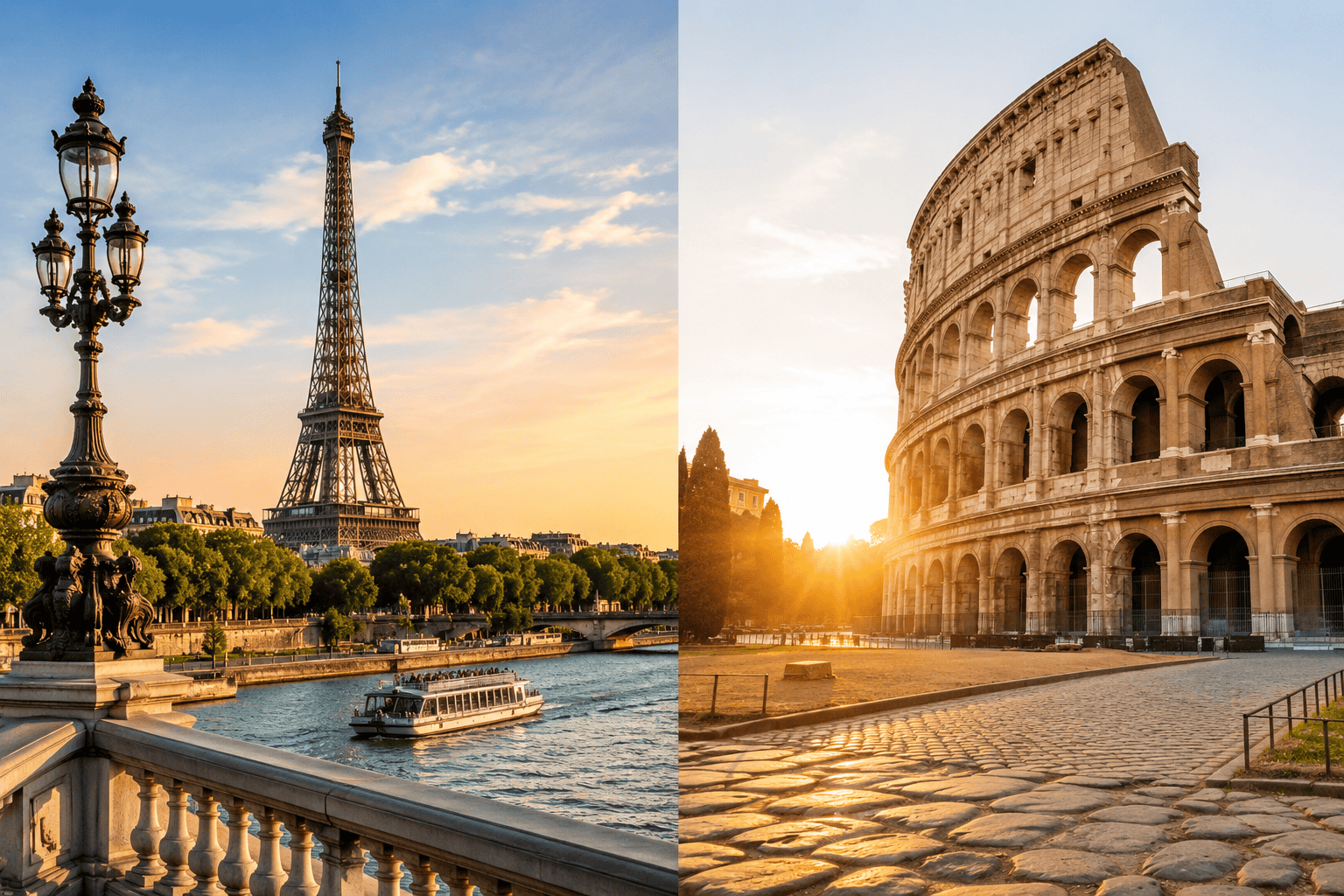
| Category | Paris | Rome |
|---|---|---|
| Best for | Art, museums, fashion, cafés, and architecture | Ancient history, ruins, piazzas, churches, and Italian cuisine |
| Getting around | Extensive metro and public transport | Compact historic center with more walking |
| Atmosphere | Elegant, polished, and cosmopolitan | Historic, lively, and relaxed |
| Food highlights | Pastries, cheese, wine, bistros, and fine dining | Pasta, pizza, gelato, espresso, and trattorias |
| Ideal trip length | 3–5 days | 3–5 days |
| Best first choice for | Museum lovers and classic European city breaks | History enthusiasts and food-focused travelers |
Choose Paris First If You Want Art, Style, and Classic Europe
Paris is an excellent first destination if you picture Europe as elegant boulevards, famous museums, riverside walks, and iconic landmarks. Highlights including the Eiffel Tower, the Louvre, Montmartre, Notre-Dame, and the Seine create a memorable first impression.
Paris also offers one of Europe’s best public transport systems, making it easier to reach major attractions without relying on taxis.
Choose Rome First If You Want History, Food, and Ancient Landmarks
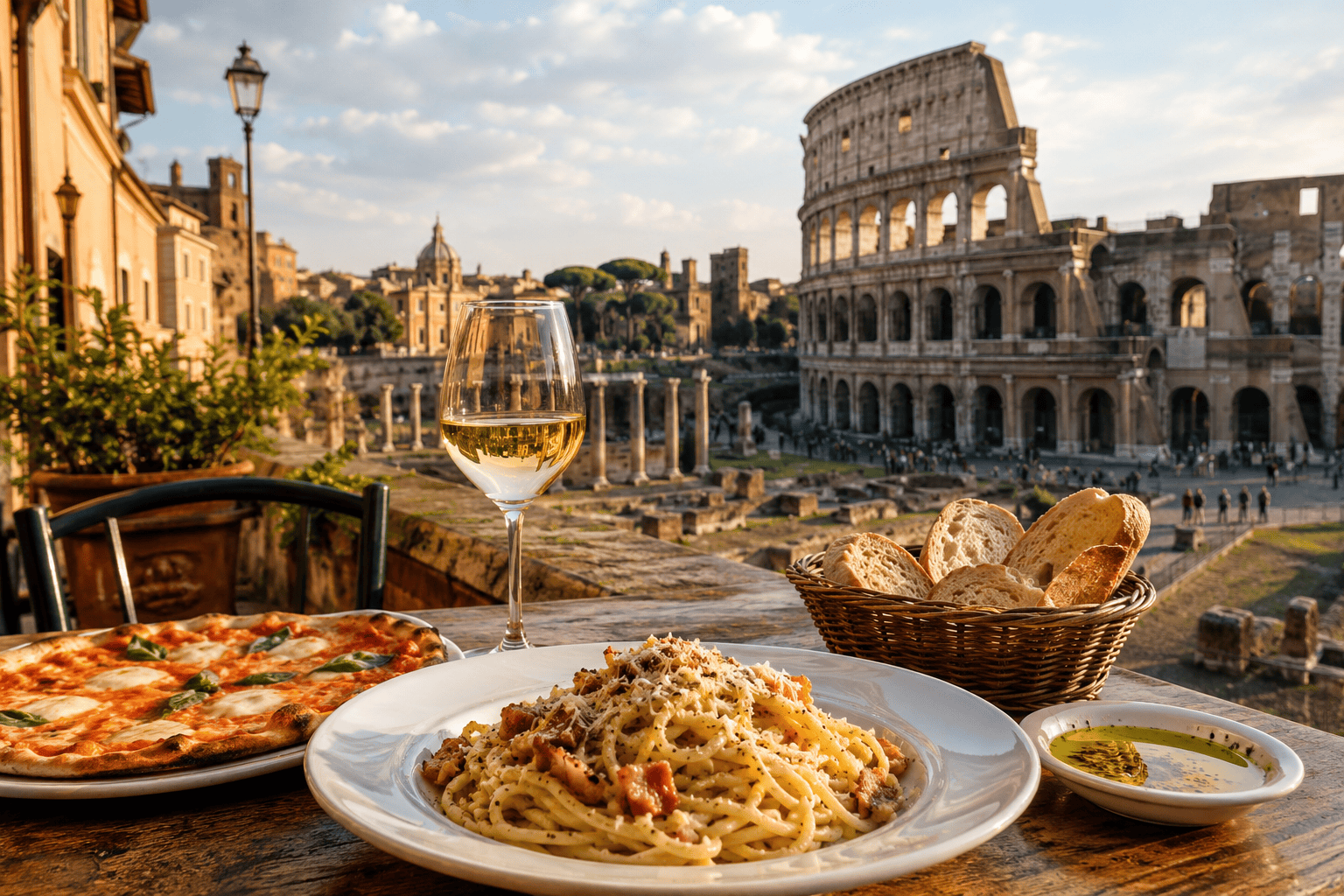
Rome feels like an open-air museum. The Colosseum, Roman Forum, Pantheon, Trevi Fountain, Vatican City, and countless historic streets create one of Europe’s richest sightseeing experiences.
The city is equally appealing for food lovers, with traditional pasta dishes, pizza, espresso bars, and neighborhood trattorias found throughout the historic center.
Which City Is Easier for First-Time Visitors?
For most first-time visitors, Paris is slightly easier to navigate thanks to its comprehensive metro network and clearly organized neighborhoods. Rome is more chaotic but rewards travelers who enjoy exploring on foot and discovering hidden squares along the way.
Paris vs Rome for Sightseeing
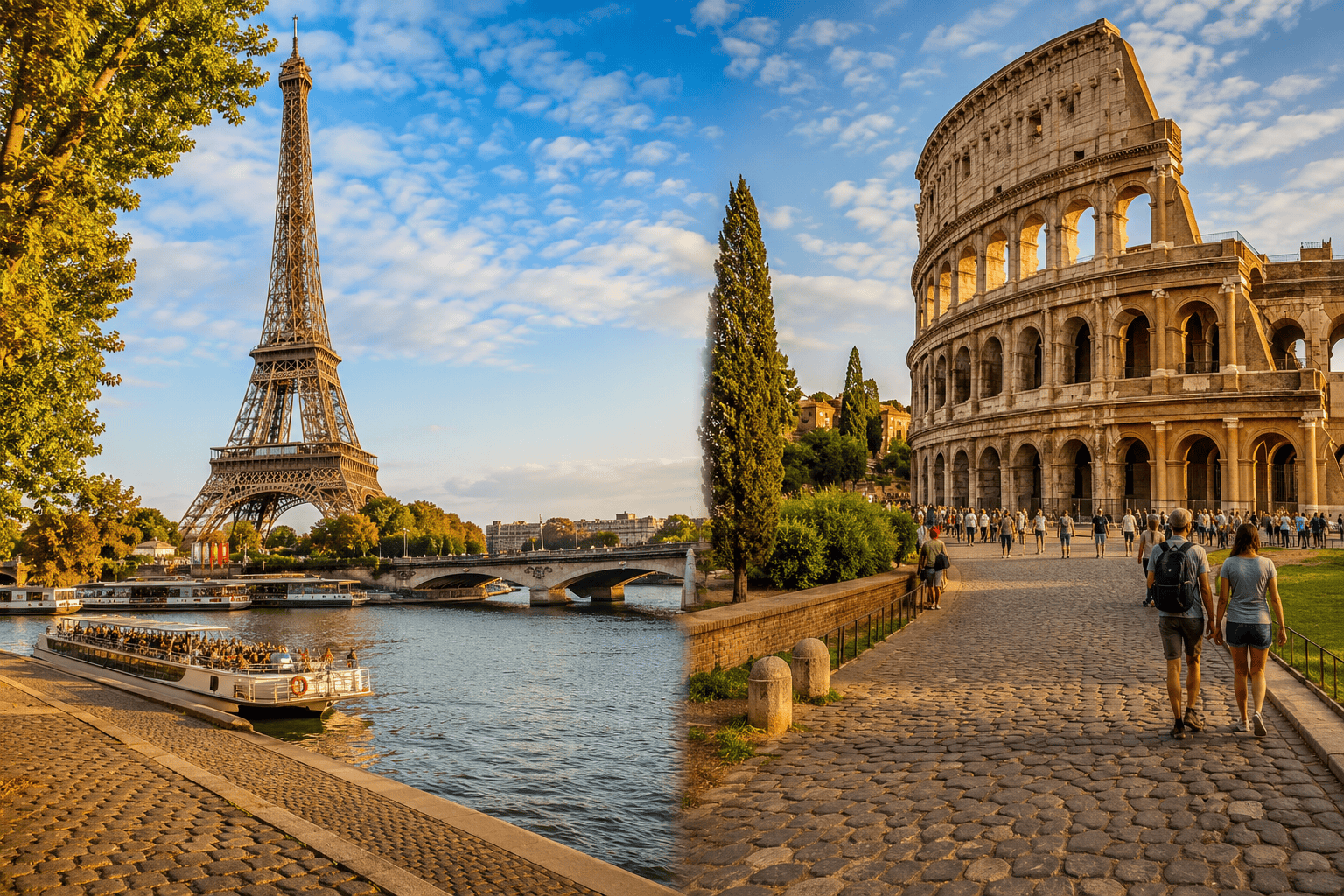
Both cities rank among Europe’s greatest destinations, but they offer different experiences.
| Travel Priority | Better Choice | Reason |
|---|---|---|
| World-famous museums | Paris | The Louvre and Musée d’Orsay are among the world’s finest. |
| Ancient history | Rome | The Colosseum, Forum, and Pantheon are unmatched. |
| Romantic scenery | Paris | The Seine, bridges, and Eiffel Tower define the skyline. |
| Historic wandering | Rome | Ruins, fountains, churches, and piazzas appear throughout the city. |
| Café culture | Paris | Traditional cafés and bakeries are central to everyday life. |
| Outdoor dining | Rome | Relaxed trattorias and piazza dining are easy to find. |
Paris vs Rome for Food
Comparing Paris vs Rome for food comes down to personal preference. Paris offers exceptional bakeries, markets, cheese, wine, and fine dining, while Rome is celebrated for simple regional cooking, pasta, pizza, gelato, and espresso.
Rome often feels easier for affordable casual meals, while Paris provides greater culinary variety.
Paris vs Rome for Cost
Neither city is inexpensive, particularly during peak travel seasons. Paris generally has higher hotel prices, while Rome often offers slightly better value for casual dining and accommodation outside the busiest tourist areas. Booking well in advance helps reduce costs in both destinations.
Paris vs Rome for Couples, Families, and Solo Travelers
Paris is often the favorite for couples seeking romantic walks, museums, and elegant neighborhoods. Rome appeals to travelers who enjoy history, lively public squares, and relaxed meals. Families and solo travelers can have an excellent experience in either city, although Paris usually feels easier to organize while Rome feels more spontaneous.
How Many Days Do You Need?
Allow at least three full days for either destination. Four or five days lets you explore neighborhoods at a slower pace, visit more museums or historic sites, and enjoy day-to-day city life instead of rushing between attractions.
Which City Should You Visit First?
Choose Paris first if your priorities include museums, architecture, shopping, cafés, and iconic European scenery.
Choose Rome first if ancient history, Italian food, lively piazzas, and archaeological sites are at the top of your list.
Many first-time Europe travelers find Paris slightly easier as an introduction, while Rome often leaves the strongest impression on history lovers.
Final Verdict: Paris or Rome?
There is no wrong choice in the Paris vs Rome debate. Paris offers elegance, world-famous museums, and efficient transport, while Rome delivers remarkable history, vibrant streets, and outstanding Italian cuisine. Pick the city that best matches your interests, or visit both if your itinerary allows enough time.
FAQs About Paris vs Rome
Is Paris or Rome better for a first Europe trip?
Paris is generally easier thanks to its transport system and organized layout, while Rome is ideal for travelers whose priorities are history and Italian food.
Is Paris more expensive than Rome?
Hotels and restaurants in Paris are often more expensive on average, although costs in both cities vary depending on the season and location.
Which city is better for food?
Paris excels in pastries, bakeries, wine, and fine dining, while Rome is renowned for pasta, pizza, gelato, espresso, and traditional trattorias.
Can you visit Paris and Rome on the same trip?
Yes. If you have at least a week or more, combining both cities can work well. For shorter trips, focusing on one destination usually provides a more relaxed experience.
For more destination comparisons and trip planning advice, browse more travel guides on this site. You can also read additional background information on Wikivoyage.

Mara Vale
Mara Vale writes Eurly travel guides for first-time Europe visitors who want practical routes, realistic pacing, and fewer avoidable planning mistakes.
Eurly guides are written to help readers make confident travel decisions, but opening hours, ticket rules, transit disruptions, and local conditions can change. Always verify key reservations and official schedules before you travel.