

The best Paris neighbourhoods for first time visitors combine central locations, easy public transport, excellent dining, and convenient access to the city's top attractions. This guide compares seven of the best areas to stay, including Le Marais, Saint-Germain-des-Prés, the Latin Quarter, and Montmartre, so you can choose the neighbourhood that best matches your travel style and budget.
For more planning advice, see our 3 Days in Paris: A Realistic Itinerary for First-Time Visitors (2026), Paris Travel Guide for First-Time Visitors, and our guide to where to stay in Paris.
Quick Takeaways
Start here: The best Paris neighbourhoods for first time visitors combine central locations, easy public transport, excellent dining, and convenient access to the city's top attractions.
Planning note: For more planning advice, see our 3 Days in Paris: A Realistic Itinerary for First-Time Visitors (2026), Paris Travel Guide for First-Time Visitors, and our guide to where...
This guide compares the best areas to stay in Paris for first-time visitors, including atmosphere, who each neighbourhood suits best, typical hotel price ranges, and the main advantages and disadvantages.
Last updated: 25 April 2026
Best Paris Neighbourhoods For First Time Visitors: Best Paris Neighbourhoods for First-Time Visitors: Quick Answer
For most travellers, Le Marais is the best Paris neighbourhood for first-time visitors thanks to its central location, walkability, excellent transport links, restaurants, shopping, and lively atmosphere. Saint-Germain-des-Prés suits visitors looking for a classic Paris experience, the Latin Quarter offers better value, while the 7th arrondissement is ideal if staying close to the Eiffel Tower is your priority.
Le Marais (3rd and 4th Arrondissements)
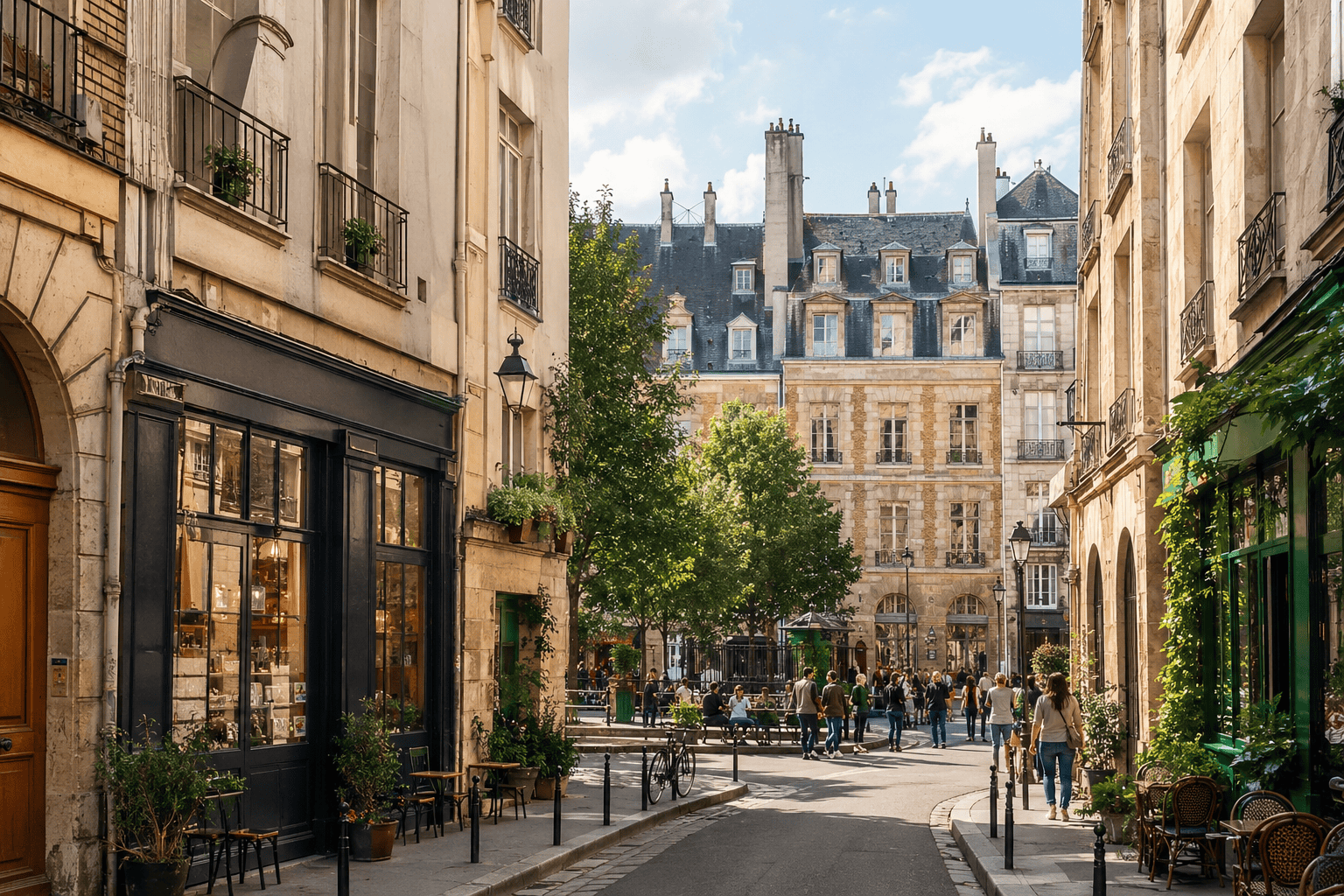
Le Marais is one of the best all-round places to stay in Paris. It combines historic streets, excellent dining, boutique shopping, museums, nightlife, and a highly walkable central location.
Best for: First-time visitors who want atmosphere, walkability, restaurants, shopping, and nightlife.
Pros
- Central location with excellent metro connections.
- Beautiful historic architecture and lively streets.
- Outstanding cafés, bakeries, boutiques, and museums.
- Excellent choice for evenings out.
Cons
- Hotels can be expensive.
- Popular streets become crowded.
- Some areas are noisy late at night.
Typical hotel prices: Mid-range to luxury.
Saint-Germain-des-Prés (6th Arrondissement)
Saint-Germain-des-Prés delivers the classic Left Bank experience with elegant boulevards, famous cafés, galleries, independent bookshops, and easy walking access to the Seine and major museums.
Best for: Couples, café culture, luxury stays, and relaxed sightseeing.
Pros
- Elegant and timeless Parisian atmosphere.
- Excellent restaurants and historic cafés.
- Close to the Seine, Musée d’Orsay, and the Louvre.
- Very walkable with good transport.
Cons
- Among the city’s most expensive neighbourhoods.
- Less nightlife than Le Marais.
Typical hotel prices: Upper mid-range to luxury.
The Latin Quarter (5th Arrondissement)
The Latin Quarter is one of the best-value central neighbourhoods in Paris. Home to the Sorbonne, it combines history, lively cafés, affordable dining, and convenient transport.
Best for: Budget-conscious travellers, students, and younger visitors.
Pros
- Generally more affordable accommodation.
- Large choice of cafés and restaurants.
- Walkable location near many attractions.
- Good metro and RER connections.
Cons
- Some streets feel touristy.
- Can be noisy during evenings.
Typical hotel prices: Budget to mid-range.
The 7th Arrondissement (Eiffel Tower Area)
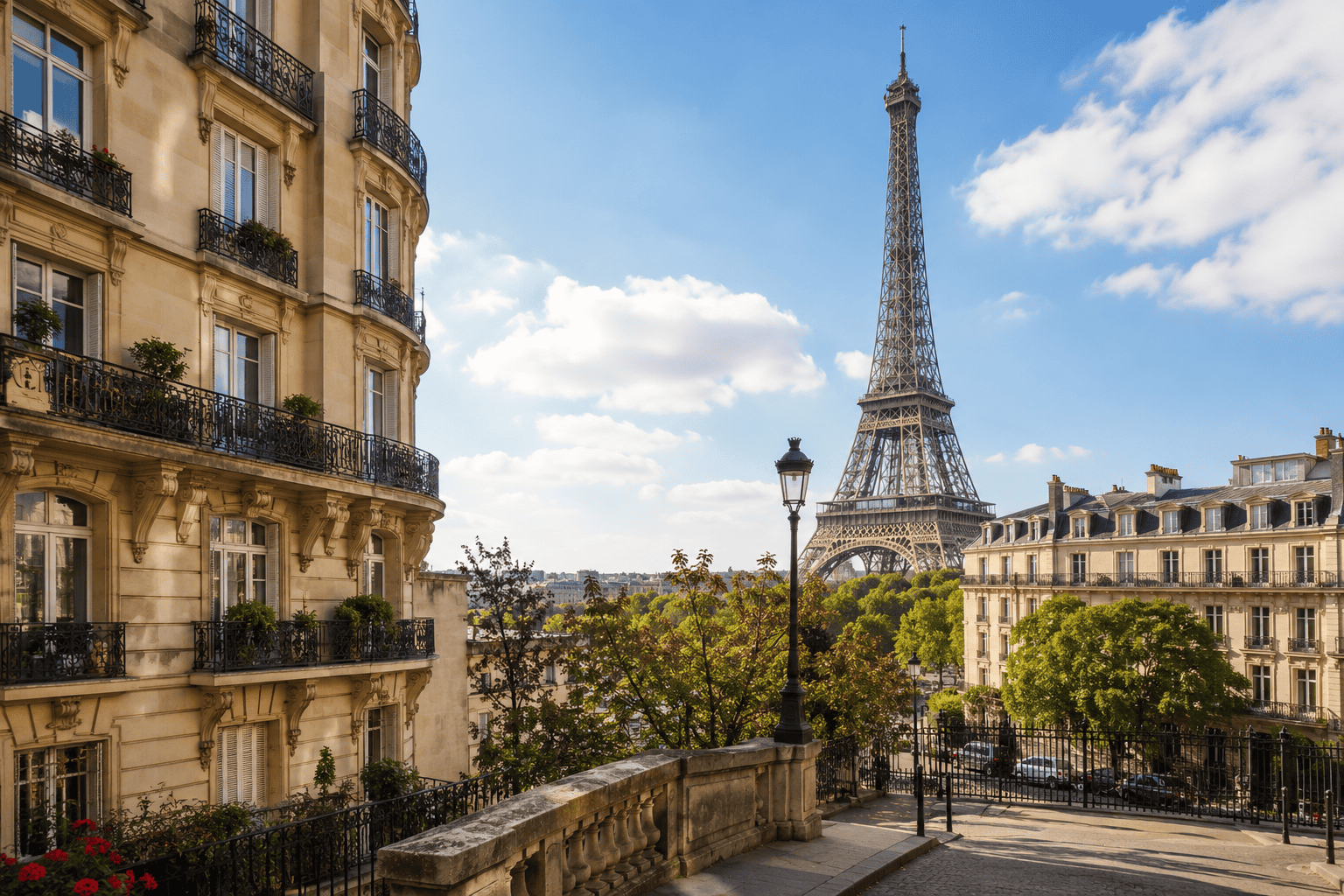
The 7th arrondissement is a favourite for travellers wanting to stay close to the Eiffel Tower, Musée d’Orsay, Les Invalides, and the Seine. It offers a quieter, more residential feel than some central districts.
Best for: Families, luxury travellers, and visitors focused on major landmarks.
Pros
- Safe and peaceful atmosphere.
- Excellent for sightseeing.
- Beautiful residential streets.
- Wide choice of upscale hotels.
Cons
- Limited nightlife.
- Restaurants near major sights can be expensive.
- Less local energy than Le Marais or the Latin Quarter.
Typical hotel prices: Mid-range to luxury.
Montmartre (18th Arrondissement)
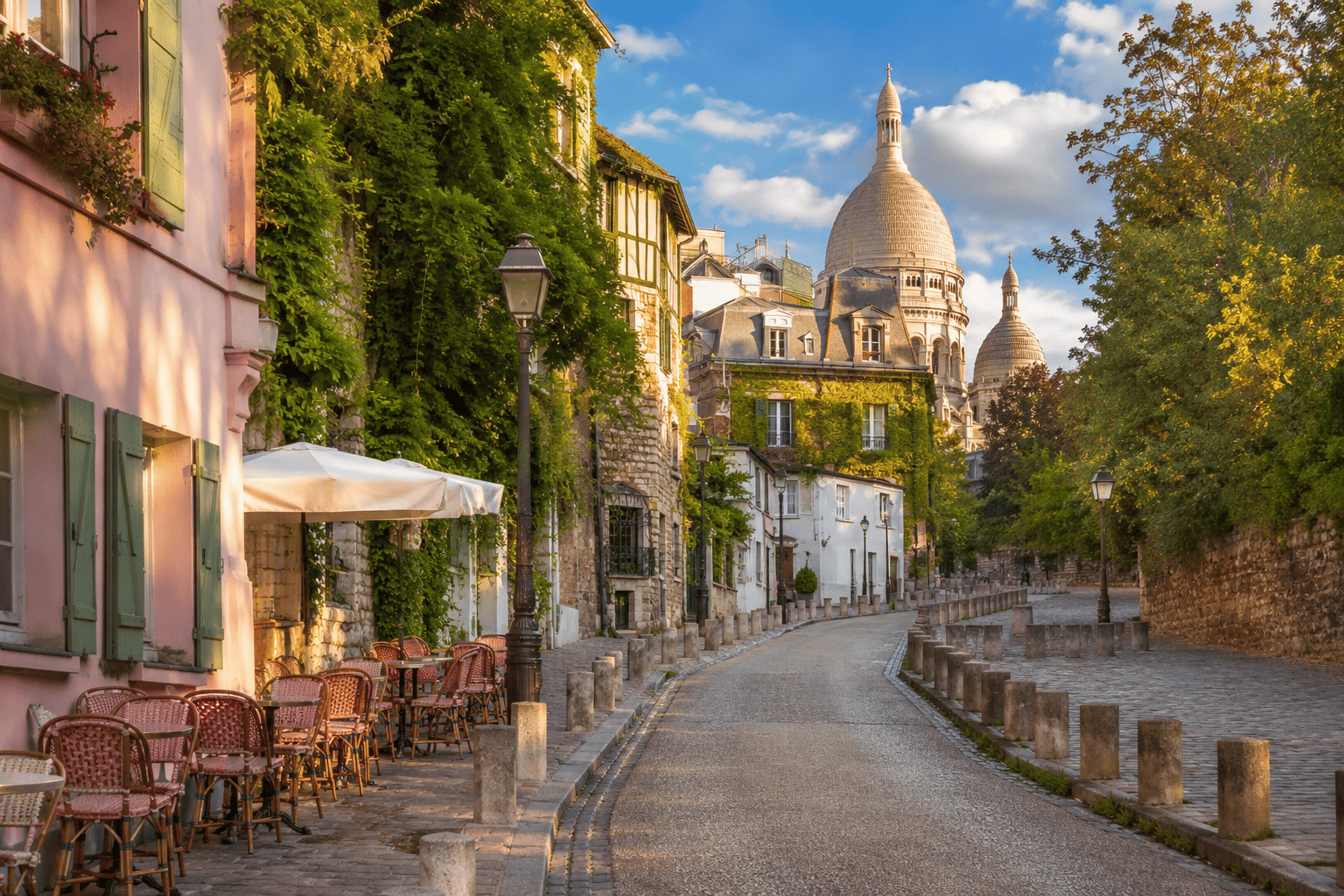
Montmartre is famous for its artistic heritage, village atmosphere, and panoramic views from Sacré-Cœur Basilica. It appeals to travellers seeking character rather than the most central location.
Best for: Romantic trips, photography, and visitors seeking a unique atmosphere.
Pros
- Distinctive neighbourhood with beautiful viewpoints.
- Excellent cafés and local restaurants.
- Some good-value hotels.
- Strong artistic identity.
Cons
- Steep streets and many stairs.
- Longer journeys to some attractions.
- Busy around Sacré-Cœur.
Typical hotel prices: Budget to mid-range.
Champs-Élysées and the 8th Arrondissement
The 8th arrondissement is known for luxury hotels, designer shopping, elegant boulevards, the Arc de Triomphe, and the Champs-Élysées.
Best for: Luxury shopping, premium hotels, and business trips.
Pros
- Excellent luxury accommodation.
- Convenient for major attractions.
- Elegant architecture and wide avenues.
Cons
- Very expensive.
- Less neighbourhood character.
- Very busy around the Champs-Élysées.
Typical hotel prices: Luxury.
Quick Comparison of the Best Paris Neighbourhoods
| Neighbourhood | Best For | Atmosphere | Typical Price |
|---|---|---|---|
| Le Marais | First-time visitors | Historic and lively | Mid-range to luxury |
| Saint-Germain-des-Prés | Couples | Elegant and classic | Upper mid-range to luxury |
| Latin Quarter | Budget travellers | Student and lively | Budget to mid-range |
| 7th Arrondissement | Families and sightseeing | Quiet and upscale | Mid-range to luxury |
| Montmartre | Romantic stays | Artistic and scenic | Budget to mid-range |
| 8th Arrondissement | Luxury shopping | Elegant and busy | Luxury |
How to Choose the Best Paris Neighbourhood for Your Trip
The best Paris neighbourhood for your first visit depends on your budget, travel style, and priorities.
- Choose Le Marais for the best overall mix of sightseeing, dining, shopping, and nightlife.
- Choose Saint-Germain-des-Prés for classic Parisian cafés and elegant surroundings.
- Choose the Latin Quarter for better-value accommodation in a central location.
- Choose the 7th arrondissement if staying near the Eiffel Tower is your priority.
- Choose Montmartre for a romantic, artistic atmosphere.
- Choose the 8th arrondissement for luxury hotels and premium shopping.
Frequently Asked Questions
What is the best Paris neighbourhood for first-time visitors?
Le Marais is widely regarded as the best overall choice thanks to its central location, walkability, restaurants, shopping, and excellent public transport.
Where should couples stay in Paris for the first time?
Saint-Germain-des-Prés is one of the most popular areas for couples because of its elegant streets, famous cafés, galleries, and riverside location.
What is the best budget-friendly central area in Paris?
The Latin Quarter is one of the best-value central neighbourhoods, offering affordable hotels, lively restaurants, and convenient transport.
Is the Eiffel Tower area a good place to stay?
Yes. The 7th arrondissement is an excellent choice for visitors who want a quieter base close to the Eiffel Tower and several major museums.
How many days should first-time visitors spend in Paris?
Three to five days gives most first-time visitors enough time to explore the city’s main attractions and several neighbourhoods without rushing.
Final Thoughts on the Best Paris Neighbourhoods for First-Time Visitors
There is no single perfect area for every traveller, but Le Marais remains the strongest all-round choice. Saint-Germain-des-Prés delivers timeless Parisian charm, the Latin Quarter offers excellent value, the 7th arrondissement is ideal for landmark-focused stays, Montmartre provides unique character, and the 8th arrondissement suits luxury travellers.
Choose the neighbourhood that best matches your budget, interests, and preferred pace of travel for a more enjoyable first visit to Paris.
For more destination comparisons and practical planning advice, browse more travel guides on this site.
For broader destination information, see Wikivoyage’s Paris guide.
For broader trip-planning context, you can also check additional travel background on Wikivoyage.

Mara Vale
Mara Vale writes Eurly travel guides for first-time Europe visitors who want practical routes, realistic pacing, and fewer avoidable planning mistakes.
Eurly guides are written to help readers make confident travel decisions, but opening hours, ticket rules, transit disruptions, and local conditions can change. Always verify key reservations and official schedules before you travel.