

This Paris food guide helps travellers find authentic, memorable meals without overspending in the French capital. Eating well in Paris is less about budget and more about knowing where locals dine, which tourist-heavy areas to avoid, and how to spot restaurants that deliver real value.
One of the best meals we had cost €16 for a two-course lunch in Le Marais, while one of the weakest was only a few steps from Notre-Dame. The lesson was simple: in Paris, location matters as much as price.
Last updated: 2026-04-25
How to Avoid Tourist-Trap Restaurants in Paris
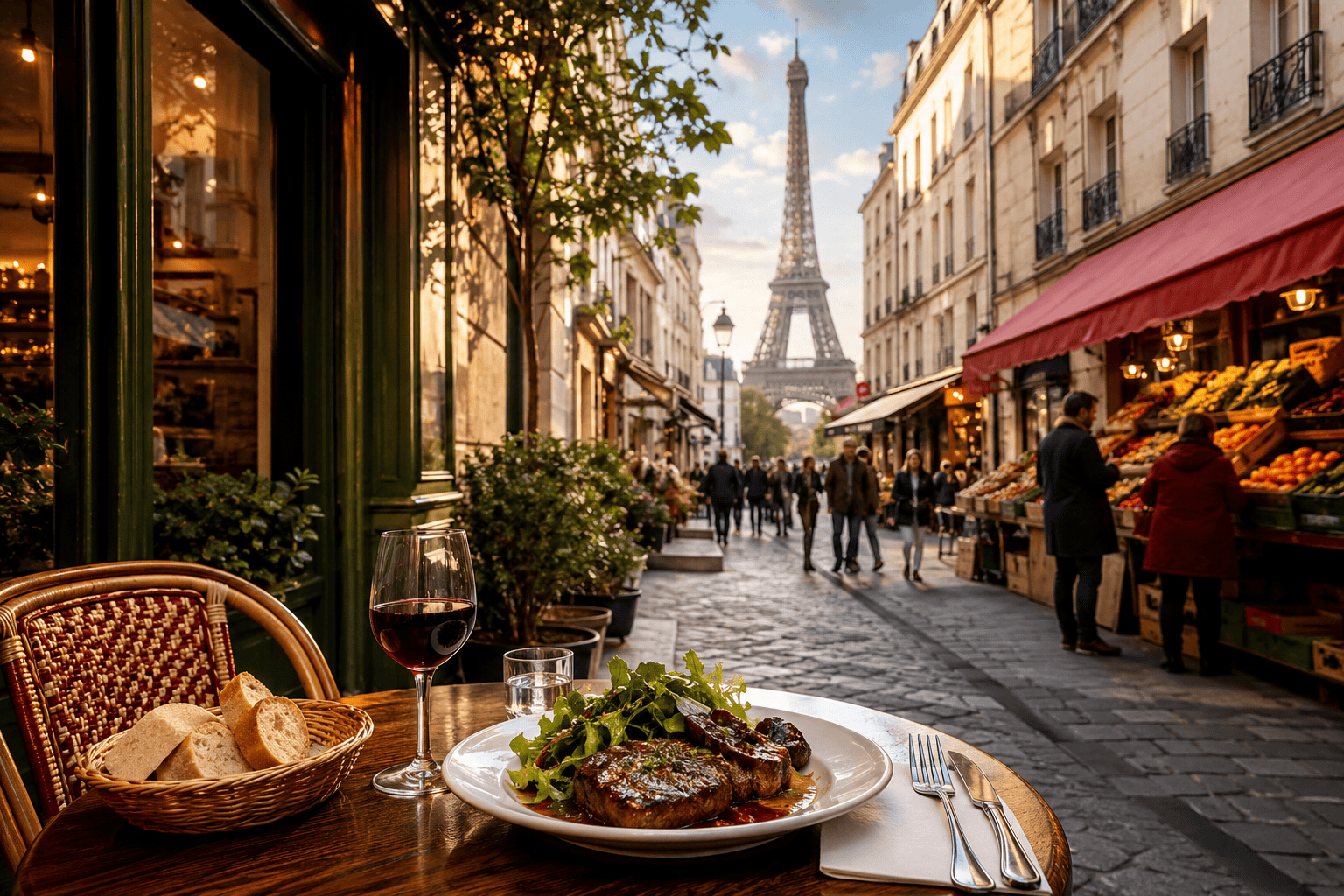
The easiest way to overpay for mediocre food in Paris is to eat directly beside major landmarks. Restaurants around the Eiffel Tower, Notre-Dame, the Louvre, and the Champs-Élysées often depend on a constant flow of visitors rather than repeat local customers.
That does not mean every restaurant in these areas is poor quality. However, prices are usually higher and quality can be less consistent. Menus translated into multiple languages, aggressive hosts outside the entrance, and oversized photo menus are often warning signs.
A smarter strategy is to walk 10 to 15 minutes away from major attractions before choosing where to eat. Residential streets, local squares, and side roads with regular neighbourhood foot traffic often provide better food and better value.
What a Real Paris Restaurant Looks Like
Many excellent Paris restaurants are surprisingly understated. Instead of flashy signage, look for places with short menus, handwritten specials, and tables filled with people who appear to live or work nearby.
Useful signs of a good local restaurant include:
- A limited menu that changes regularly
- French-speaking customers making up much of the dining room
- Seasonal ingredients and daily specials
- Lunch formulas with two or three courses
- No staff trying to pull people inside
In Paris, a smaller menu is often a positive sign. Restaurants attempting to serve pizza, burgers, onion soup, steak, sushi, crêpes, and cocktails all at once are often targeting tourists rather than focusing on quality.
Best Areas in Paris for Affordable Food
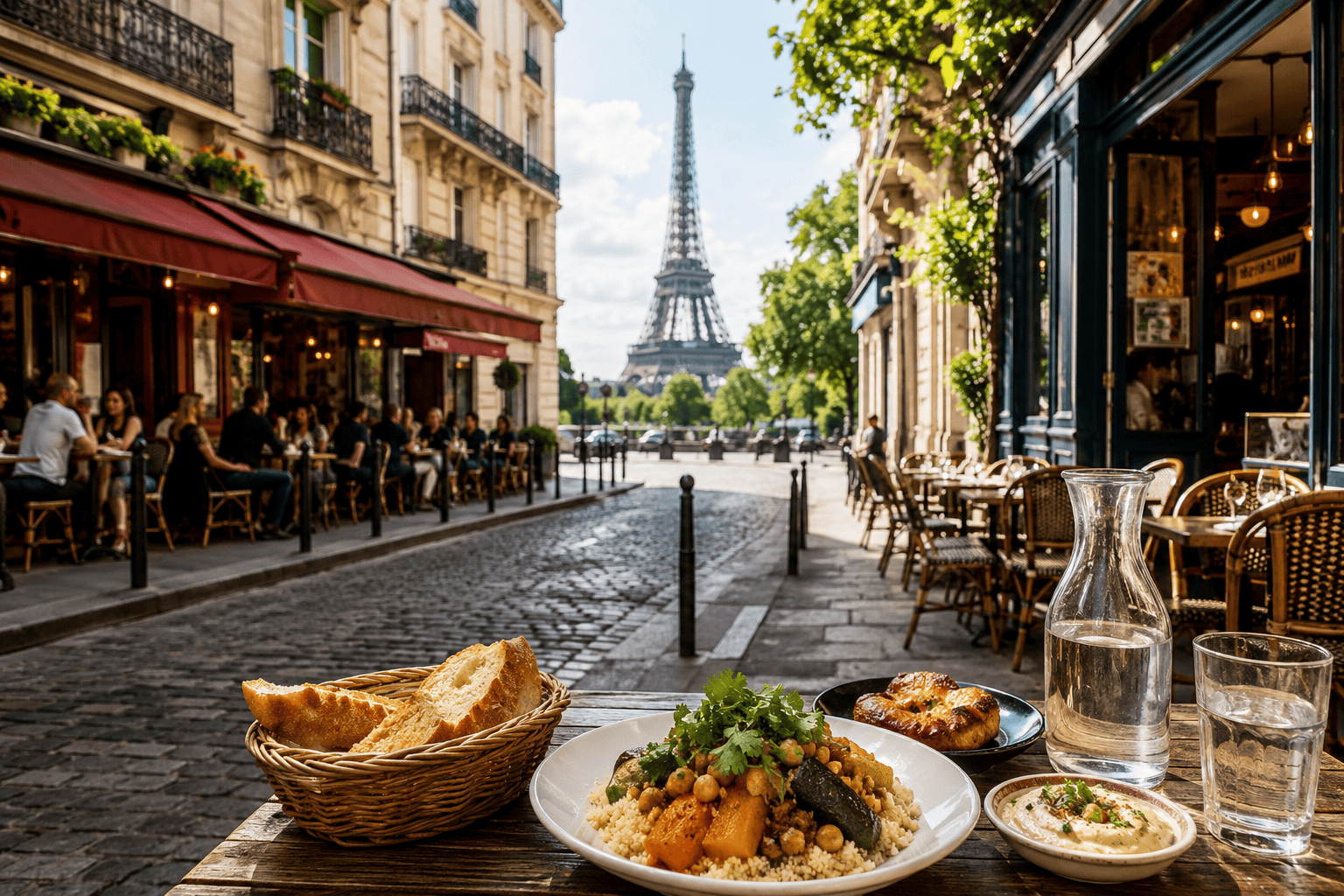
Some neighbourhoods consistently offer better value than others. Areas with strong local communities and fewer tourist crowds tend to have more reliable restaurants, bakeries, cafés, and wine bars.
| Neighbourhood | Why It Works | Best For |
|---|---|---|
| Le Marais | Mix of local cafés, bakeries, and modern bistros | Casual lunches and pastries |
| Canal Saint-Martin | Relaxed atmosphere with a strong local dining scene | Dinner and wine bars |
| 11th Arrondissement | Modern Paris bistros with better value than central tourist zones | Affordable dinners |
| Latin Quarter side streets | Good value when you move away from the busiest tourist blocks | Budget meals and cafés |
| South Pigalle | Popular with locals and younger crowds | Trendy but reasonably priced food |
Understanding Paris Lunch Formulas
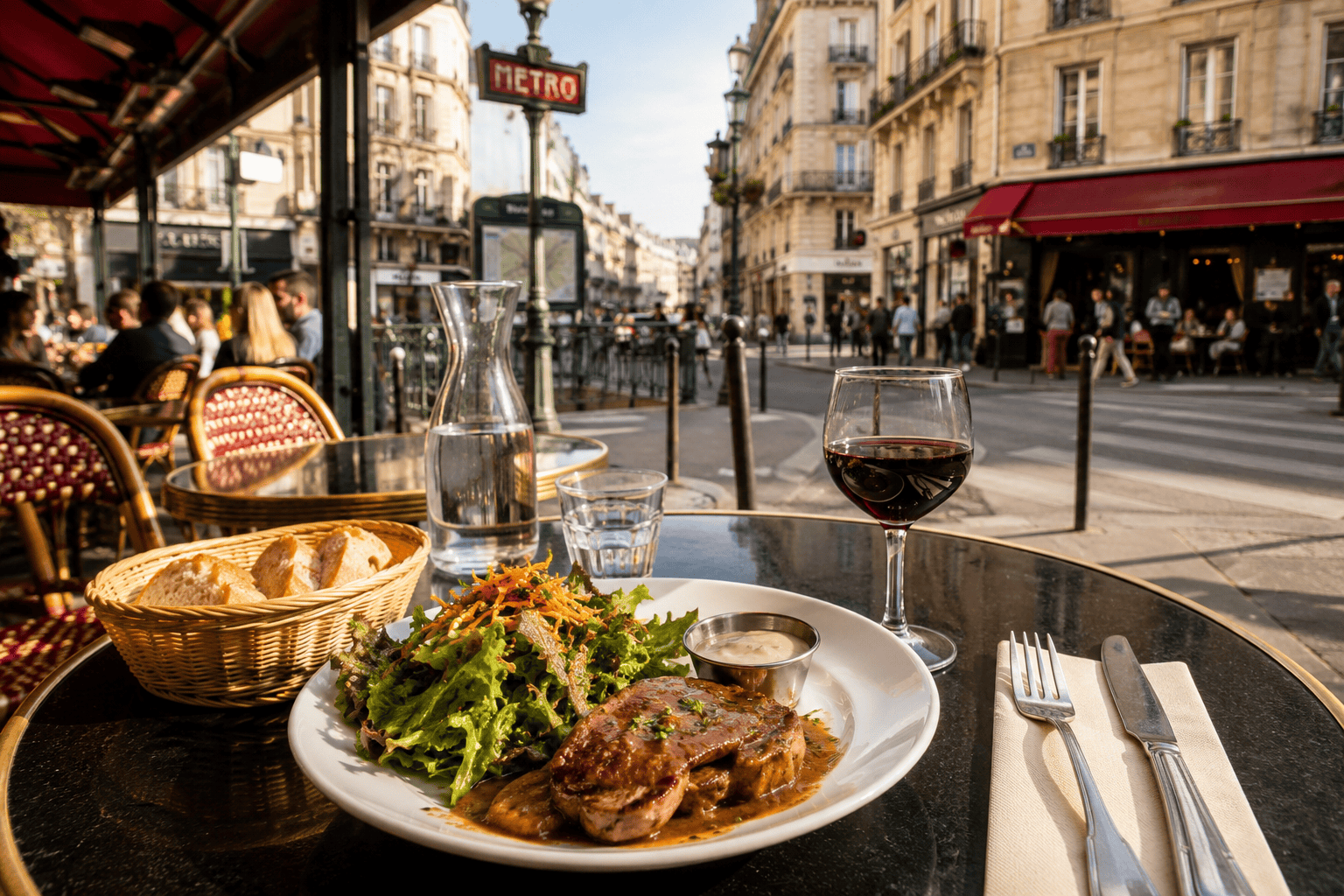
One of the best ways to eat well without overspending is to take advantage of Paris lunch formulas. Many restaurants offer fixed-price weekday lunch menus that cost significantly less than dinner.
A typical lunch formula may include:
- Starter and main course
- Main course and dessert
- Two or three courses for a fixed price
These menus are often where restaurants provide their best value. It is entirely possible to enjoy an excellent Paris lunch for under €20 if you avoid heavily touristed streets and choose a restaurant with a focused menu.
How to Read a Paris Menu Before Sitting Down
Before committing to a restaurant, pause outside and read the menu carefully. A short menu with a few starters, mains, and desserts often suggests a kitchen that cooks with purpose. A lengthy menu covering several unrelated cuisines can be a warning sign.
Also check whether the menu mentions a formule, plat du jour, or menu du midi. These are common value-focused lunch options and can be a more economical choice than ordering à la carte.
Simple Rules for Eating Better in Paris
If you want consistently better meals in Paris, follow these simple rules:
- Avoid restaurants directly beside major monuments
- Walk into side streets before choosing where to eat
- Look for short menus and handwritten specials
- Prioritise lunch formulas for better value
- Check whether locals are actually dining there
- Do not assume higher prices mean better food
Paris rewards curiosity more than budget. Some of the city’s best meals happen in small neighbourhood restaurants that never appear in major travel guides.
For more on planning your trip, also see our Madrid Travel Guide: Budget, Itinerary & Tips and 3 Days in Paris: A Realistic Itinerary for First-Time Visitors (2026).
Frequently Asked Questions About Eating in Paris
How can I avoid tourist-trap restaurants in Paris?
Move away from major landmarks, avoid restaurants with aggressive street marketing, and look for places with shorter menus and local customers.
What is a lunch formula in Paris?
A lunch formula is a fixed-price menu that typically includes two or three courses for a set cost, often offering better value than dinner service.
Which Paris neighbourhoods offer the best value for food?
Le Marais, Canal Saint-Martin, the 11th Arrondissement, quieter parts of the Latin Quarter, and South Pigalle are all known for offering better value than heavily touristed areas.
Final Thoughts
A great Paris food experience is rarely about finding the most famous restaurant. It is about understanding how the city eats. Once you move away from the obvious tourist zones and start paying attention to local dining patterns, the difference in quality becomes clear.
The best meals in Paris are often simple, affordable, and hidden one or two streets away from the crowds. Use this Paris food guide as a practical filter: avoid obvious tourist traps, follow local dining habits, and spend your food budget where it genuinely improves the experience.
For more destination comparisons and trip ideas, browse more travel guides on this site.
For broader trip-planning context, you can also check additional travel background on Wikivoyage.
You can explore authoritative background and references on Wikipedia.

Mara Vale
Mara Vale writes Eurly travel guides for first-time Europe visitors who want practical routes, realistic pacing, and fewer avoidable planning mistakes.
Eurly guides are written to help readers make confident travel decisions, but opening hours, ticket rules, transit disruptions, and local conditions can change. Always verify key reservations and official schedules before you travel.