

Paris in winter offers a quieter, more atmospheric side of the French capital that many travelers never experience. With fewer crowds, shorter museum lines, cozy cafés, and potential hotel savings, winter can be an excellent time to visit. While colder temperatures and shorter days are not for everyone, the season reveals a more local and relaxed version of Paris.
The trade-off is simple: you gain easier sightseeing and a calmer atmosphere, but you lose some of the outdoor energy, long evenings, and garden scenery that make Paris so popular in warmer months. Whether Paris in winter is worth visiting depends on the type of trip you want.
Is Paris Worth Visiting in Winter?
Yes. Paris is worth visiting in winter if your ideal trip focuses on museums, food, architecture, shopping, cafés, and atmospheric walks rather than long sunny days in parks. Many of the city’s most famous attractions remain enjoyable year-round, and the reduced crowds can make sightseeing more pleasant.
The Eiffel Tower, the Louvre, Musée d’Orsay, Sainte-Chapelle, Montmartre, covered passages, department stores, and classic cafés all work well during winter. Travelers who value culture and atmosphere often find this season especially rewarding.
For more planning advice, see our 3 Days in Paris: A Realistic Itinerary for First-Time Visitors (2026).
What Paris in Winter Is Really Like
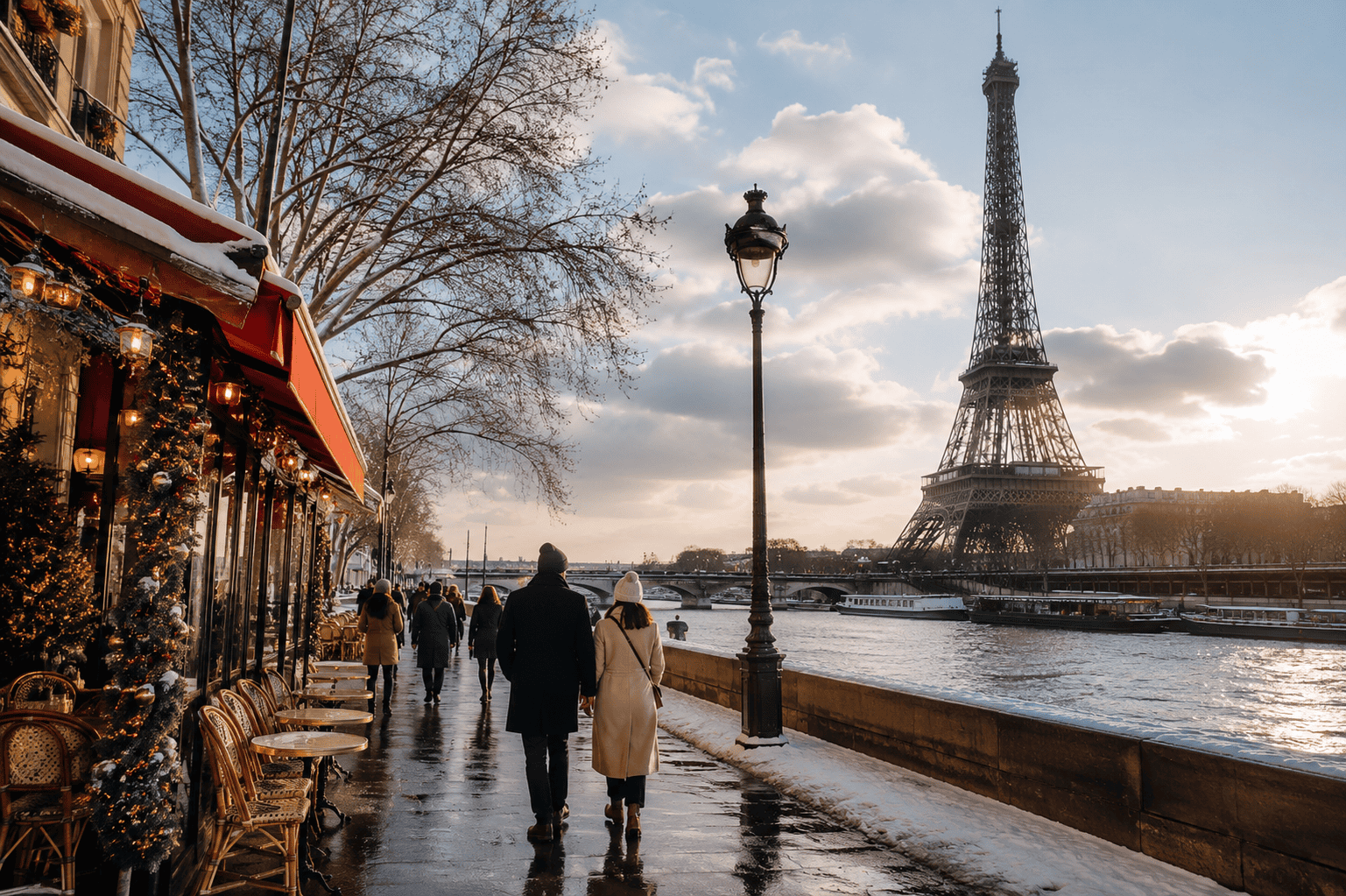
Winter in Paris is typically cool, damp, and often overcast. December and January bring shorter daylight hours, making it important to plan outdoor sightseeing efficiently. Rain is possible throughout the season, although heavy snowfall is uncommon.
Despite the weather, winter creates a distinctive atmosphere. Warm bakeries, illuminated cafés, festive seasonal displays, and quieter streets give the city a charm that many visitors miss during peak travel months.
Best Reasons to Visit Paris in Winter
- Fewer crowds: Popular attractions are often easier to enjoy than during peak summer.
- Potential hotel savings: Accommodation prices can be lower outside major holiday periods.
- Excellent museum season: The Louvre, Musée d’Orsay, Musée de l’Orangerie, and many smaller museums are ideal winter attractions.
- Cozy food culture: Winter is perfect for cafés, bistros, pastries, hot chocolate, and long indoor meals.
- More local atmosphere: Some neighborhoods feel less tourist-heavy and more authentic.
Reasons You Might Not Like Paris in Winter
- Short daylight hours: Outdoor sightseeing time is reduced.
- Grey weather: Overcast and rainy days are common.
- Less outdoor café culture: Terraces remain open but feel very different from summer.
- Less vibrant parks and gardens: Green spaces are quieter and less colorful.
Paris in Winter: Pros and Cons
| Pros | Cons |
|---|---|
| Lower crowds at many attractions | Cold, damp, and grey weather is common |
| Potentially better hotel value | Shorter daylight hours |
| Ideal for museums and cafés | Less vibrant parks and gardens |
| More relaxed atmosphere | Reduced outdoor dining experience |
Who Should Visit Paris in Winter?
Paris in winter is ideal for travelers who enjoy museums, architecture, food, photography, and slower-paced city breaks. It is also a great option for repeat visitors who want to experience a different side of the city.
If your dream Paris trip revolves around blooming gardens, picnics, long evenings outdoors, and warm café terraces, spring or early autumn may be a better choice.
How to Make a Winter Trip to Paris Better
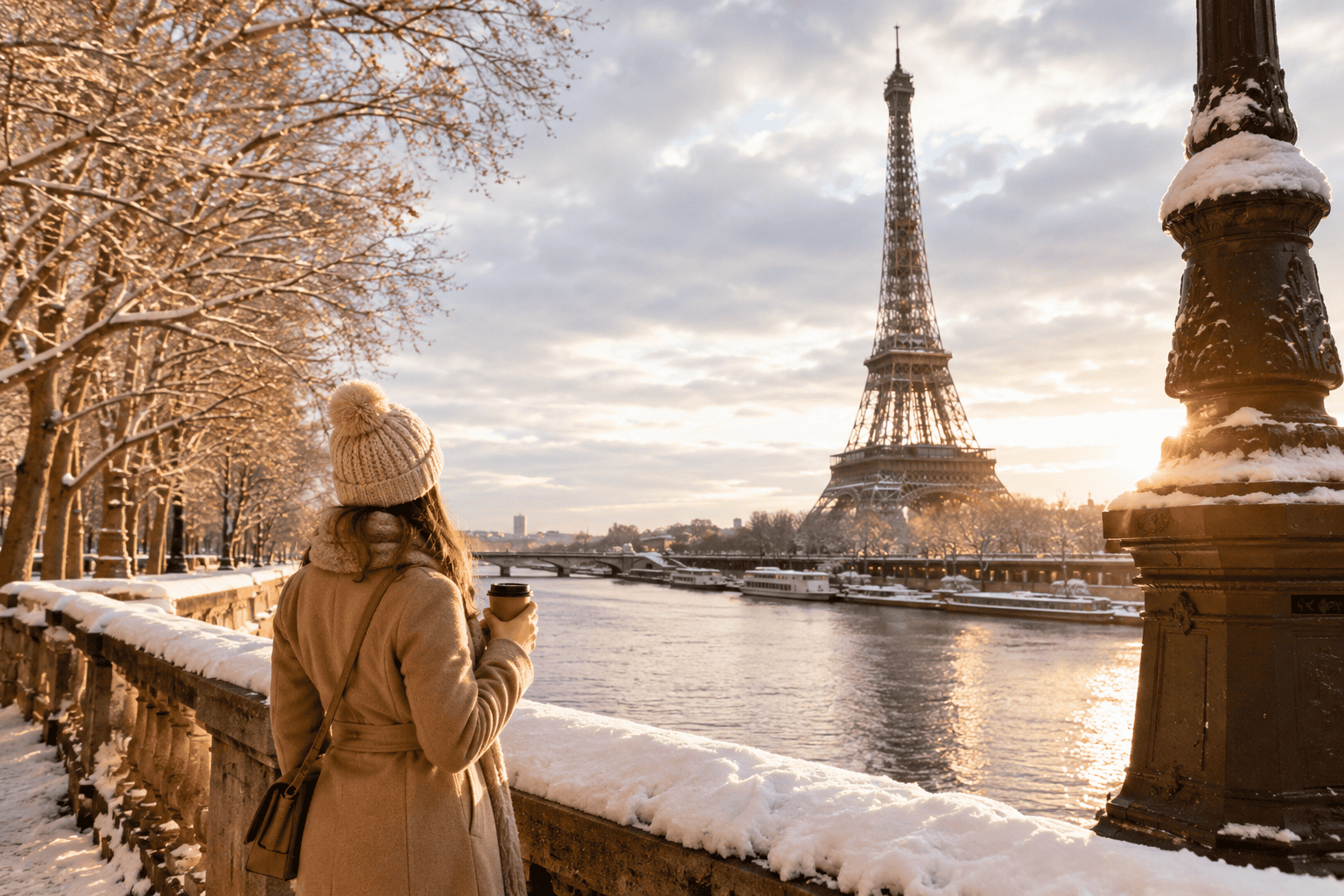
Plan outdoor sightseeing for clearer mornings and keep museums, galleries, covered passages, and department stores available as weather-friendly alternatives. Staying in a central neighborhood can also reduce travel time during colder days.
Build flexibility into your itinerary and avoid scheduling every activity around perfect weather conditions.
What to Pack for Paris in Winter

Pack for cool and damp conditions rather than extreme snow. Essentials include a warm coat, sweaters, gloves, a scarf, waterproof shoes, and a compact umbrella.
Layering is important because indoor spaces are often significantly warmer than the streets. Comfortable walking shoes remain essential, as exploring Paris on foot is part of the experience.
Best Things to Do in Paris in Winter
The best winter activities combine indoor culture with shorter outdoor walks. Visit major museums, explore covered passages, enjoy traditional cafés and bistros, browse department stores, and wander through neighborhoods such as Saint-Germain-des-Prés, Le Marais, and Montmartre.
When the weather is clear, prioritize outdoor highlights including the Eiffel Tower, Seine riverbanks, Île de la Cité, and panoramic viewpoints around Montmartre.
Final Verdict: Is Paris in Winter Worth It?
Paris in winter is worth visiting for travelers who value atmosphere, culture, and a less crowded experience. While you sacrifice warm weather and long daylight hours, you gain easier access to attractions, cozy indoor experiences, and a more relaxed pace.
For museum lovers, couples, photographers, food-focused travelers, and repeat visitors, winter can be one of the most rewarding times to visit Paris. First-time visitors seeking the classic sunny postcard experience may prefer spring or early autumn.
For more trip-planning inspiration, see our France Travel Guide for First-Time Visitors.
You can also review additional Paris travel information on Wikivoyage and background resources on Wikipedia.

Mara Vale
Mara Vale writes Eurly travel guides for first-time Europe visitors who want practical routes, realistic pacing, and fewer avoidable planning mistakes.
Eurly guides are written to help readers make confident travel decisions, but opening hours, ticket rules, transit disruptions, and local conditions can change. Always verify key reservations and official schedules before you travel.