

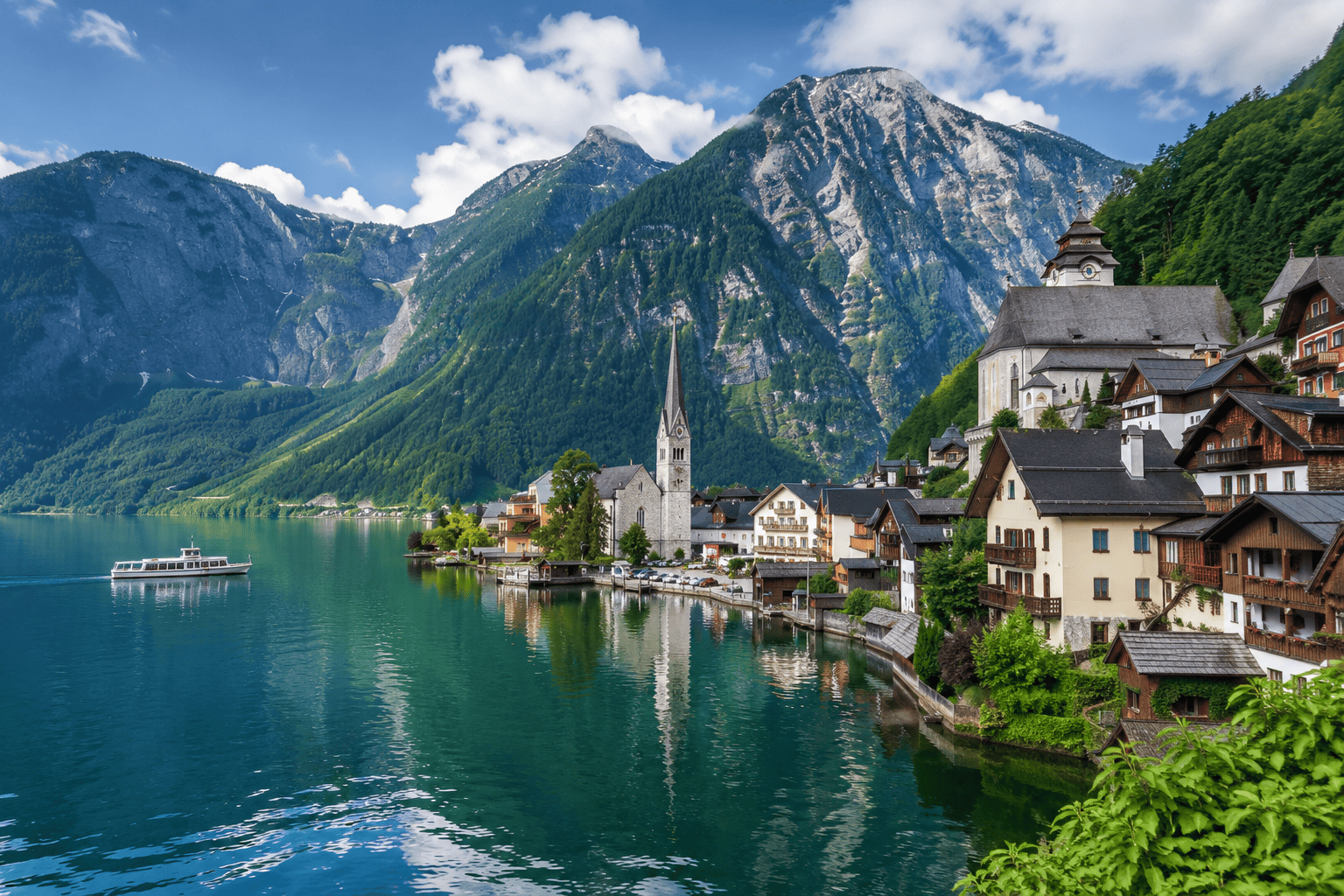
The best time to go to Switzerland depends on your travel goals. Different seasons offer unique experiences, from alpine hiking to skiing and festive markets.
Switzerland changes dramatically throughout the year. January brings snowy mountain villages and ski resorts, July offers warm lakes and long daylight hours, autumn is quieter and scenic, and spring is a good time for waterfalls, flowers, and city breaks.
Quick Takeaways
Start here: The best time to go to Switzerland depends on your travel goals.
Planning note: Switzerland changes dramatically throughout the year.
For most travelers, late June and September offer the best balance of pleasant weather, mountain access, and manageable crowds. However, the ideal month depends on whether you are planning to hike, ski, ride scenic trains, visit cities, or travel on a tighter budget.
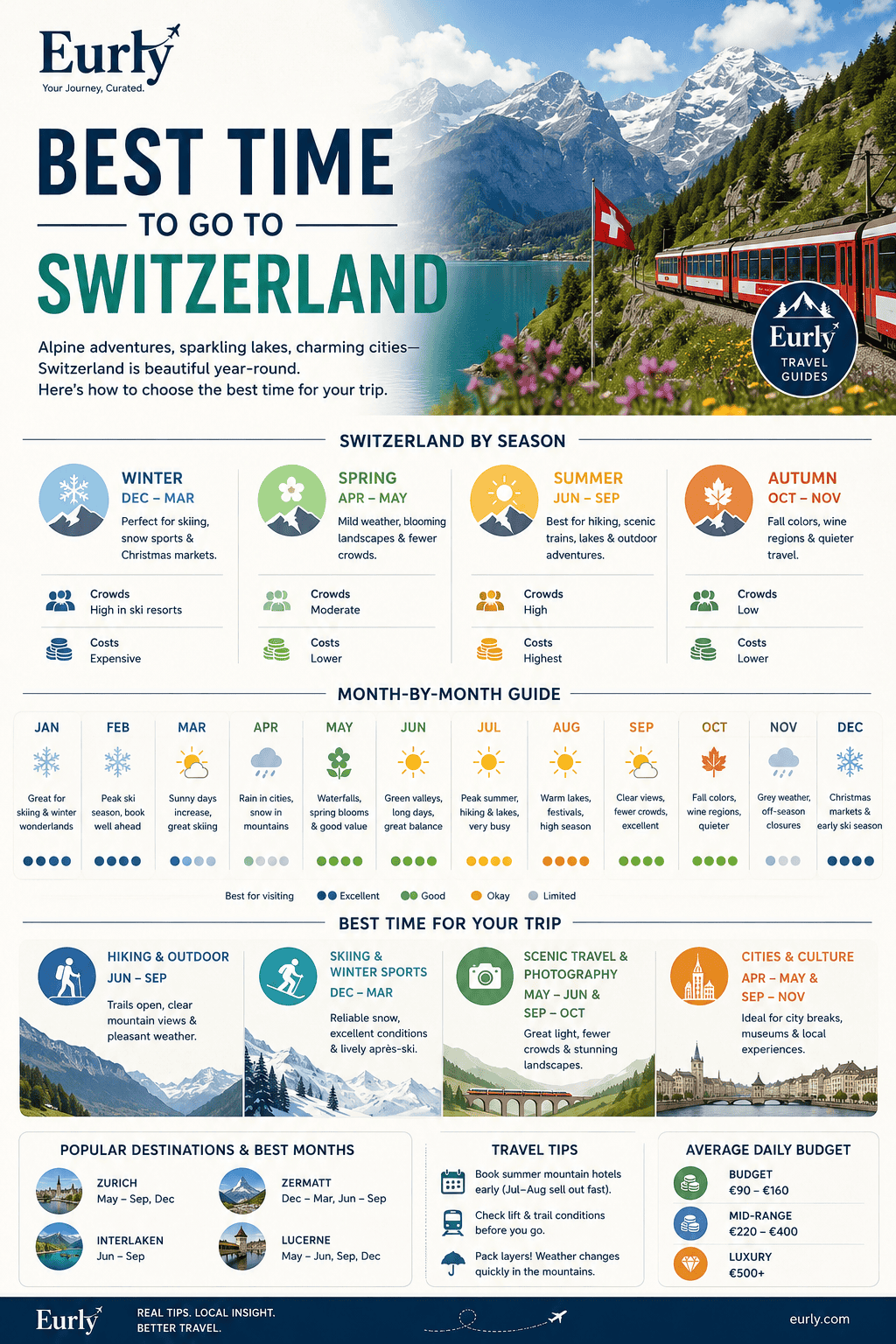
Switzerland at a Glance: Best Seasons to Visit
| Season | Best For | Weather | Crowds | Typical Daily Cost |
|---|---|---|---|---|
| Winter (December to March) | Skiing, snow scenery, Christmas markets | Cold and snowy in the Alps | High in ski resorts | €140–600+ |
| Spring (April to May) | City breaks, waterfalls, lower prices | Mild but unpredictable | Moderate | €90–250 |
| Summer (June to September) | Hiking, lakes, scenic trains | Warm in cities, cooler in mountains | High in July and August | €150–500+ |
| Autumn (October to November) | Fall colors, vineyards, quieter travel | Cool with increasing rain | Low | €90–220 |
Best Time to Go to Switzerland for Good Weather
The best weather in Switzerland usually arrives between June and September. During these months, many hiking trails are open, mountain railways run fuller schedules, and lakes are generally warm enough for swimming.
Summer temperatures vary by altitude:
- Zurich and Geneva: around 22–28°C (72–82°F)
- Interlaken: around 24°C (75°F)
- High mountains such as Jungfraujoch: near freezing even in summer
Swiss cities can become hot in July and August, while mountain weather remains unpredictable year-round. Rainstorms and sudden temperature drops are common in alpine areas, so pack waterproof clothing and layers even in summer.
Best Time to Visit Switzerland for Hiking
The main hiking season runs from late June through early October. July, August, and September usually offer the most reliable trail conditions, especially in higher alpine regions.
Some of the best hiking destinations include:
- Jungfrau Region: mid-July through September
- Zermatt and Matterhorn trails: July to early October
- Appenzell: June through October
- Engadin Valley: July through September
Why September Is Ideal for Hiking
September is often one of the best months for hiking in Switzerland. European school holidays have usually ended, trails are quieter, hotel prices can ease, visibility is often clearer than in midsummer, and many mountain lifts are still operating.
Before hiking, check current trail conditions at SchweizMobil, Switzerland’s official outdoor route network.
Best Time to Visit Switzerland for Skiing
Switzerland’s ski season usually runs from mid-December through late March. Snow reliability, prices, and crowd levels vary by resort and month.
- January: excellent snow and often lower prices after New Year
- February: peak ski conditions, with higher prices and crowds
- March: longer daylight hours and sunnier ski days
Top ski destinations include Zermatt, St. Moritz, Verbier, and Wengen.
Typical Winter Travel Costs
| Travel Style | Estimated Daily Budget |
|---|---|
| Budget | €140–220 |
| Mid-range | €250–450 |
| Luxury | €600+ |
To save money during ski season, consider staying in smaller villages outside major resort centers and booking accommodation several months in advance.
Best Time to Visit Switzerland to Avoid Crowds
The busiest periods in Switzerland are usually:
- Mid-July through August
- Christmas and New Year’s week
- February school holiday periods
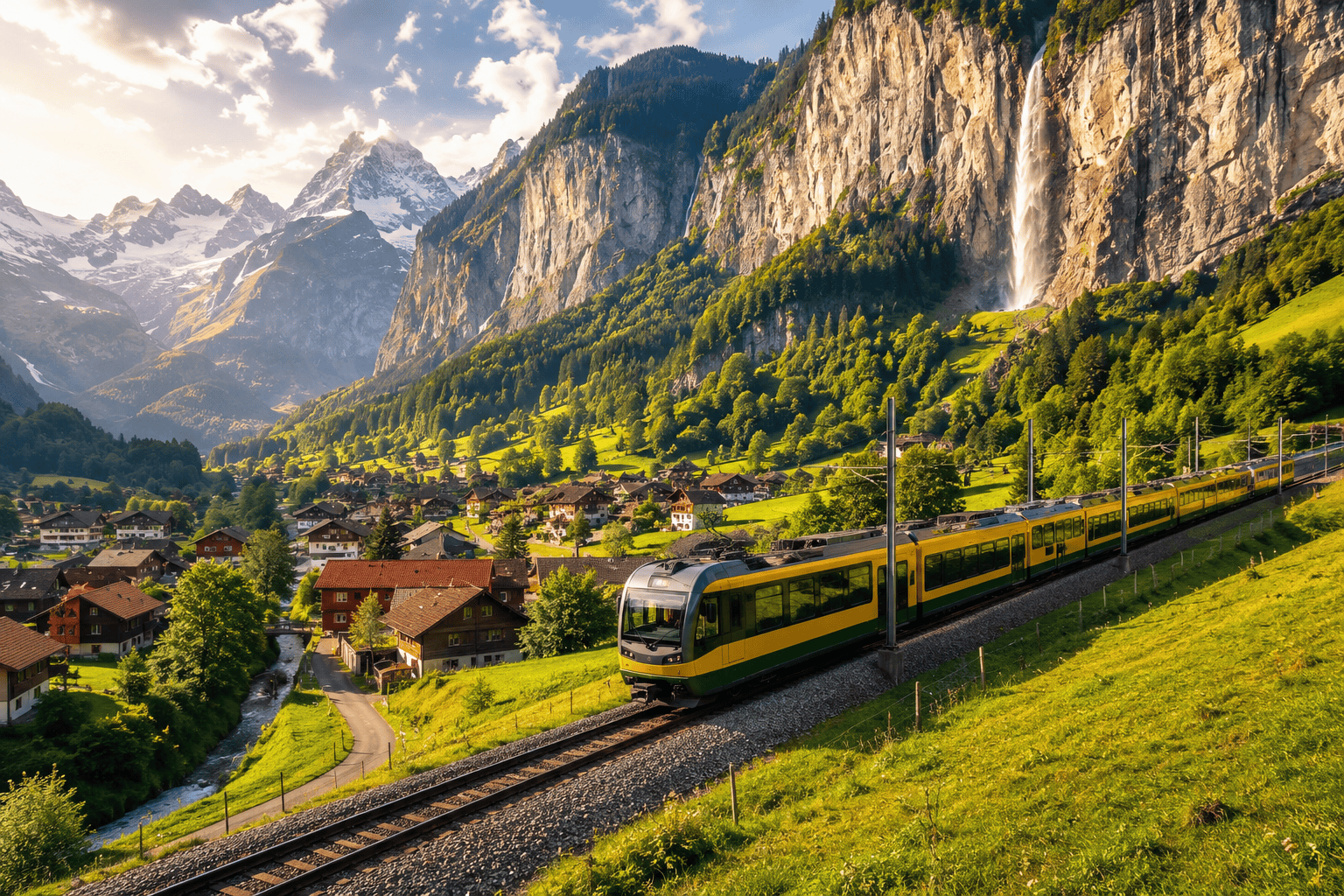
Popular places such as Lauterbrunnen, Lucerne, and Jungfraujoch can feel especially crowded during peak summer.
For quieter travel, consider visiting during:
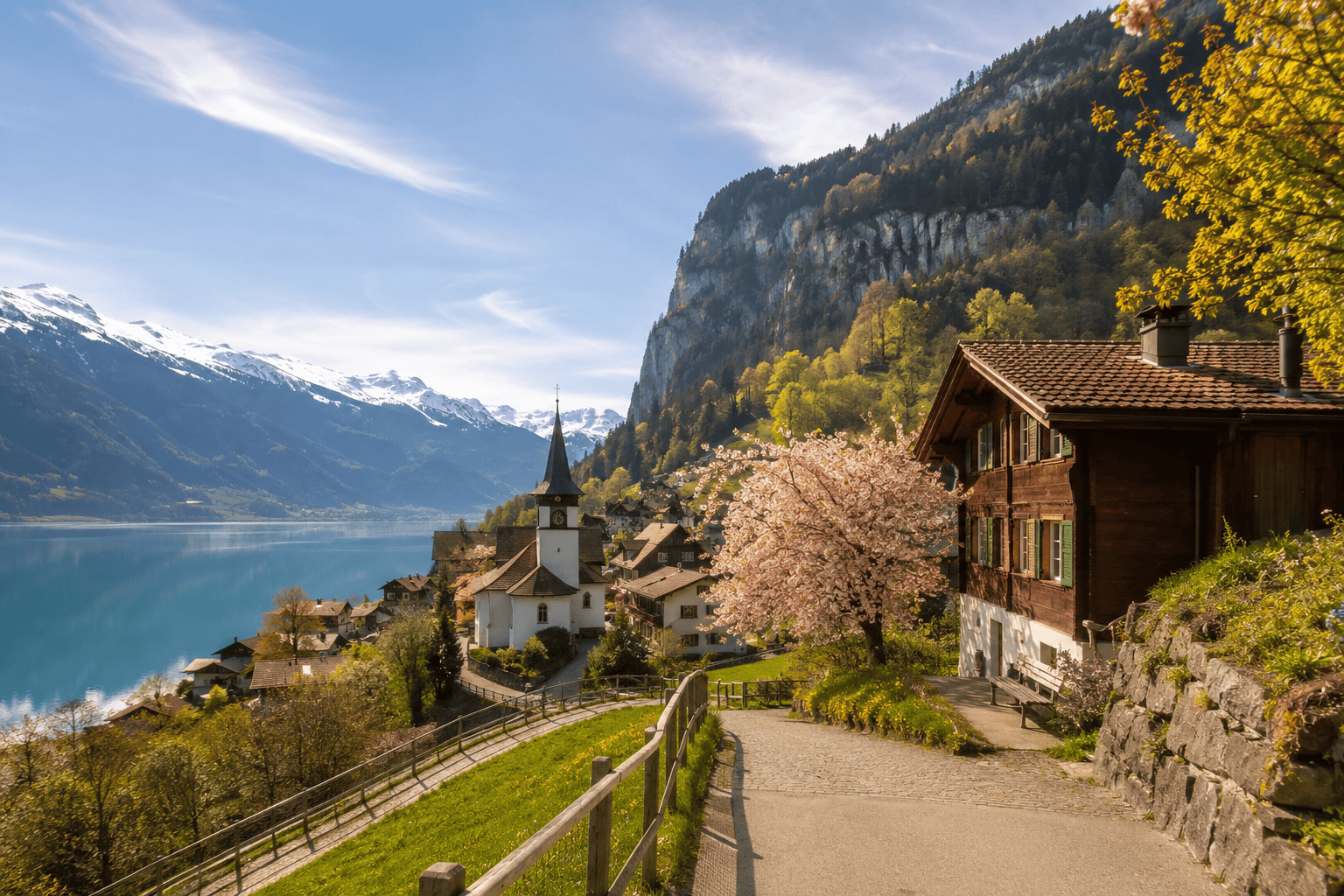
- May: spring flowers and lower prices
- Early June: fewer tourists before the main summer holidays
- Late September: excellent hiking with calmer conditions
- October: autumn scenery and fewer visitors
Switzerland Month by Month
January
January is one of the best months for skiing, with reliable snow in resorts such as Zermatt and St. Moritz. Cities are often quieter after New Year’s celebrations.
February
February is peak ski season, with strong snow conditions but higher prices and crowds due to European school holidays.
March
March is a good shoulder-season ski month, with longer daylight and generally milder weather.
April
April works best for affordable city breaks in Zurich, Geneva, and Bern. Many alpine hiking trails remain closed because of snow.
May
May offers good value, spring flowers, strong waterfalls, and fewer tourists. Some mountain lifts may still be closed.
June
June is one of the best overall months to visit Switzerland, with green landscapes, long daylight hours, and relatively moderate crowds.
July
July is peak hiking season, with major mountain railways operating. Expect higher hotel prices and crowded attractions.
August
August is one of the warmest months for swimming in Swiss lakes and enjoying outdoor events. It is also one of the busiest and most expensive months.
September
September is often considered the best month overall because it combines good hiking conditions, fewer tourists, and lower accommodation prices than peak summer.
October
October brings autumn colors, quieter cities, and scenic vineyard regions around Lake Geneva and Ticino.
November
November is one of the quietest and often cheapest months, though weather can be grey and many mountain facilities close between seasons.
December
December is ideal for Christmas markets, festive lights, snowy mountain scenery, and winter city breaks in places such as Zurich, Basel, and Montreux.
Best Time to Visit Popular Swiss Destinations
Zurich
Zurich is best from May through September for lake activities and outdoor dining. December is also a strong choice for Christmas markets.
Interlaken
Interlaken is ideal from mid-June through September for access to the Jungfrau region and alpine hiking trails.
Zermatt
Zermatt is a year-round destination, with skiing in winter and Matterhorn hiking from July through September.
Lucerne
Lucerne is especially appealing in May, June, September, and December, when weather and crowd levels are more balanced.
Cheapest Time to Visit Switzerland
The cheapest times to visit Switzerland are usually November, early April, and late October, outside both the main summer and ski seasons.
| Travel Style | Off-Peak Daily Budget | Peak Season Daily Budget |
|---|---|---|
| Budget | €90–130 | €150–220 |
| Mid-range | €200–320 | €300–500 |
| Luxury | €400–600 | €700+ |
The Swiss Travel Pass can help reduce transport costs by covering trains, buses, boats, and selected mountain routes.
Travel Planning Mistakes to Avoid
Assuming Hiking Trails Open Early
Many high-altitude routes remain snow-covered until late June, even when valleys feel warm.
Trying to Visit Too Many Places
Switzerland looks compact on a map, but mountain train connections take time. Focusing on fewer destinations usually creates a more relaxed trip.
Booking Mountain Hotels Too Late
Popular mountain villages such as Wengen and Mürren can sell out months ahead during summer and ski season.
Frequently Asked Questions
What is the best month to visit Switzerland overall?
September is generally one of the best overall months thanks to excellent hiking conditions, fewer tourists, and lower prices than peak summer.
Is Switzerland worth visiting in winter if you do not ski?
Yes. December is especially appealing for Christmas markets, festive lights, scenic trains, and snowy landscapes.
Can you swim in Swiss lakes?
Yes. Lakes such as Lake Geneva, Lake Lucerne, Lake Thun, and Lake Brienz are usually warmest for swimming in July and August.
Is April a good time to visit Switzerland?
April is good for city breaks and lower prices, but it is not ideal for alpine hiking because many mountain trails remain closed.
Final Thoughts on the Best Time to Go to Switzerland
The best time to go to Switzerland depends on your travel style. Summer is ideal for hiking, lake swimming, and scenic rail journeys. Winter is best for skiing and Christmas markets. Spring and autumn are better for quieter city breaks, waterfalls, vineyards, and lower prices.
If you want the strongest balance of weather, crowd levels, and mountain access, choose late June or September. For snow, plan around January to March. For festive cities, December is the best choice.
For more destination inspiration and travel planning tips, browse more travel guides on this site.
For more on this part of the trip, also see our Zurich City Guide for First-Time Visitors and Switzerland Travel Guide for First-Time Visitors.

Mara Vale
Mara Vale writes Eurly travel guides for first-time Europe visitors who want practical routes, realistic pacing, and fewer avoidable planning mistakes.
Eurly guides are written to help readers make confident travel decisions, but opening hours, ticket rules, transit disruptions, and local conditions can change. Always verify key reservations and official schedules before you travel.