

Europe budget travel 2026 is more achievable than many travellers think. With smart planning, you can reduce costs on transport, accommodation, food, and sightseeing without missing the experiences that make Europe memorable.
This guide breaks down realistic Europe travel costs in 2026 by region, accommodation type, and travel style. Whether you are planning a backpacking adventure, a mid-range holiday, or a longer stay, these estimates provide a practical starting point for building your budget.
Europe Budget Travel 2026 by Cost Tier
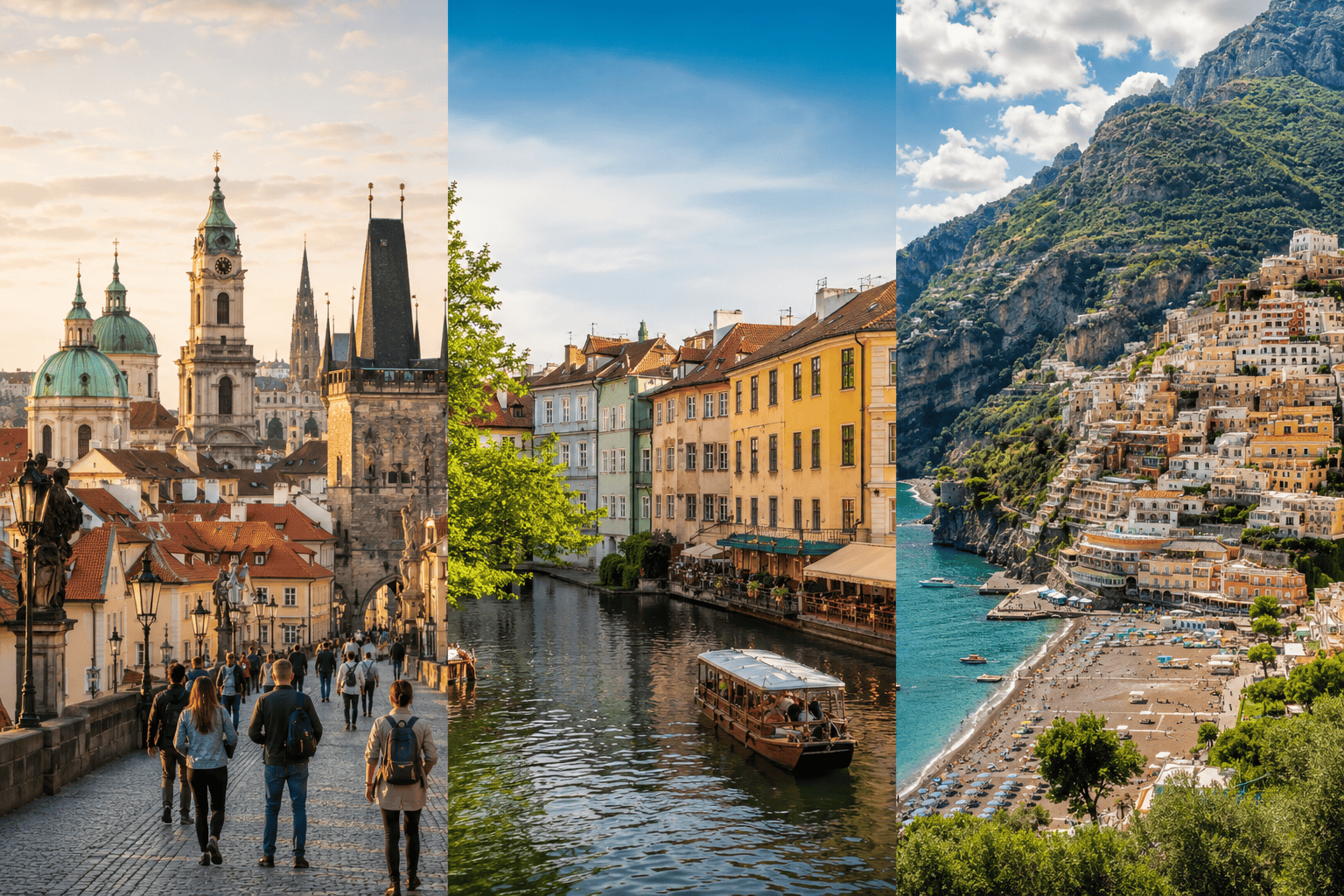
Travel costs vary significantly across Europe. Western and Northern Europe are generally the most expensive regions, while Central and Eastern Europe continue to offer excellent value for budget-conscious travellers.
| Cost Tier | Countries | Typical Daily Budget | What to Expect |
|---|---|---|---|
| Tier 1 — Most Expensive | Switzerland, Iceland, Norway, Denmark | €120+ per person | High accommodation, food, and transport costs. |
| Tier 2 — Expensive | UK, France, Netherlands, Germany, Sweden, Finland, Austria, Ireland | €80–120 per person | Popular destinations including London, Paris, Amsterdam, and Berlin. |
| Tier 3 — Mid-Range | Spain, Italy, Portugal, Belgium, Czech Republic | €65–95 per person | Strong tourist infrastructure with better value than much of Western Europe. |
| Tier 4 — Budget-Friendly | Poland, Hungary, Romania, Croatia, Bulgaria, Slovakia | €40–70 per person | Affordable accommodation, transport, and dining. |
Choosing destinations from Tier 3 and Tier 4 countries can dramatically lower your overall Europe travel budget while still offering rich cultural experiences, historic sites, and excellent food.
Accommodation Costs Across Europe
Accommodation is often the largest expense after flights. Prices rise sharply during summer, public holidays, and weekends in major cities.
| Accommodation Type | Tier 2 (Paris/London) | Tier 3 (Barcelona/Lisbon) | Tier 4 (Budapest/Krakow) |
|---|---|---|---|
| Hostel dorm (6–8 bed) | €28–45 | €18–32 | €12–22 |
| Budget private room | €70–100 | €50–80 | €30–55 |
| Mid-range hotel | €120–180 | €90–140 | €60–100 |
In expensive destinations, hostels often provide the best value. In many Central and Eastern European cities, private rooms and guesthouses remain surprisingly affordable. Booking early and travelling outside peak summer months can help secure better rates.
Food Prices in Europe

Food costs depend heavily on your dining choices. Supermarkets, bakeries, lunch specials, and local cafés can significantly reduce daily spending.
| Meal Type | Tier 2 | Tier 3 | Tier 4 |
|---|---|---|---|
| Supermarket breakfast | €3–6 | €2–5 | €1.50–3 |
| Casual lunch | €12–18 | €9–14 | €5–10 |
| Mid-range dinner | €20–35 | €15–25 | €10–18 |
| Coffee | €3–5 | €2.50–4 | €1.50–3 |
Look for local lunch specials such as France’s menu du jour and Spain’s menú del día, which are often much cheaper than dinner menus. Shopping at local markets and preparing simple meals can also stretch your budget further.
Public Transport and Intercity Travel Costs
Europe’s public transport network is usually efficient and more economical than taxis or rideshare services.
| City | Daily Transit Pass | Single Journey |
|---|---|---|
| London | £8.10 (Oyster daily cap, Zones 1–2) | £2.80 |
| Paris | €15.90 (Navigo day pass, all zones) | €2.15 |
| Amsterdam | €9 (24-hour GVB pass) | €3.20 |
| Barcelona | €11.35 (T-Casual 10-trip card) | €2.55 |
| Prague | CZK 310 (~€12.50) | CZK 30 (~€1.20) |
| Budapest | HUF 1,650 (~€4.30) | HUF 450 (~€1.20) |
Booking long-distance trains 6–8 weeks in advance can reduce costs considerably, especially on high-speed routes. Public transport passes are often cheaper than buying individual tickets throughout the day.
12 Smart Savings Tips for Europe Budget Travel 2026
If your goal is to make Europe budget travel 2026 affordable, these practical strategies can help reduce costs without sacrificing the overall experience.
- Stay in hostels in expensive cities.
- Choose guesthouses or private rooms in lower-cost regions.
- Eat your main meal at lunch.
- Use free museum days and free attractions.
- Book trains and transport early.
- Cook at least one meal daily.
- Shop at supermarkets such as Lidl, Aldi, Tesco, or Carrefour.
- Travel during the shoulder season.
- Use public transport instead of taxis.
- Avoid restaurants directly beside major attractions.
- Pack carefully to avoid budget airline baggage fees.
- Compare accommodation locations to reduce transport costs.
The Best Budget-Friendly Cities in Europe
Some European cities offer an excellent balance between affordability and memorable travel experiences.
- Lisbon, Portugal: Affordable food, reliable public transport, and easy beach access. Typical daily budget: €55–80.
- Prague, Czech Republic: Historic architecture and relatively affordable accommodation. Typical daily budget: €50–75.
- Budapest, Hungary: Famous thermal baths and excellent-value hotels. Typical daily budget: €45–70.
- Krakow, Poland: One of Europe’s most affordable major tourist cities. Typical daily budget: €40–60.
- Porto, Portugal: Often cheaper and less crowded than Lisbon. Typical daily budget: €50–75.
Common Budget Travel Mistakes in Europe
- Booking non-refundable accommodation too early.
- Exchanging money at airports.
- Ignoring hostel extra fees.
- Eating next to major attractions.
- Overpacking for budget airlines.
Avoiding these mistakes can help preserve your travel budget and reduce unnecessary expenses during your trip.
For more planning advice, see our Madrid Travel Guide: Budget, Itinerary & Tips.
Frequently Asked Questions
What is the cheapest country to visit in Europe?
Poland, Hungary, Romania, Bulgaria, and the Czech Republic remain among the most affordable destinations for budget travellers.
Can you travel Europe on €50 a day?
Yes, particularly in Central and Eastern Europe. In Western Europe, travelling on €50 a day usually requires hostels, budget dining, and careful planning.
What is the cheapest time to visit Europe?
November through February, excluding Christmas and New Year, often offers the lowest prices on accommodation and flights.
How much does a 2-week Europe trip cost from India?
Budget travellers typically spend between ₹90,000 and ₹1.3 lakh, while mid-range travellers often spend ₹1.5–2.5 lakh including flights.
Is Europe more expensive than Southeast Asia?
Western Europe is generally more expensive, although some destinations in Eastern and Southern Europe can offer comparable value.

Final Thoughts on Europe Budget Travel 2026
Europe budget travel 2026 remains realistic for travellers who choose destinations carefully, book transport early, and manage daily spending. Combining affordable cities with smart money-saving strategies can significantly reduce costs while still delivering a rewarding travel experience.
Whether you are planning a short city break or an extended backpacking trip, understanding accommodation, food, and transport costs will help you build a realistic budget and avoid common financial surprises.
Last verified: 2026-04-27
For more destination comparisons and travel ideas, browse more travel guides on this site.
For additional trip-planning background, visit Wikivoyage Europe travel resources.
For transport planning, see How to Book Trains in Europe for First-Time Visitors.
You can also explore general background information on Wikipedia.

Mara Vale
Mara Vale writes Eurly travel guides for first-time Europe visitors who want practical routes, realistic pacing, and fewer avoidable planning mistakes.
Eurly guides are written to help readers make confident travel decisions, but opening hours, ticket rules, transit disruptions, and local conditions can change. Always verify key reservations and official schedules before you travel.
I appreciate how well-researched and informative each post is It’s obvious how much effort you put into your work