
This italy train travel guide shows why rail is one of the easiest ways to explore the country. Trains connect major cities efficiently and reduce travel-day stress. They make multi-city itineraries smoother and more enjoyable.
This first-time visitor guide explains the train decisions that matter most before you book: high-speed versus regional trains, ticket timing, station strategy, luggage logistics, and the common mistakes that make simple journeys feel stressful.
Italy Train Travel Guide: Italy train travel: quick start
- Use high-speed trains for classic city pairs like Rome to Florence, Florence to Venice, Milan to Venice, and Rome to Naples.
- Use regional trains for shorter hops, day trips, smaller towns, or slower scenic journeys.
- Book important long-distance routes once your itinerary is stable.
- Compare the full transfer-day effort, not only the train duration shown on the ticket.
- Arrive at larger stations early enough to find your platform without rushing.
High-speed trains vs regional trains in Italy
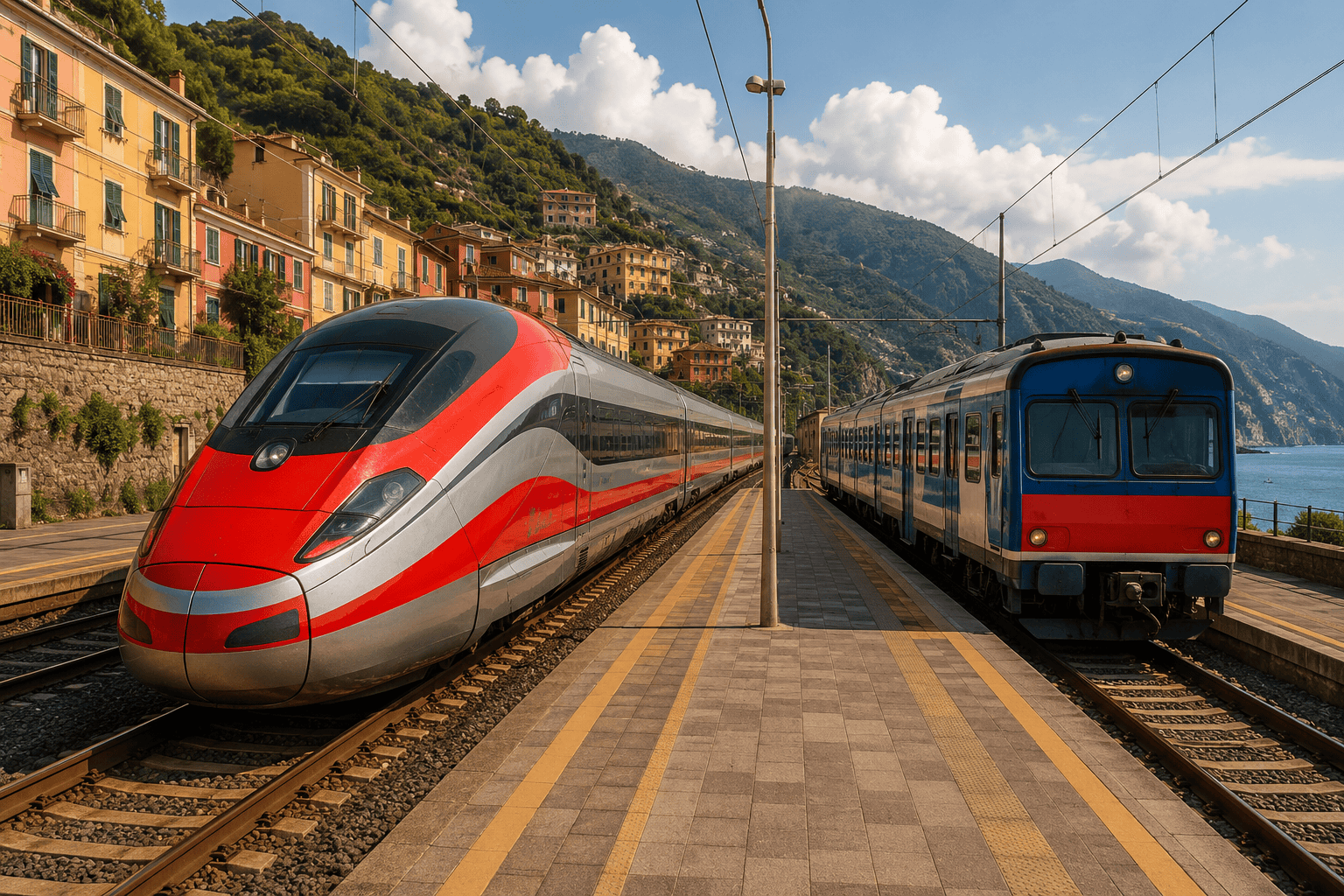
High-speed trains
High-speed rail is usually the smartest option for Italy’s major city routes because it reduces overall travel stress and keeps your trip efficient. These trains connect central stations and help you protect sightseeing time instead of spending hours navigating airports.
- Best for: Rome, Florence, Milan, Venice, Bologna, and Naples connections.
- Main operators: Trenitalia Frecciarossa and Italo.
- Why travelers prefer them: faster travel times, fewer logistics, comfortable seating, and easy city-center arrivals.
Regional trains
Regional trains are often the better choice for shorter distances, slower-paced itineraries, or smaller towns that are not connected to Italy’s high-speed network.
- Best for: day trips, budget-conscious travel, and smaller destinations.
- Trade-offs: slower schedules, more stops, and occasional transfer complexity.
- Flexibility advantage: many regional tickets are less restrictive and easier to book last minute.
Italy train routes where rail usually wins
If your itinerary is built around major cities, train travel is often the cleanest and least stressful option. These are the routes where first-time visitors commonly find rail easier than flying or driving.
| Route | Why the Train Works Well |
|---|---|
| Rome to Florence | Fast city-center connection with frequent departures. |
| Florence to Venice | Simple high-speed ride without airport transfers. |
| Rome to Naples | Quick journey that avoids driving and airport hassle. |
| Milan to Venice | Efficient north Italy connection ideal for short trips. |
| Rome to Bologna | Easy high-speed link between two major hubs. |
Our Rome to Florence route guide is a good example of where rail usually beats the full airport process. The same logic applies to the Florence to Venice route guide, where high-speed rail can turn a potentially stressful transfer day into a smooth travel experience.
The Milan to Venice route guide also shows why train travel can make more sense than renting a car for short city-to-city transfers. Likewise, the Rome to Naples route guide demonstrates why rail is usually the simplest option for southern Italy connections.
How to book Italy train tickets without overcomplicating your trip
Booking strategy matters because the cheapest ticket is not always the best ticket. A first Italy train trip is usually easier when you lock in the key long-distance legs but keep lower-risk local journeys flexible.
- Book hotels first if your travel dates are still flexible.
- Reserve important high-speed train segments once your itinerary is stable.
- Leave regional or low-risk routes flexible if your plans may change.
- Check official operators before using third-party booking platforms.
- Balance cheaper fares against the risk of non-refundable tickets.
The most common mistake is locking every train too early and then redesigning the entire trip around fixed tickets. A little flexibility usually creates a smoother Italy itinerary.
Station tips first-time Italy train travelers miss
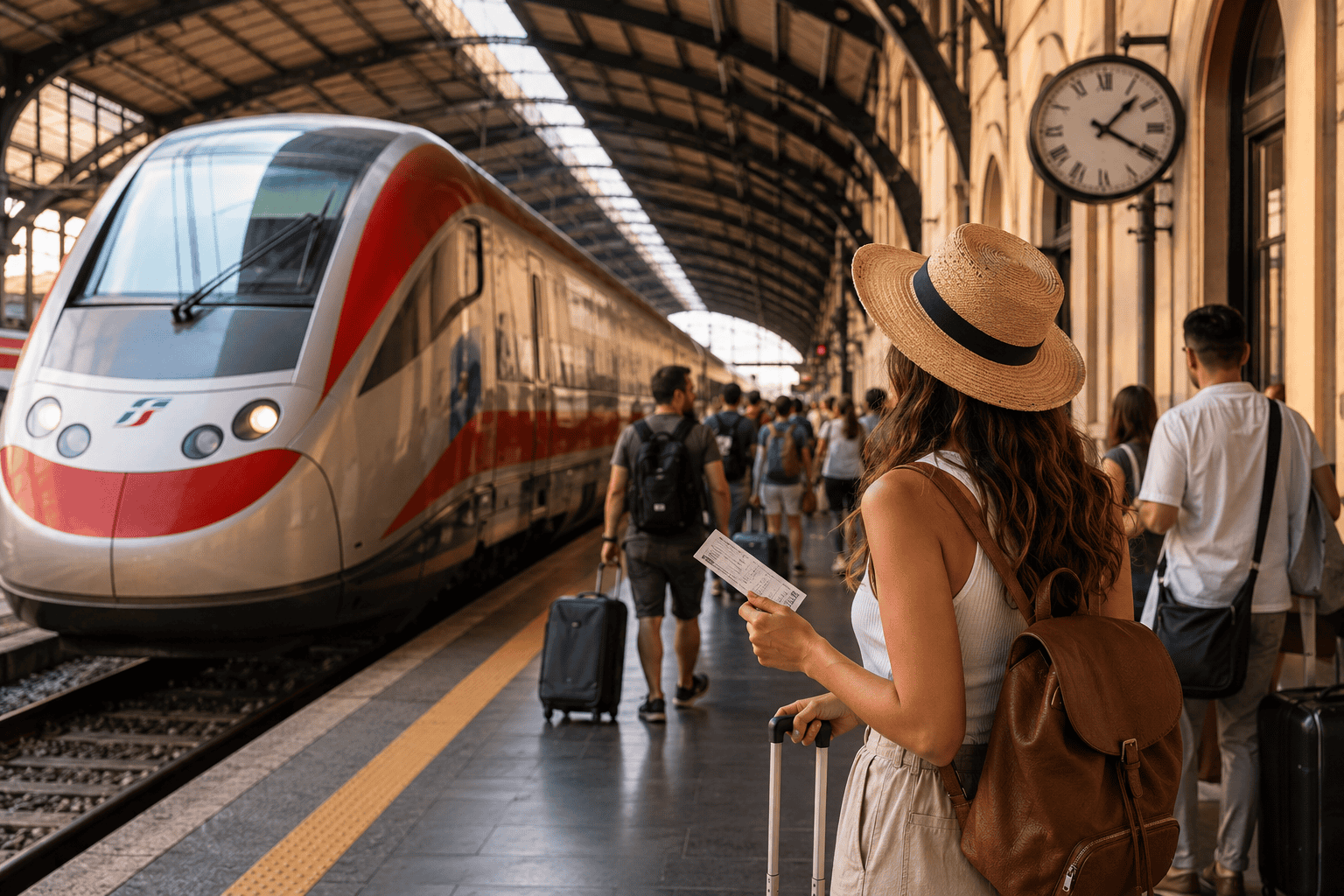
- The travel day starts at your hotel, not at the train platform.
- A hotel near the station can help for one-night stops, but it is not always necessary for longer stays.
- Major stations like Roma Termini and Milano Centrale can take longer to navigate than expected.
- Platform changes with luggage and stairs can quickly become stressful if your transfer window is too tight.
- Arriving 20 to 30 minutes early is usually safer than rushing at the last minute.
Luggage tips for Italy train travel

Luggage is one of the biggest reasons a simple train route can feel harder than expected. Before booking, think about how far you must walk from your hotel, how many stairs you might face, and whether you can lift your bag onto a rack without help.
- Pack lighter if your itinerary includes several city changes.
- Choose direct trains when possible if you are carrying large suitcases.
- Leave extra time for platform changes at larger stations.
- Check whether your arrival hotel is easy to reach from the station.
When train travel may not be the best option
- When the route requires too many connections or long regional transfers.
- When a one-night stop creates more travel fatigue than enjoyment.
- When your airport location or onward flight genuinely makes flying easier.
- When the destination is poorly connected to Italy’s main rail network.
Local Italy train travel friction points travelers underestimate
- Too many city changes in a short trip can create platform fatigue.
- The cheapest ticket is not always the smartest choice if your itinerary may shift.
- Station choice matters far more once luggage is involved.
- Arrival hotels feel much more convenient when they are well connected to the station.
- A beautiful itinerary on paper can become exhausting if it includes constant moving.
A simple rule for deciding whether to take the train
If the route connects major Italy city centers and the train removes more hassle than flying or driving, train travel is usually the best choice. If a route adds multiple changes, awkward timing, or difficult luggage handling, compare the full door-to-door journey before booking.
FAQ about Italy train travel
Is train the best way to travel between major cities in Italy?
Usually yes. For classic routes like Rome to Florence or Milan to Venice, high-speed rail is often the fastest and least stressful option overall.
Should I book Italy train tickets in advance?
For high-speed routes, booking in advance can help you secure better fares. Regional trains are often flexible enough to book closer to departure.
Which Italy train operators should first-time visitors know?
Trenitalia and Italo are the main high-speed operators serving Italy’s major cities.
Are Italy train stations easy to navigate?
Most are manageable, but large stations can feel busy during peak travel times. Give yourself extra time if you are carrying luggage or changing trains.
Do I need a rail pass for a first Italy trip?
Not always. Many first-time visitors do well by booking individual tickets for their confirmed city-to-city routes and staying flexible on shorter regional journeys.
Official Italy rail resources
More Italy travel guides
- Start with our Rome travel guide
- Choose the right base with our where to stay in Rome guide
- Plan smarter with our Rome 3-day itinerary
- Compare a classic rail route in our Rome to Florence guide
- Continue north with our Florence travel guide
- Compare another classic rail journey in our Florence to Venice guide
- Add Milan with our Milan travel guide
- Review another north Italy route in our Milan to Venice guide
- Head south with our Naples travel guide
- Compare the Rome to Naples route before booking
Last verified: 2026-04-18

Mara Vale
Mara Vale writes Eurly travel guides for first-time Europe visitors who want practical routes, realistic pacing, and fewer avoidable planning mistakes.
Eurly guides are written to help readers make confident travel decisions, but opening hours, ticket rules, transit disruptions, and local conditions can change. Always verify key reservations and official schedules before you travel.