

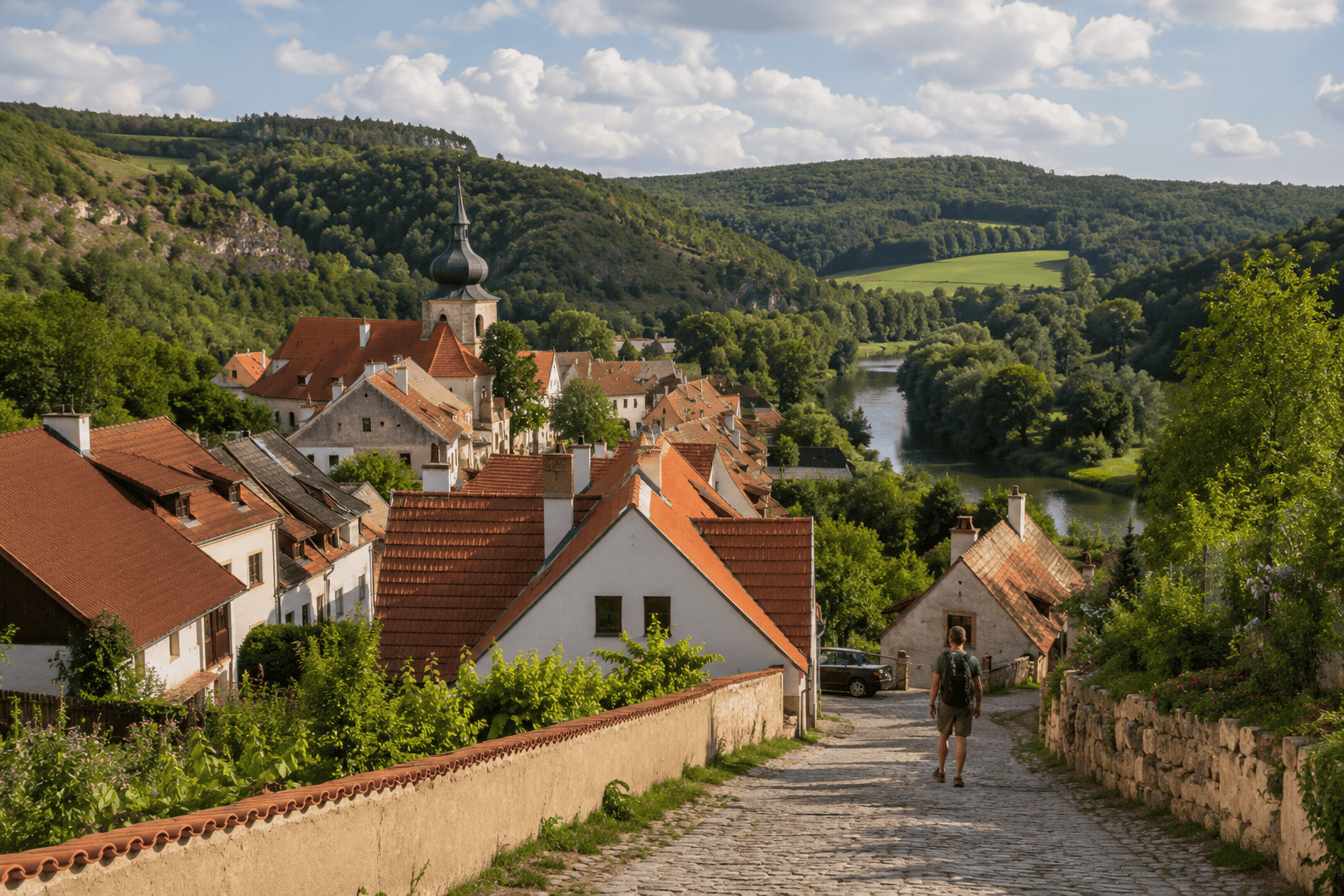
The Czech countryside offers a quieter and more authentic side of the country beyond Prague. Charming villages, historic towns, castles, vineyards, forests, and national parks make it an excellent destination for travelers seeking culture, nature, and slower-paced experiences.
One of the greatest advantages of exploring the Czech countryside is how easy it is to travel between regions. Affordable trains, compact distances, and well-preserved historic centers allow visitors to combine hiking, castle visits, wine tasting, and cultural sightseeing without spending long hours in transit.
Why Explore the Czech Countryside?
The Czech countryside is one of Europe’s easiest rural destinations to explore thanks to excellent transportation, affordable accommodation, compact geography, and a remarkable concentration of castles, forests, and historic towns.
- Excellent rail connections
- Affordable accommodation compared with much of Western Europe
- Safe villages and small towns
- Strong food, beer, and wine culture
- Well-maintained hiking and cycling routes
Best Regions in the Czech Countryside
South Bohemia: Fairy-Tale Towns and Lakes
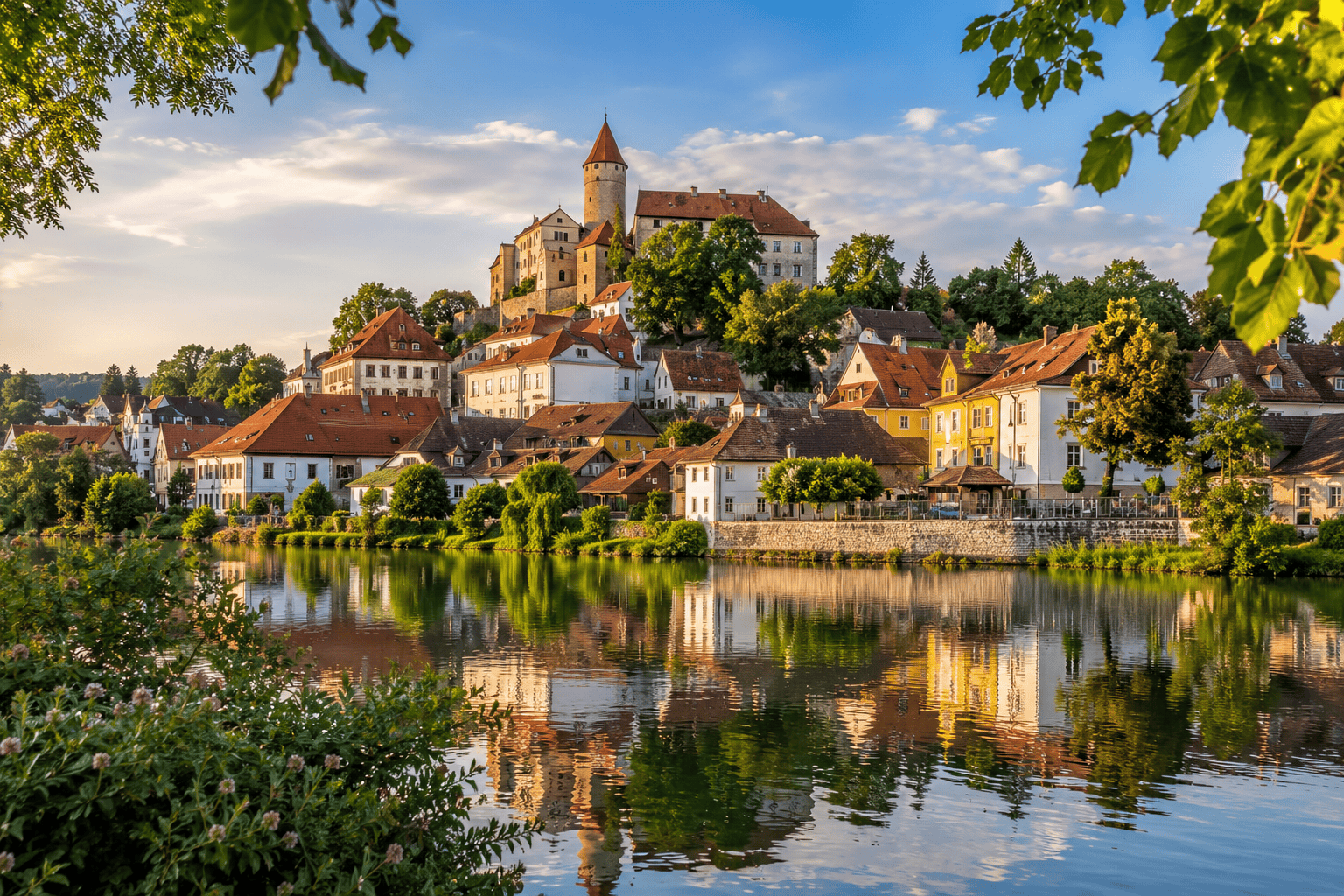
South Bohemia is often the best introduction to the Czech countryside. Visitors can combine Renaissance towns, forested landscapes, lakes, castles, and national parks in a single trip.
Highlights: Český Krumlov, Hluboká Castle, Telč, the Třeboň fishpond region, and Šumava National Park.
Best for: First-time visitors, photographers, romantic trips, and castle lovers.
Moravia: Wine Villages and Folk Culture
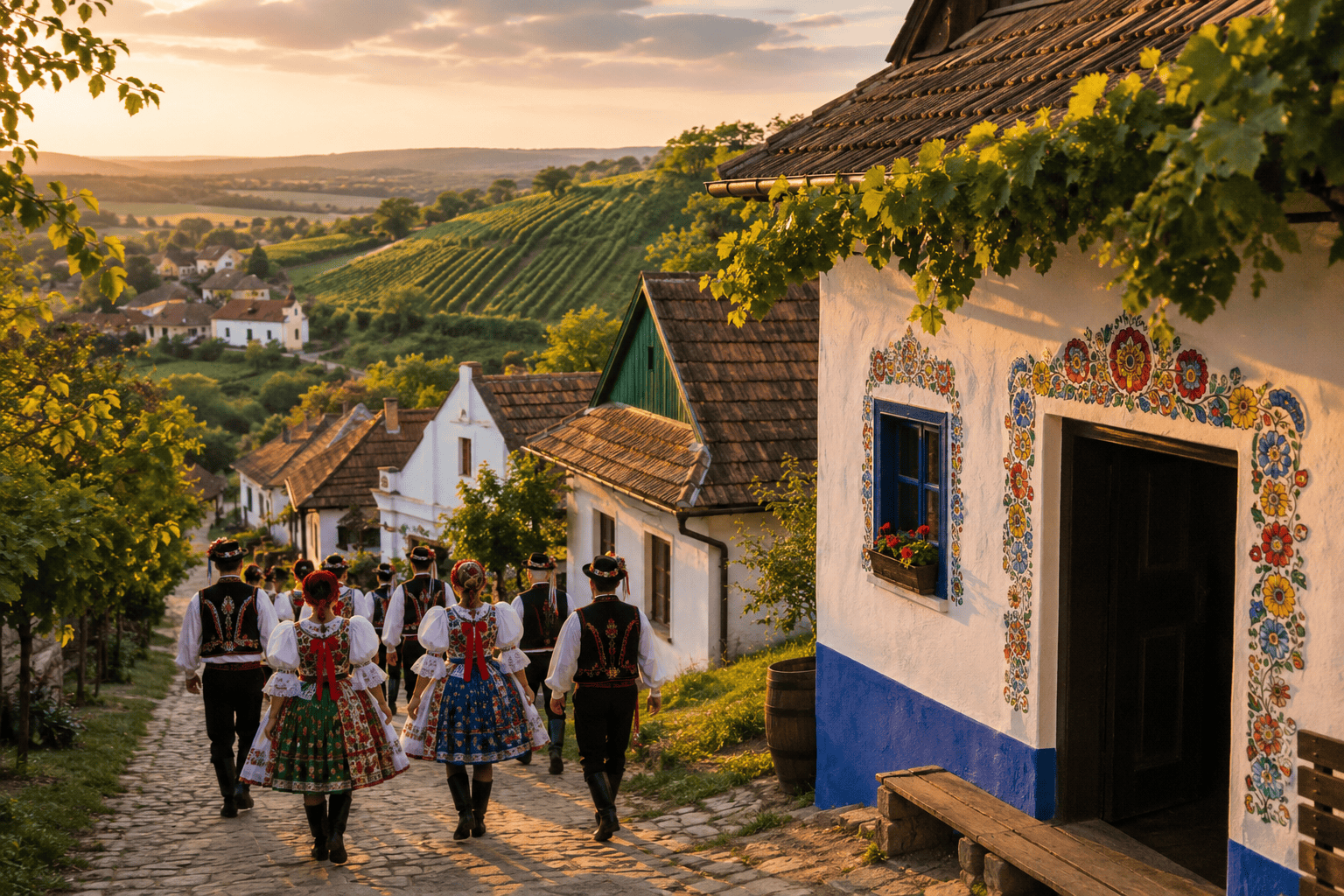
Moravia offers a different atmosphere from Prague, with a stronger focus on wine, rural traditions, and local culture.
Highlights: Brno, Mikulov, Znojmo, Lednice Castle, Valtice Castle, and the Pálava wine region.
Best for: Food and wine travel, cycling trips, and visitors looking for fewer crowds.
Bohemian Switzerland
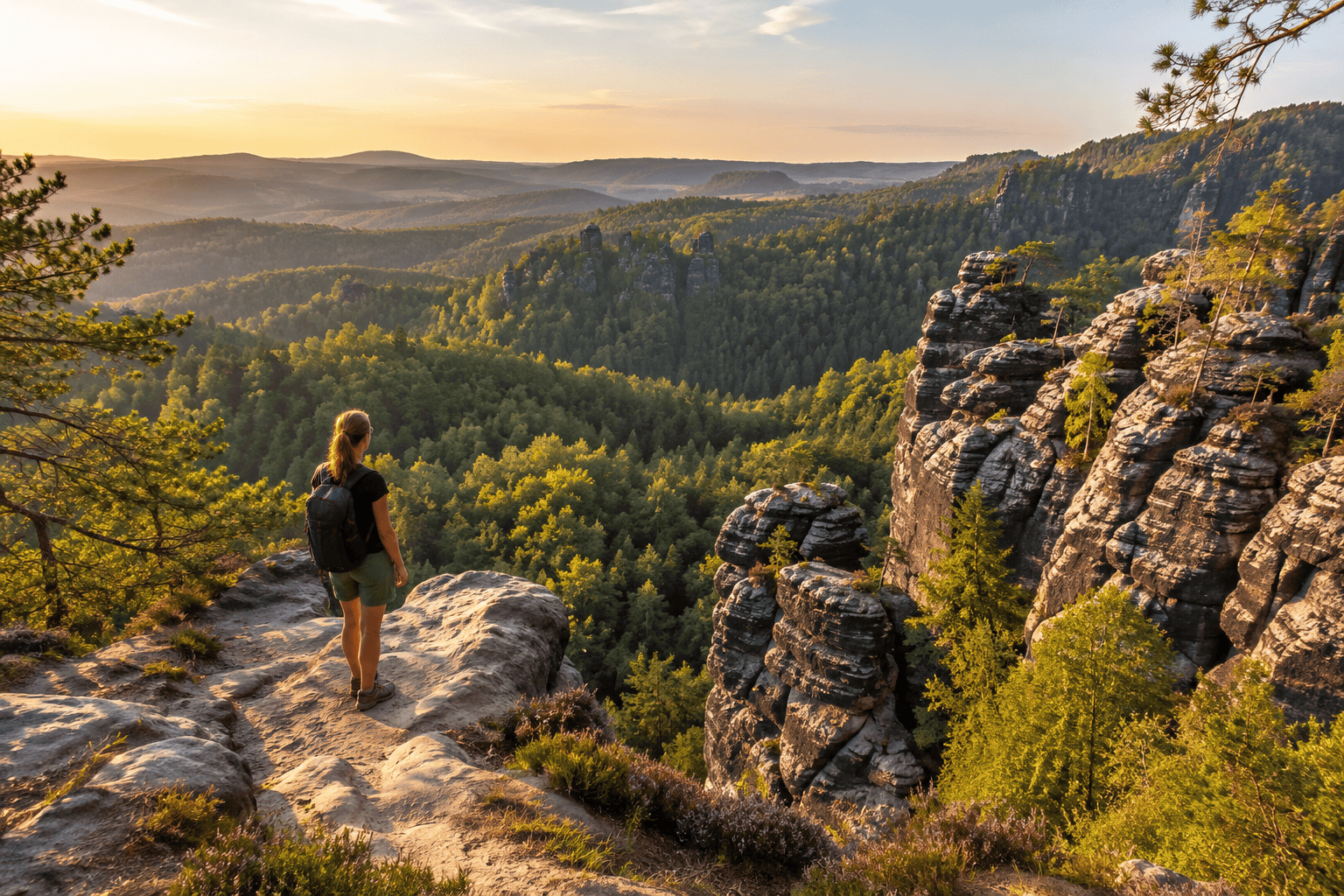
Near the German border, Bohemian Switzerland National Park features sandstone cliffs, forest trails, river gorges, and spectacular viewpoints.
Best bases: Hřensko, Děčín, and Jetřichovice.
Best for: Hiking, photography, and nature-focused trips.
Vysočina: Quiet Rural Czechia
The Vysočina region is known for rolling hills, historic churches, village guesthouses, and a slower pace of travel.
Highlights: Telč, the Pilgrimage Church of Saint John of Nepomuk, and extensive cycling and hiking routes.
The Best Castles in the Czech Countryside
The Czech Republic has one of Europe’s highest concentrations of castles. These are among the most memorable countryside landmarks:
- Karlštejn Castle – One of the country’s most famous castles and an easy trip from Prague.
- Hluboká Castle – Known for its elegant appearance and grand interiors.
- Pernštejn Castle – A rugged and atmospheric medieval fortress.
- Bouzov Castle – A classic fairy-tale castle.
- Loket Castle – Ideal to combine with western Bohemia’s spa towns.
National Parks and Outdoor Areas
The Czech countryside is particularly rewarding for outdoor travelers thanks to its extensive network of marked trails.
| Region | Best For | Difficulty |
|---|---|---|
| Bohemian Switzerland | Dramatic hikes and viewpoints | Moderate |
| Šumava National Park | Forests and lakes | Easy–Moderate |
| Krkonoše Mountains | Mountain hiking | Moderate–Hard |
| Moravian Karst | Caves and nature | Easy |
| Pálava Hills | Wine-country hiking | Easy |
How to Travel Around the Czech Countryside
By Train
For most travelers, trains provide the easiest and most economical way to explore the Czech countryside.
- Affordable fares
- Frequent services
- Comfortable long-distance connections
- Reliable access to major towns and cities
By Car
A rental car becomes useful when visiting remote villages, national parks, and wine regions. Many travelers find it more practical to pick up a car after finishing their time in Prague.
Budget Expectations in the Czech Countryside
Although prices have increased in recent years, the Czech countryside remains relatively affordable compared with many European destinations.
| Travel Style | Estimated Daily Budget |
|---|---|
| Backpacker | €45–70 |
| Mid-range | €90–160 |
| Comfortable | €180+ |
| Expense | Typical Cost |
|---|---|
| Guesthouse room | €45–90 |
| Local restaurant meal | €8–15 |
| Beer | €2–4 |
| Castle entry | €6–15 |
| Regional train ride | €5–20 |
Best Time to Visit the Czech Countryside
Spring (April–June)
Excellent weather, green landscapes, and lighter crowds.
Summer (July–August)
The warmest season, ideal for outdoor activities but often the busiest.
Autumn (September–October)
Often considered the best overall season thanks to cooler temperatures, harvest season, and colorful landscapes.
Winter
Best suited to travelers seeking Christmas markets, snowy scenery, and a quieter atmosphere.
Common Travel Mistakes
- Trying to see too much too quickly instead of choosing a few regional bases.
- Only visiting Český Krumlov and missing regions such as Moravia or Vysočina.
- Assuming English is widely spoken in every rural area.
- Underestimating evening and weekend public transport schedules.
Suggested Czech Countryside Itineraries
5-Day First-Timer Route
Days 1–2 in Prague, Day 3 in Český Krumlov, Day 4 exploring South Bohemia, and Day 5 returning to Prague.
10-Day Slow Travel Route
Spend 3 days in Prague, 3 days in South Bohemia, 3 days in Moravia, and finish with 1 day in Brno.
Is the Czech Countryside Worth Visiting?
Yes. The Czech countryside is ideal for travelers who enjoy scenic train journeys, historic towns, castles, hiking, wine regions, and slower travel experiences. Beyond Prague, visitors discover a diverse landscape that rewards exploration at a relaxed pace.
For more trip-planning inspiration, see What to Eat in Prague: 15 Must-Try Czech Foods.
For additional travel background, visit Wikivoyage.
Mara Vale
Mara Vale writes Eurly travel guides for first-time Europe visitors who want practical routes, realistic pacing, and fewer avoidable planning mistakes.
Eurly guides are written to help readers make confident travel decisions, but opening hours, ticket rules, transit disruptions, and local conditions can change. Always verify key reservations and official schedules before you travel.