

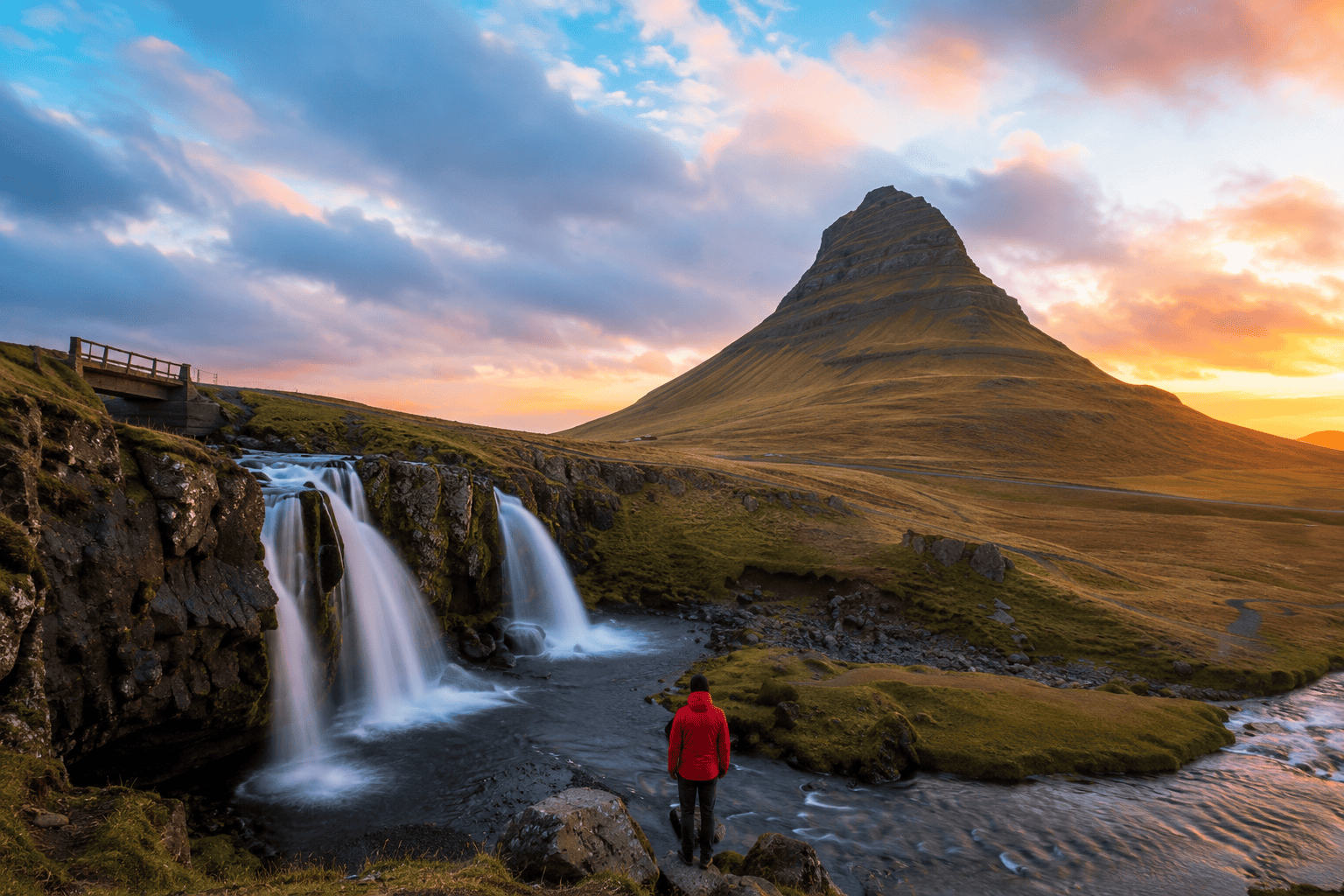
If you’re planning an Iceland itinerary, this guide covers practical route options, driving considerations, budgeting, and seasonal advice to help you make the most of your trip. For more route inspiration, see our Itinerary for Iceland: 7–10 Day Ring Road Route.
An Iceland itinerary provides a clear framework for exploring waterfalls, glaciers, volcanoes, black sand beaches, and coastal villages. Whether you have 5 days, 7 days, or 10 days, careful planning helps maximize your time and reduce unnecessary driving.
Quick Facts Before You Start Planning
- Trip lengths covered: 5 days, 7 days, and 10 days
- Main gateway: Keflavík International Airport (KEF)
- Best transport: Rental car for most routes
- Daily budget: Approximately €120–600+ depending on travel style
- Best shoulder seasons: May and September
- Currency: Icelandic Króna (ISK)
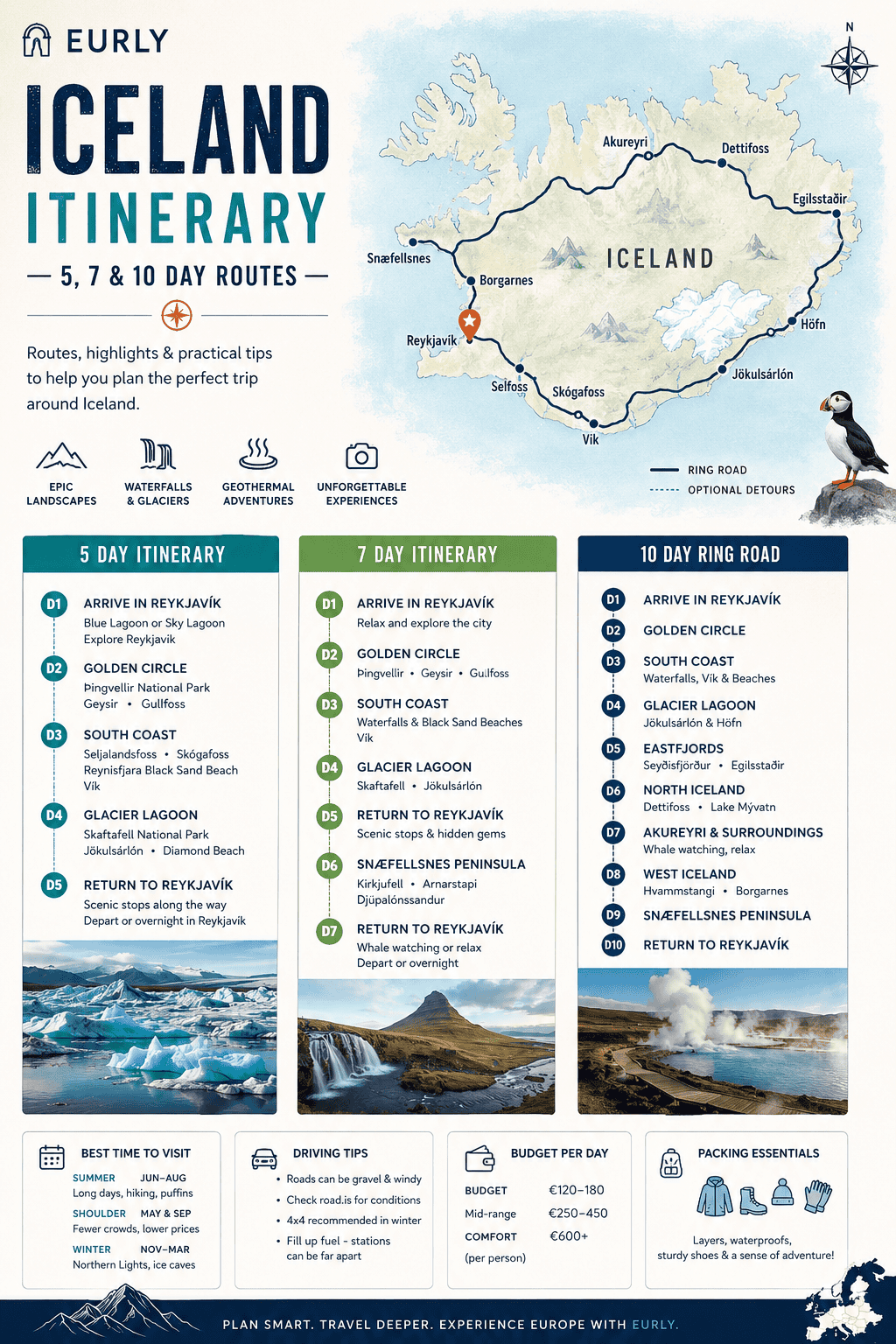
Best Time to Visit Iceland
The best time for an Iceland itinerary depends on your priorities. Summer offers maximum daylight and access to hiking routes, while winter provides opportunities to see the northern lights and ice caves.
Summer (June–August)
Expect long daylight hours, access to most roads, puffin sightings, and ideal conditions for road trips. Accommodation and rental cars are often at their most expensive, so booking well in advance is recommended.
Winter (November–March)
Winter brings snow-covered landscapes, ice caves, and aurora viewing opportunities. However, daylight is limited, weather can change quickly, and some roads may close temporarily.
Shoulder Seasons (May and September)
For many travellers, May and September provide the best balance of manageable weather, lower prices, and fewer crowds.
How Many Days Do You Actually Need?
3–4 days: Reykjavík, the Golden Circle, and part of the South Coast.
5–7 days: Ideal for first-time visitors wanting to experience the South Coast and glacier lagoon region.
10+ days: Allows a full Ring Road itinerary with time for the Eastfjords and North Iceland.
The 5-Day Iceland Itinerary
This 5-day Iceland itinerary focuses on the country’s most famous sights while minimizing long backtracking drives.
Day 1 — Arrive at Keflavík and Explore Reykjavík
Pick up your rental car and spend the day visiting Reykjavík. Popular stops include Hallgrímskirkja, Laugavegur shopping street, the Old Harbour, and either the Blue Lagoon or Sky Lagoon.
Overnight: Reykjavík
Day 2 — Golden Circle Route
- Þingvellir National Park
- Geysir geothermal area
- Gullfoss waterfall
Optional additions include Kerið Crater, Secret Lagoon, or Friðheimar.
Overnight: Hella or Selfoss
Day 3 — South Coast Highlights
- Seljalandsfoss
- Skógafoss
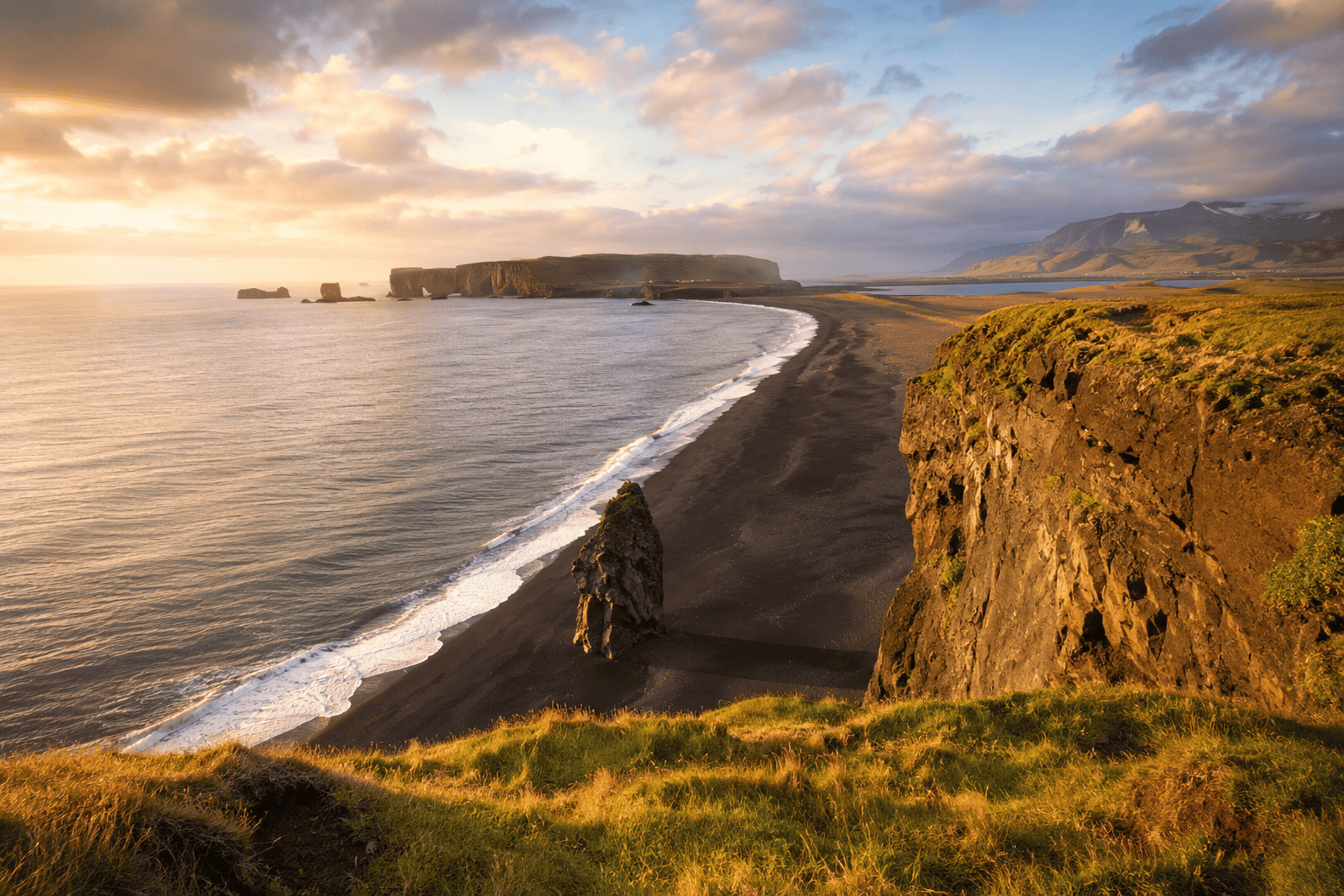
- Dyrhólaey
- Reynisfjara Black Sand Beach
- Vík
Safety reminder: Always respect warning signs at Reynisfjara due to dangerous sneaker waves.
Overnight: Vík
Day 4 — Glacier Lagoon Region
- Fjaðrárgljúfur Canyon
- Skaftafell
- Jökulsárlón Glacier Lagoon
- Diamond Beach
Overnight: Höfn or near Jökulsárlón
Day 5 — Return Toward Reykjavík or Keflavík
Use the return drive to revisit favourite stops or enjoy additional viewpoints along the South Coast.
The 7-Day Iceland Itinerary
A 7-day Iceland itinerary adds flexibility and time for the scenic Snæfellsnes Peninsula.
Days 1–4
Follow the 5-day itinerary described above.
Day 5 — Relaxed Return West
Enjoy lesser-known waterfalls, geothermal pools, or the Lava Centre before returning to Reykjavík.
Day 6 — Snæfellsnes Peninsula
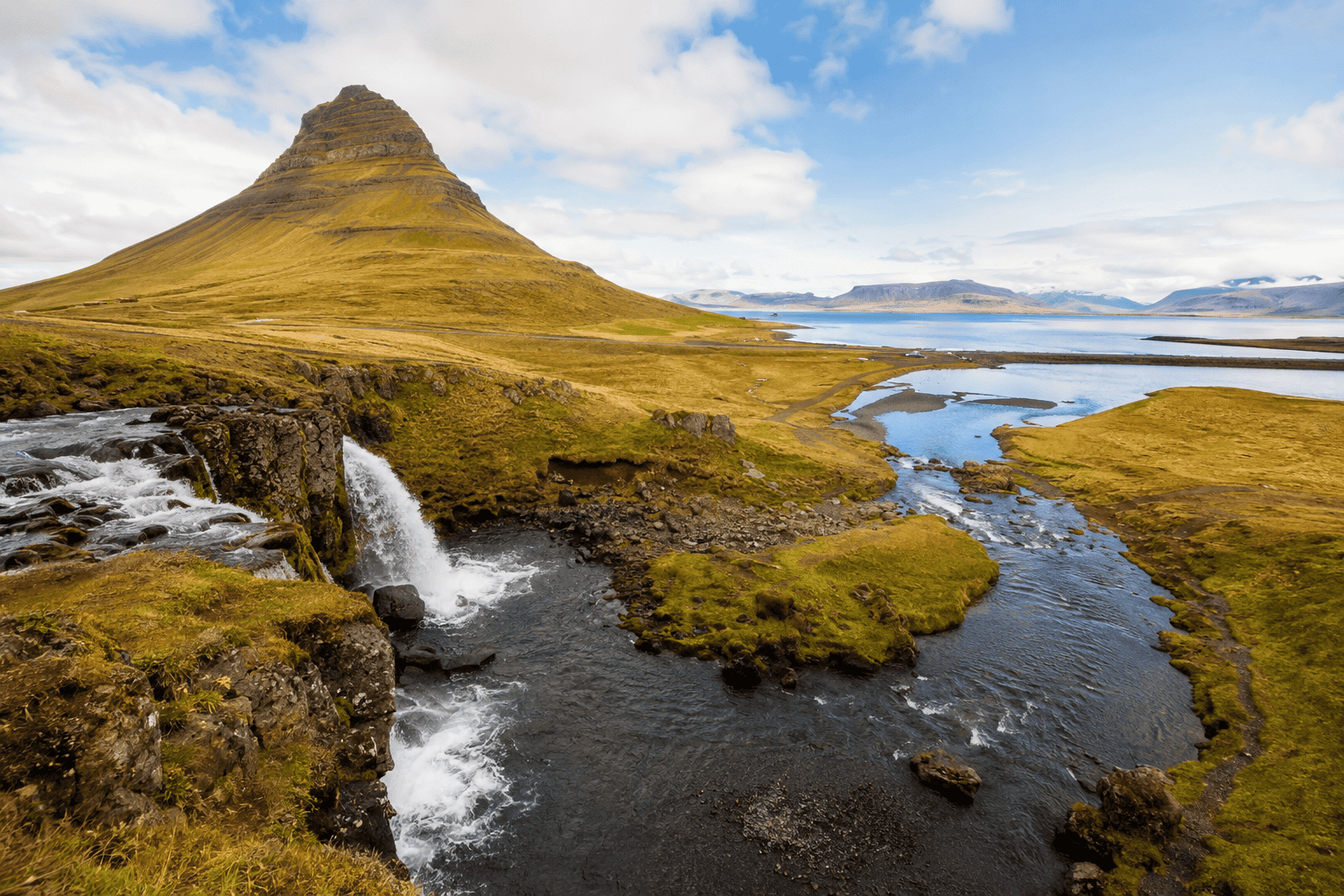
- Kirkjufell Mountain
- Arnarstapi Coastal Walk
- Djúpalónssandur Beach
- Snæfellsjökull National Park
Overnight: Stykkishólmur or Borgarnes
Day 7 — Return to Reykjavík
Spend a final morning exploring before heading to the airport or continuing your journey.
The 10-Day Iceland Ring Road Itinerary
A 10-day Iceland itinerary makes the complete Ring Road achievable at a comfortable pace and allows time to experience Iceland’s diverse regions.
| Day | Route |
|---|---|
| 1 | Keflavík to Reykjavík |
| 2 | Golden Circle |
| 3 | South Coast to Vík |
| 4 | Glacier Lagoon Region |
| 5 | Eastfjords |
| 6 | Lake Mývatn |
| 7 | Dettifoss and Akureyri |
| 8 | Akureyri Exploration |
| 9 | West Iceland |
| 10 | Return to Reykjavík |
Eastfjords
Highlights include Seyðisfjörður, Djúpivogur, and Egilsstaðir, offering quieter scenery and fewer crowds than southern Iceland.
Lake Mývatn and Dettifoss
Explore geothermal landscapes, lava formations, hot springs, and one of Europe’s most powerful waterfalls.
Akureyri
North Iceland’s main urban centre offers whale watching, botanical gardens, and excellent restaurants.
Renting a Car in Iceland: What First-Timers Get Wrong
- Ignoring gravel protection insurance.
- Choosing a 2WD vehicle for winter or F-road travel.
- Underestimating wind hazards.
- Not checking road and weather conditions daily.
Before driving, monitor conditions through official services such as road.is and vedur.is.
Iceland Trip Budget: What to Expect
| Travel Style | Estimated Daily Budget |
|---|---|
| Budget | €120–180 |
| Mid-Range | €250–450 |
| Higher-End | €600+ |
Accommodation is typically the largest expense. Farm stays can often provide better value than standard hotels, especially outside major tourist centres.
Where to Stay Along Your Iceland Itinerary
- Reykjavík
- Hella or Selfoss
- Vík
- Höfn
- Egilsstaðir
- Akureyri
- Stykkishólmur or Borgarnes
Booking accommodation well in advance is strongly recommended during summer when availability is limited.
What to Pack for Iceland
- Waterproof jacket and trousers
- Warm insulating layers
- Waterproof hiking footwear
- Swimsuit for geothermal pools
- Power bank
- Sleep mask for summer travel
- Winter traction devices if travelling in colder months
Northern Lights: Managing Expectations
The northern lights are typically visible from September through March on clear nights. Flexible plans and accommodation away from major urban areas can improve your chances of a sighting, but sightings are never guaranteed.
Common Iceland Itinerary Mistakes to Avoid
- Underestimating driving times.
- Overloading each day with activities.
- Ignoring weather forecasts.
- Missing unplanned scenic stops.
- Failing to budget for food and fuel.
Self-Drive Versus Guided Tours
Self-driving provides flexibility and independence, while guided tours are useful for winter activities, glacier excursions, and travellers uncomfortable driving in challenging conditions.
Frequently Asked Questions
Is one week enough for Iceland?
Yes. A 7-day Iceland itinerary covers many of the country’s most popular attractions at a comfortable pace.
Do I need a 4×4 for the Ring Road?
Not in summer for the paved Ring Road, but it is generally recommended during winter and required for F-roads.
How far in advance should I book accommodation?
Booking 3–4 months ahead is advisable for summer travel, especially along the South Coast.
Can I visit Iceland without a rental car?
Yes, but you’ll rely heavily on organised tours and limited public transportation options.
When is the cheapest time to visit Iceland?
January and February are often among the least expensive months, while May and September can offer a strong balance of value and favourable conditions.
Is Iceland safe to drive in winter?
Yes, provided you use an appropriate vehicle, monitor conditions regularly, and respect weather warnings.
Last verified: May 2025. Prices, road conditions, and attraction access can change seasonally. Always confirm current information through official Icelandic sources before travel.

Mara Vale
Mara Vale writes Eurly travel guides for first-time Europe visitors who want practical routes, realistic pacing, and fewer avoidable planning mistakes.
Eurly guides are written to help readers make confident travel decisions, but opening hours, ticket rules, transit disruptions, and local conditions can change. Always verify key reservations and official schedules before you travel.