

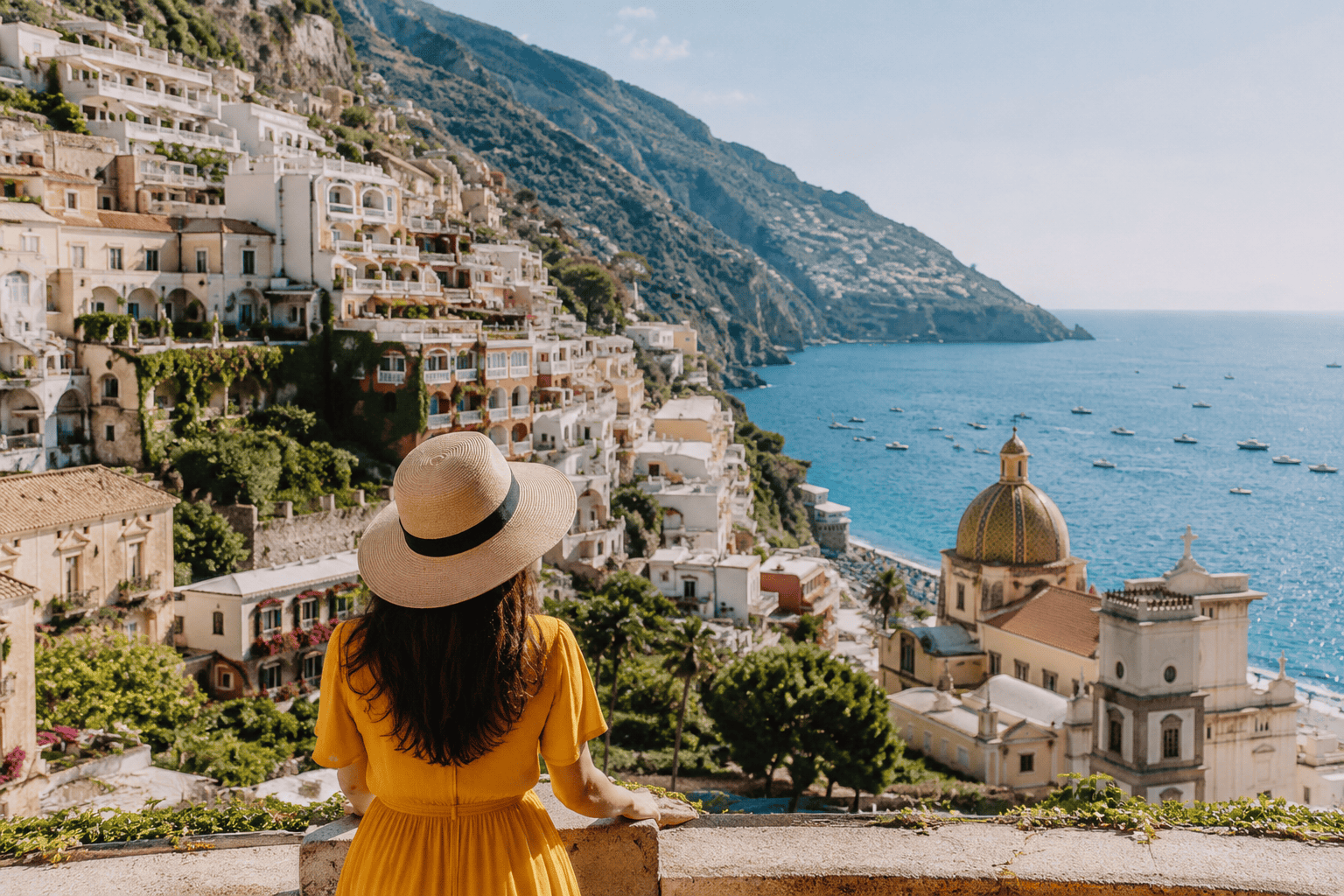
A European travel guide can help travelers plan more efficiently across multiple destinations. Good preparation saves time, reduces stress, and leads to a smoother travel experience.
This European travel guide helps travelers make smarter decisions before and during their trip. Understanding transport, timing, budgets, and travel pace can improve the entire experience and help you get more value from every destination.
This guide covers everything you need to plan a European trip well, from choosing the right season and transport options to managing costs, building realistic itineraries, and avoiding common travel mistakes.
European Travel Guide: Why Europe Is Both Easier and Harder Than You Expect
Europe is compact, connected, and full of iconic destinations. You can take a morning train from Paris and be in Amsterdam by early afternoon, making multi-country travel far easier than in many other regions.
However, short distances on a map do not always translate to easy travel days. Common challenges include:
- Airport transfers consuming large parts of the day
- Train connections becoming stressful with heavy luggage
- Popular cities becoming crowded and expensive in summer
- Museum-heavy itineraries causing fatigue after several days
- Frequent hotel changes creating unnecessary stress
The best European trips balance famous cities with slower regional experiences. Rather than visiting ten countries in two weeks, many travelers enjoy Europe more when they focus on two to four countries, reduce hotel changes, combine cities with smaller towns or nature, and schedule recovery days.
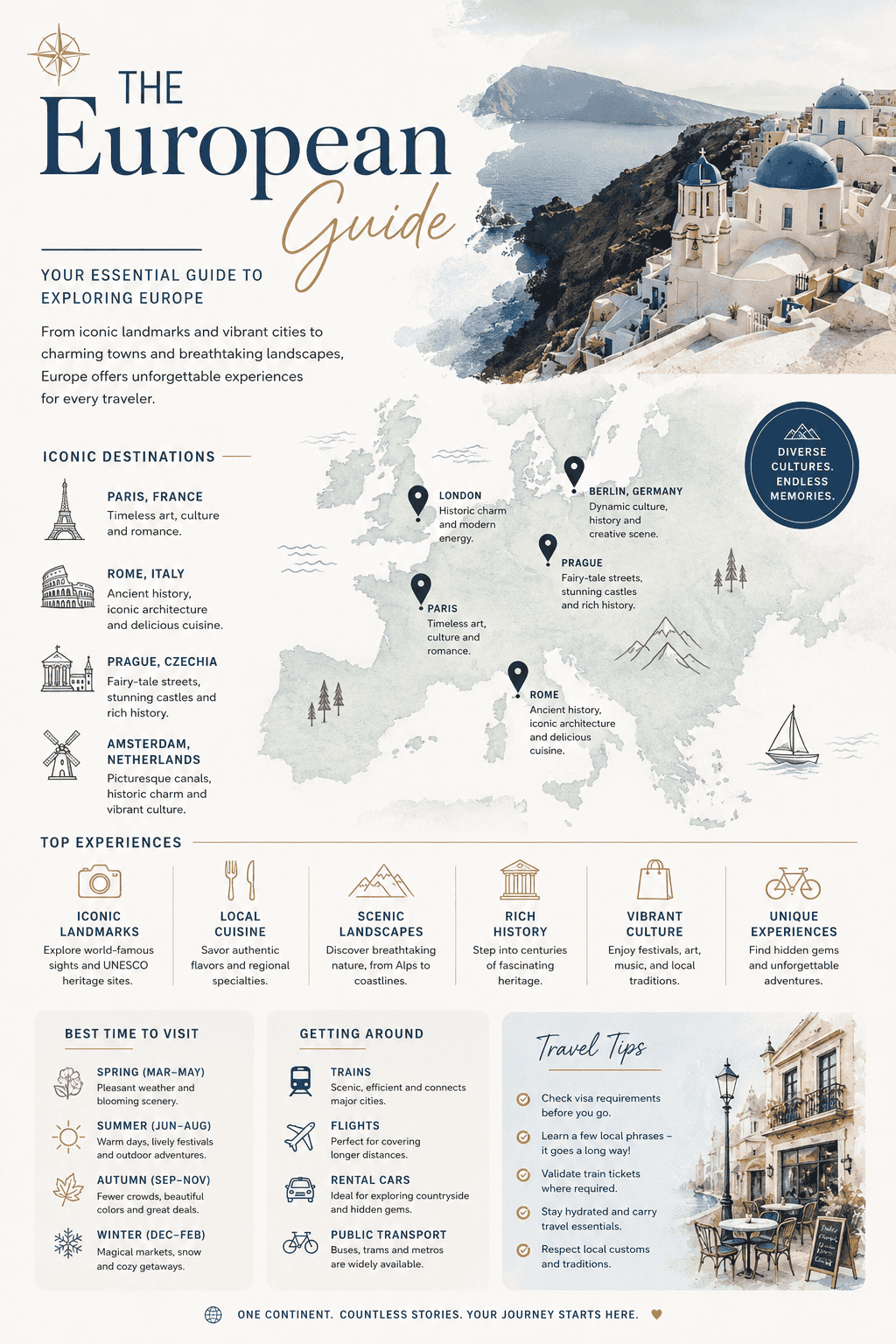
When to Visit Europe: A Practical Season Guide
Timing influences weather, prices, crowd levels, and the overall travel experience.
Spring (April–May)
Spring offers mild temperatures, lower accommodation costs, and fewer crowds. Destinations such as the Netherlands, Italy, Portugal, and southern Spain are especially attractive during this period.
Summer (June–August)
Summer brings long daylight hours, festivals, beaches, and mountain activities. It is also the busiest and most expensive season, particularly in southern Europe where heat waves can occur.
Fall (September–October)
Many experienced travelers consider fall the ideal season. Warm weather often remains, crowds decrease, and accommodation and transport costs become more manageable.
Winter (November–March)
Winter offers two distinct experiences: festive Christmas market destinations such as Vienna and Prague, and milder escapes including Portugal, southern Spain, Sicily, and parts of Greece.
How Long Should a Europe Trip Be?
The ideal trip length depends on your interests, budget, and tolerance for travel fatigue.
One Week
Focus on a single region. Strong combinations include Paris and Amsterdam, Rome and Florence, Lisbon and Porto, or Prague, Vienna, and Budapest.
Two Weeks
Two weeks is often the sweet spot. It allows time for several major cities, smaller destinations, and slower travel days without feeling rushed.
One Month
Longer trips benefit from regional bases and day trips. Staying in apartments and minimizing frequent moves can improve both comfort and budget management.
Getting Around Europe: Transport Options Compared
Trains
Europe’s rail network is one of its greatest travel advantages. Trains are often faster and less stressful than flying once airport transfers and security checks are considered.
Countries with especially strong rail systems include France, Italy, Switzerland, Germany, Austria, and the Netherlands. Compare routes using Rome2Rio and always compare rail passes with individual ticket prices before purchasing.
Budget Airlines
Budget airlines work well for long-distance journeys, island routes, and connections where rail travel is impractical. Be sure to account for baggage fees, airport transfers, and other additional costs.
Renting a Car
Driving is particularly useful in rural regions such as Ireland, the Scottish Highlands, Tuscany, Provence, Iceland, and parts of the Balkans. In major cities, public transportation is usually the better option.
Europe Budget Guide: Daily Costs by Region
Travel costs vary significantly across Europe.
| Region Type | Example Destinations | Typical Mid-Range Daily Budget |
|---|---|---|
| High Cost | Switzerland, Norway, Iceland, Denmark | €200–€400 per person |
| Moderate Cost | France, Germany, Italy, Austria, Netherlands | €120–€250 per person |
| Budget Friendly | Portugal, Poland, Hungary, Romania, Albania | €60–€140 per person |
Practical Ways to Reduce Costs
- Travel during shoulder seasons.
- Stay near public transit instead of major landmarks.
- Mix restaurant meals with grocery breakfasts and casual lunches.
- Consider regional trains for scenic and economical journeys.
Starter Itineraries: Four Routes Worth Considering
Classic Western Europe
London, Paris, and Amsterdam offer excellent transport links and many iconic attractions.
Italy Focus
Rome, Florence, Tuscany, and Venice provide a strong mix of history, food, art, and scenery.
Central Europe Triangle
Prague, Vienna, and Budapest combine beautiful architecture, efficient rail travel, and good value.
Iberian Peninsula
Lisbon, Porto, Seville, Granada, and Barcelona offer excellent food, architecture, and mild weather in cooler months.
Common Europe Travel Mistakes
- Trying to visit too many destinations in a short time.
- Underestimating travel fatigue.
- Skipping advance reservations during peak season.
- Overpacking for multi-city travel.
Accommodation: Which Type Works Best
- Hotels: Ideal for shorter stays and predictable service.
- Apartments: Great for families, longer stays, and travelers who want kitchens or laundry facilities.
- Hostels: Suitable for budget-conscious travelers and those seeking social experiences.
Food Culture: What Changes Across Europe
Dining customs vary considerably across Europe.
Northern Europe often features earlier dining times and higher restaurant prices.
Southern Europe typically offers later meals, longer dining experiences, and strong café culture.
Central Europe is known for hearty cuisine, historic cafés, and affordable lunch specials.
Safety, Connectivity, and Practical Logistics
Europe is generally safe, but travelers should remain aware of common issues such as pickpocketing, tourist scams, and taxi overcharging.
- Use secure cross-body bags.
- Keep backup payment methods separate from your primary wallet.
- Use official taxi services or trusted ride-hailing apps.
Many travelers choose eSIM plans for convenient multi-country data coverage. Contactless card payments are widely accepted, although carrying a small amount of cash remains useful in some rural areas.
For rail travel planning, compare options from Interrail and Eurail.
Slow Travel vs Fast Travel: Choosing Your Pace
Fast travel allows travelers to see more destinations but can increase fatigue and reduce time spent enjoying each place.
Slow travel emphasizes longer stays, deeper local experiences, and reduced logistical stress. Many travelers find a hybrid approach works best, combining a few main bases with day trips.
Best European Destinations by Interest
| Interest | Recommended Destinations |
|---|---|
| Art and Museums | Paris, Florence, Madrid, Vienna |
| Food | Bologna, San Sebastián, Lyon, Naples |
| Nature | Swiss Alps, Norwegian Fjords, Scottish Highlands, Dolomites |
| Beaches | Greek Islands, Algarve, Croatian Coast, Sardinia |
| History | Rome, Athens, Berlin, Kraków |
| Architecture | Prague, Lisbon, Dubrovnik, Bruges |

Frequently Asked Questions
How many countries should I visit in two weeks in Europe?
Two to four countries is a practical target for most travelers. Three countries often provides the best balance between variety and comfort.
Is a Eurail or Interrail pass worth it?
It depends on your route. Multi-country trips with frequent train travel often benefit most from rail passes.
What is the cheapest time to travel to Europe?
November through early March, excluding major holiday periods, is generally the most affordable time to visit.
Do I need to book attractions in advance?
For major attractions and peak travel periods, advance booking is strongly recommended.
Is Europe safe for solo travelers?
Yes. Most destinations are considered safe, with petty theft being the most common concern.
How much does a typical two-week Europe trip cost?
A mid-range traveler visiting Western Europe can expect costs of approximately €2,500–€5,000 per person excluding international flights, depending on destination choices and season.
By Mara Vale for Eurly
Last verified: May 2025
For more trip-planning context, also see our Best Apps for Europe Travel in 2026.

Mara Vale
Mara Vale writes Eurly travel guides for first-time Europe visitors who want practical routes, realistic pacing, and fewer avoidable planning mistakes.
Eurly guides are written to help readers make confident travel decisions, but opening hours, ticket rules, transit disruptions, and local conditions can change. Always verify key reservations and official schedules before you travel.