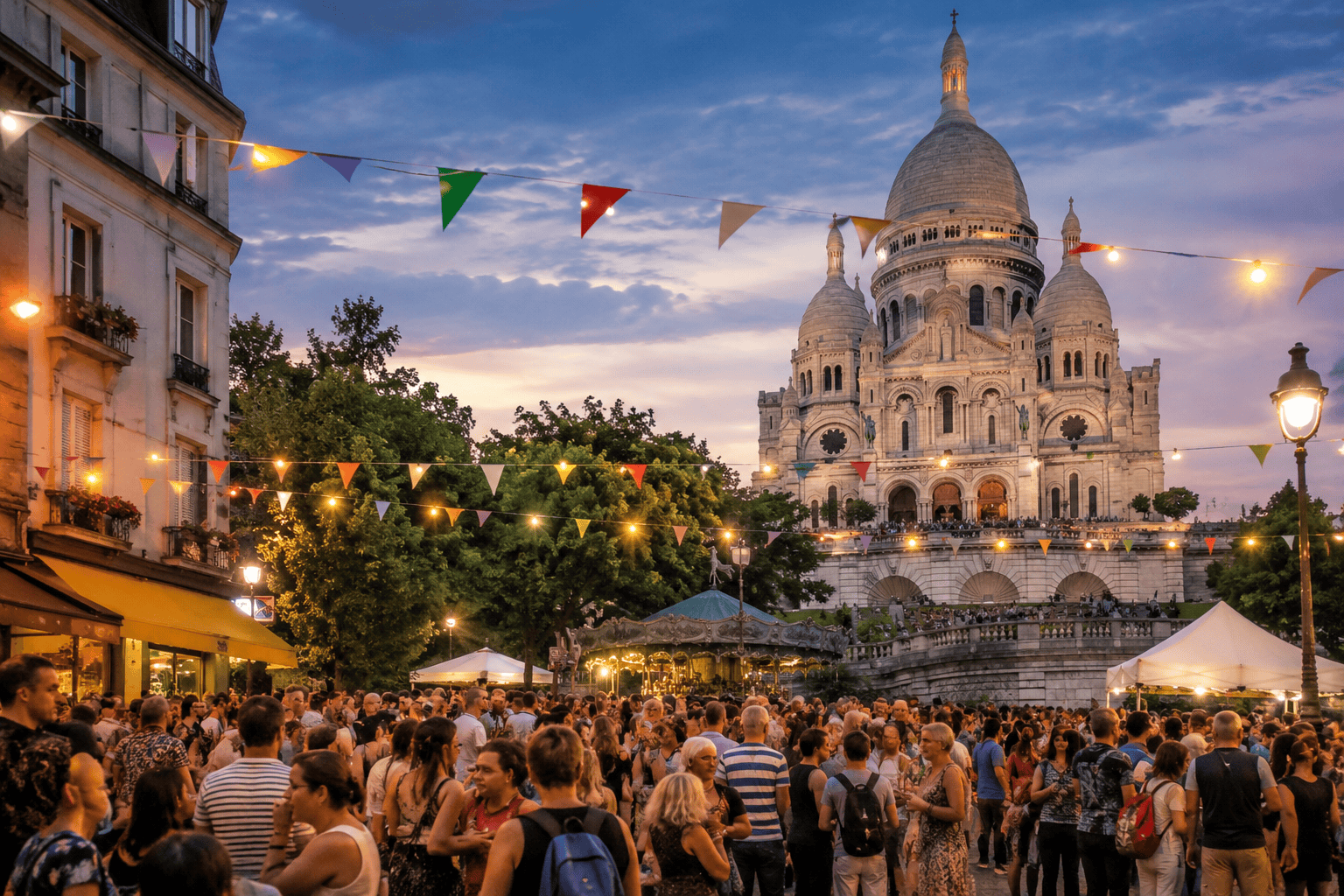
Festivals France: Best Events to Plan Around

Festivals France: Best Events to Plan Around
SEO Title: Festivals France: The Best French Festivals Worth Planning Your Trip Around

Meta Description: A practical season-by-season guide to the best festivals in France — from Nice Carnival to Strasbourg's Christmas Market — with budget tips, booking timelines, and honest tradeoffs.

Primary Keyword: festivals france

Secondary Keyword:

URL Slug: festivals-france

Post Type: post


<h1>Festivals France: The Best French Festivals Worth Planning Your Trip Around</h1>

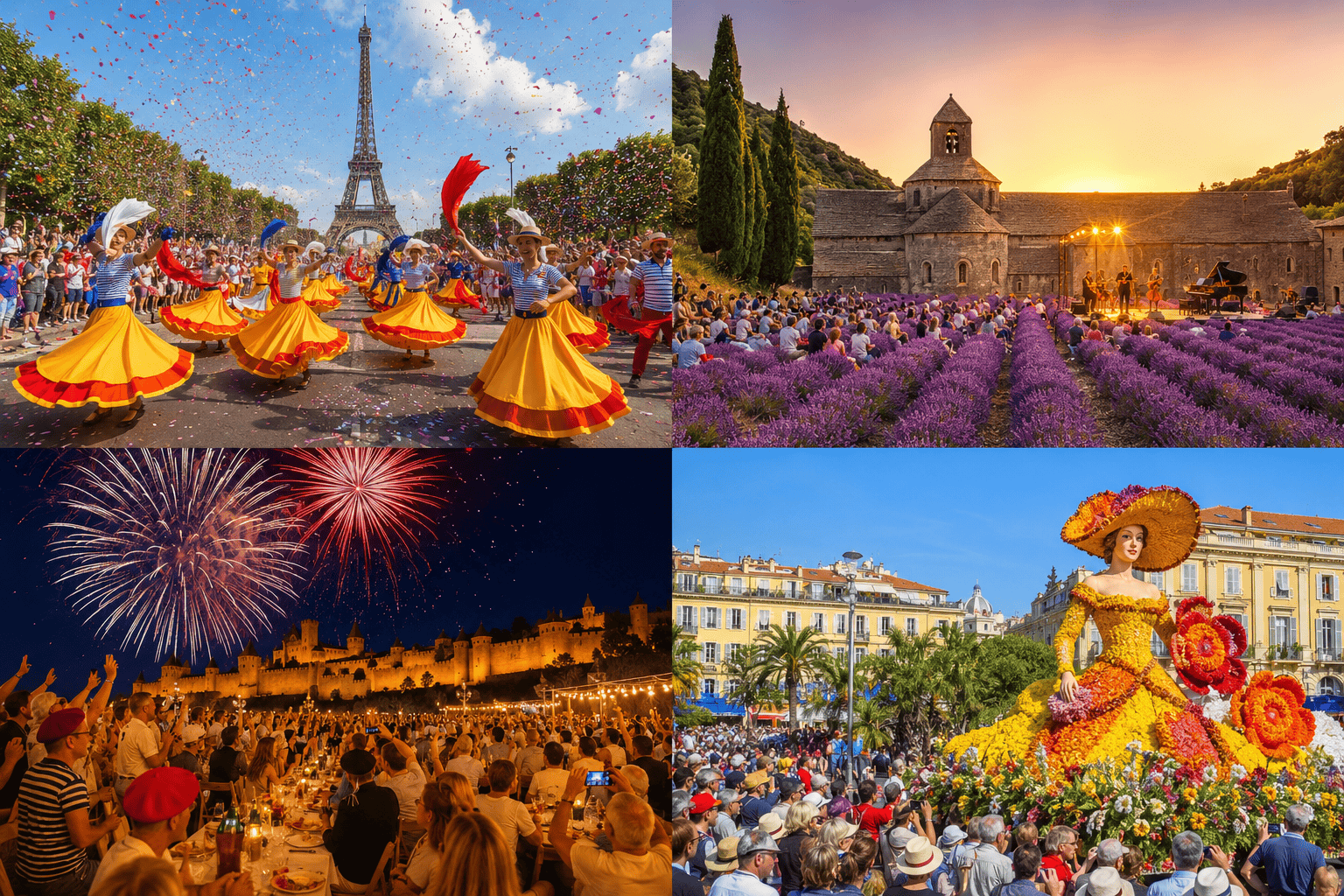
<p>France is not just about museums, wine villages, and café terraces. Across the country, festivals shape the rhythm of the year — from lavender-season celebrations in Provence to giant music events in Paris and medieval fairs in small towns most travelers otherwise skip.</p>

<p>For travelers, the real challenge is not finding festivals in France. It is choosing the right ones for your travel style, budget, and tolerance for crowds. Some are world-famous and booked up months in advance. Others are local events where you eat regional food, hear traditional music, and experience France well beyond the tourist circuit.</p>

<p>This guide covers the best festivals by season, practical booking timelines, honest budget realities, and the mistakes worth avoiding.</p>

<hr />

<h2>Why Festivals Matter in France</h2>

<p>French festivals are deeply regional. A festival in Brittany feels completely different from one in Provence or the Alps — food, language, music, and cultural identity shift dramatically from region to region. That matters for travelers because festivals are often the easiest way to experience local culture without needing insider connections or fluent French.</p>

<p>Depending on the season, you will find:</p>

<ul>

<li>Food festivals celebrating oysters, wine, cheese, or truffles</li>

<li>Music festivals ranging from jazz to electronic, held in villages and cities alike</li>

<li>Historical reenactments and medieval fairs</li>

<li>Religious and seasonal celebrations still rooted in local tradition</li>

<li>Film and arts festivals with global reputations</li>

<li>Village fêtes where tourists remain a minority</li>

</ul>

<p>If you plan carefully, festivals also solve a common France travel problem: deciding where to spend extra nights outside Paris.</p>

<hr />

<h2>Winter and Spring Festivals in France (February–May)</h2>

<p>Late winter into spring is one of the most overlooked windows for festivals in France. Temperatures are comfortable compared to peak summer, prices are lower across much of the country, and many events feel more authentically local.</p>

<h3>Nice Carnival — French Riviera</h3>

<p>Usually held in February, the Nice Carnival is one of Europe’s largest carnival celebrations. Massive floats roll along the Promenade des Anglais while flower battles shower crowds with blooms. The combination of Mediterranean weather and a compact, walkable old town makes it one of the most accessible major festivals in France.</p>

<p><strong>Why travelers like it:</strong></p>

<ul>

<li>Mild weather compared to northern Europe in February</li>

<li>Easy to combine with Monaco, Menton, and inland Provence</li>

<li>Cheaper than peak Riviera summer rates in most years</li>

</ul>

<p><strong>Tradeoffs to know:</strong></p>

<ul>

<li>Hotel prices spike significantly during carnival week</li>

<li>Grandstand parade seating sells out early — often weeks ahead</li>

<li>The old town (Vieux-Nice) becomes very crowded after dark</li>

</ul>

<p><strong>Budget reality:</strong></p>

<ul>

<li>Budget hotels near the station: approximately €90–€140 per night</li>

<li>Mid-range beachfront hotels: €180–€300 per night</li>

<li>Parade seating tickets: €10–€30</li>

</ul>

<p><strong>Planning tip:</strong> Stay near the train station rather than on the beachfront if you want lower accommodation costs without sacrificing walkability to the main events.</p>

<p>Official information: <a href=”https://www.nicecarnaval.com/en/” rel=”noopener noreferrer” target=”_blank”>nicecarnaval.com</a></p>

<hr />

<h3>Feria d’Arles — Provence</h3>

<p>The Feria d’Arles runs twice yearly — in April (Easter week) and September — and mixes bullfighting traditions, street music, dancing, and southern food culture in the atmospheric Roman streets of the city. Even travelers with no interest in bullfighting often find the surrounding festive atmosphere compelling: wine flows freely, impromptu concerts spill into plazas, and Arles fills with people dressed in traditional Provençal clothing.</p>

<p><strong>Best for:</strong> Provence road trips, photography, and anyone wanting a taste of traditional southern French culture outside the main tourist months.</p>

<p><strong>Mistake to avoid:</strong> Many travelers underestimate how quickly Arles fills up during festival weekends. Book accommodation at least three months in advance, or plan to stay in nearby Nîmes and travel in by train.</p>

<hr />

<h2>Summer Festivals in France (June–August)</h2>

<p>Summer is peak festival season across France. Expect higher accommodation prices, increased competition for TGV seats, and extreme heat in the south during July and August. That said, the range and quality of summer events is unmatched anywhere in Europe.</p>

<h3>Festival d’Avignon — Theater and Arts</h3>

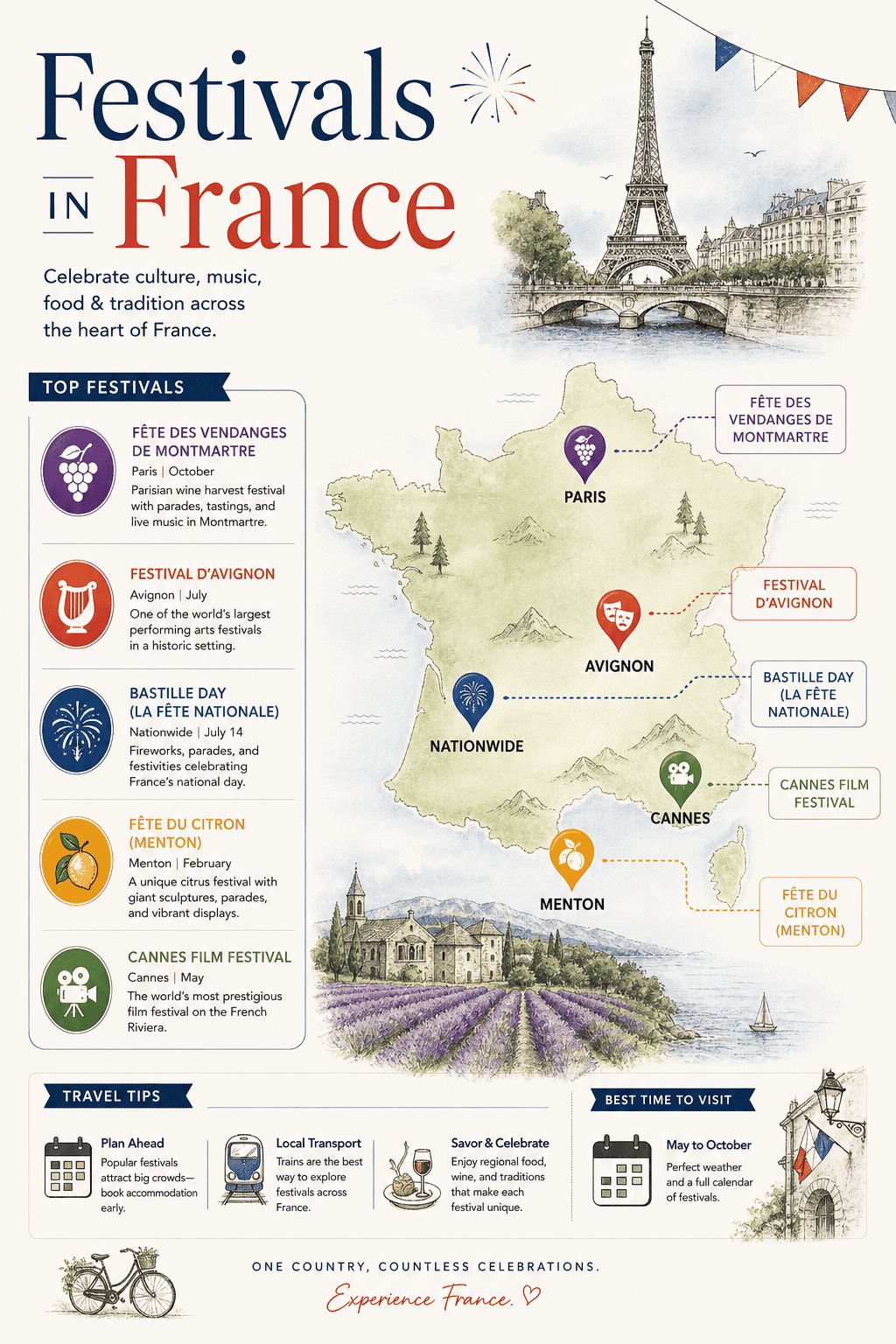
<p>Every July, the Festival d’Avignon transforms this medieval walled city into one of Europe’s most important centers for contemporary theater and performance arts. Performances overflow into courtyards, churches, cafés, and alleyways. The official festival runs alongside the <em>Festival Off</em> — hundreds of independent shows, many free or very cheap, which give the city an infectious creative energy even if you do not buy tickets to the headline program.</p>

<p><strong>What makes it work for non-French speakers:</strong> Street performances, visual theater, circus acts, and music create atmosphere throughout the city regardless of language. You do not need to follow a script to enjoy the experience.</p>

<p><strong>Real tradeoffs:</strong></p>

<ul>

<li>Accommodation shortages in Avignon are serious — book four to six months ahead</li>

<li>July heat in Provence regularly exceeds 35°C (95°F)</li>

<li>The historic center gets noisy well into the night during the festival</li>

</ul>

<p><strong>Practical tip:</strong> Staying near the train station gives you easy access to day trips around the Luberon and the Camargue, and slightly more distance from the noisiest festival streets.</p>

<p>Official information: <a href=”https://www.festival-avignon.com/en” rel=”noopener noreferrer” target=”_blank”>festival-avignon.com</a></p>

<hr />

<h3>Les Vieilles Charrues — Brittany</h3>

<p>France’s largest music festival takes place not in Paris but in the small Breton town of Carhaix, deep in rural Brittany. The lineup typically mixes major international acts with artists rooted in Breton folk traditions, and the contrast between the global stage and the deeply local setting is part of what makes it special.</p>

<p><strong>Why it works well for travelers:</strong></p>

<ul>

<li>Significantly cheaper than Paris-based festivals</li>

<li>A natural anchor for a longer Brittany trip — the coastline is within easy reach</li>

<li>Strong local atmosphere that does not feel manufactured for tourists</li>

</ul>

<p><strong>Main downside:</strong> Transportation to Carhaix without a car can be complicated. Research shuttle services from Rennes or Brest well in advance.</p>

<p><strong>Budget tip:</strong> The on-site camping is the cheapest and most social option — and widely used by French festival-goers of all ages.</p>

<hr />

<h3>Cannes Film Festival</h3>

<p>Most travelers will not attend premieres or industry screenings, but the atmosphere during the Cannes Film Festival is still worth experiencing — red carpets, luxury yachts in the harbor, outdoor screenings, and the spectacle of the global film industry in a town the size of a medium French city.</p>

<p><strong>Important reality check:</strong> Cannes during the festival is expensive even by Riviera standards. Basic hotel rooms regularly exceed €300–€500 per night, restaurant reservations fill up fast, and the train from Nice becomes noticeably more crowded.</p>

<p><strong>Smarter strategy:</strong> Base yourself in Antibes or Nice — both well-connected by regional rail — and visit Cannes as a day trip. You lose nothing of the atmosphere and save substantially on accommodation.</p>

<hr />

<h3>Bastille Day — Nationwide, July 14</h3>

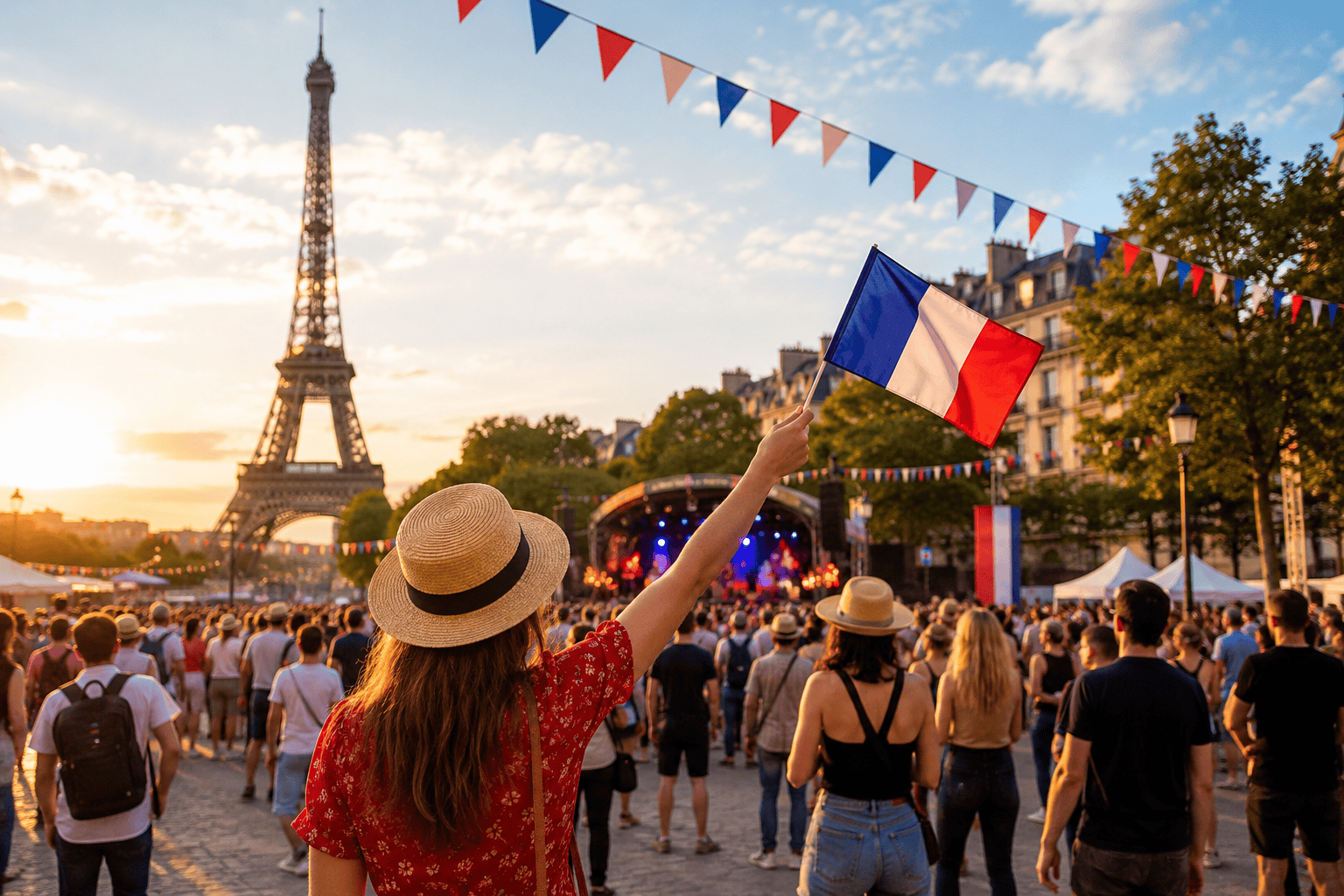
<p>Celebrated across France every July 14, Bastille Day includes military parades, fireworks, concerts, and public parties in almost every city and village. Paris hosts the country’s most iconic events — including the Champs-Élysées parade and the Eiffel Tower fireworks — but smaller cities often feel more enjoyable and far less chaotic.</p>

<p><strong>Best places to experience it:</strong></p>

<ul>

<li><strong>Paris</strong> — for the iconic military parade and major fireworks</li>

<li><strong>Lyon</strong> — for riverside fireworks with a more local crowd</li>

<li><strong>Bordeaux</strong> — for a relaxed wine-region atmosphere with evening celebrations</li>

</ul>

<p><strong>Common mistakes:</strong></p>

<ul>

<li>Not booking restaurants ahead — many fill up days in advance around July 14</li>

<li>Assuming public transport runs normally after fireworks end (it does not always)</li>

<li>Underestimating security closures and road restrictions in Paris, which can limit movement significantly</li>

</ul>

<hr />

<h2>Autumn Festivals in France (September–November)</h2>

<p>Autumn combines harvest festivals, wine events, and noticeably lower travel prices. For many experienced Europe travelers, September and October are the ideal window for festivals in France — the crowds thin, the light is beautiful, and the food calendar moves into truffle and wine harvest season.</p>

<h3>Fête des Vendanges de Montmartre — Paris</h3>

<p>Each October, Montmartre celebrates the harvest from its small hillside vineyard with wine tastings, street food, concerts, and a night-time parade through the neighborhood’s winding streets. It is one of the few Paris festivals that still feels local rather than purely touristic.</p>

<p><strong>Why it works well:</strong> You get genuine festival energy in Paris without the intensity of summer tourist season. The Montmartre neighborhood is worth a full day’s exploration beyond the festival itself.</p>

<p><strong>Good for:</strong> Couples trips, food-focused travelers, and anyone doing a short Paris city break in autumn.</p>

<hr />

<h3>Beer Festivals in Alsace</h3>

<p>Alsace has its own strong regional beer culture, shaped by centuries of French-German history, and the autumn beer festivals in Strasbourg and Colmar have a very different character from the massive Munich Oktoberfest. Half-timbered villages, excellent choucroute and tarte flambée, and a slower pace make Alsace a genuinely rewarding autumn destination for travelers who want something other than wine.</p>

<hr />

<h2>Winter Festivals in France (December–February)</h2>

<h3>Strasbourg Christmas Market — Christkindelsmärik</h3>

<p>One of Europe’s oldest Christmas markets — dating back to 1570 — transforms central Strasbourg each December into a destination in its own right. Mulled wine, Alsatian pastries, handmade decorations, and the illuminated cathedral create an atmosphere that is hard to replicate elsewhere in France.</p>

<p><strong>Best experience:</strong> Visit on a weekday in early December, before peak weekend crowds arrive in mid-month.</p>

<p><strong>Budget reality:</strong> Hotel prices can roughly double on December weekends, particularly the two closest to Christmas.</p>

<p><strong>Common mistake:</strong> Treating Strasbourg as a rushed day trip from Paris. The journey takes about 1 hour 45 minutes by TGV, but staying overnight — especially on a weekday — is a far more rewarding experience.</p>

<p>Official information: <a href=”https://noel.strasbourg.eu/en” rel=”noopener noreferrer” target=”_blank”>noel.strasbourg.eu</a></p>

<hr />

<h3>Menton Lemon Festival — French Riviera</h3>

<p>Each February, the small Riviera town of Menton hosts a festival built entirely around elaborate sculptures made from citrus fruit — thousands of lemons and oranges shaped into giant themed structures, accompanied by parades and street entertainment. It is genuinely unlike anything else on the French festival calendar.</p>

<p><strong>Why it stands out:</strong> Mediterranean weather in late winter, off-season Riviera pricing, and a spectacle that photographs extraordinarily well.</p>

<p><strong>Best combined itinerary:</strong> Nice + Menton + Monaco over four to six days. All three are connected by the scenic coastal rail line, and each is easily reached without a car.</p>

<hr />

<h2>Best Food Festivals in France</h2>

<p>France’s food festival calendar is one of the richest in Europe. A few events worth knowing:</p>

<h3>Truffle Markets in Provence</h3>

<p>Winter truffle markets in villages like Richerenches and Aups attract professional chefs and serious food travelers from across Europe. These are functioning agricultural markets first and tourist events second — which means they retain a genuine character that more commercialized food festivals lose.</p>

<p><strong>Best for:</strong> Serious food travelers, Provence winter road trips, and market photography. Visit on a Saturday morning in January or February for the strongest atmosphere.</p>

<h3>Wine Festivals in Bordeaux and Burgundy</h3>

<p>Bordeaux and Burgundy both host seasonal wine events ranging from formal tastings at prestigious châteaux to open-air harvest celebrations accessible to general visitors.</p>

<p><strong>Budget warning:</strong> Premium wine events can become expensive quickly once you add tasting fees, transportation, and accommodation during event weekends.</p>

<p><strong>Smarter approach:</strong> Smaller regional wine festivals — particularly in lesser-visited appellations — typically offer better value and more personal access to producers than the flagship international events.</p>

<hr />

<h2>How to Plan Around Festivals in France</h2>

<h3>Book Earlier Than You Think</h3>

<p>Small French cities can sell out surprisingly fast during festival periods. As a general guide:</p>

<ul>

<li>Book TGV and regional trains 2–3 months ahead for major festival weekends</li>

<li>Reserve accommodation 4–6 months early for well-known events like Avignon, Cannes, and the Strasbourg Christmas Market</li>

<li>Check the local public holiday calendar — French national holidays create additional demand across the country</li>

</ul>

<h3>Understand Transportation Limitations</h3>

<p>France’s rail network is genuinely excellent, but festivals create bottlenecks. Common problems include late-night service gaps after events end, fully booked TGV trains on festival Fridays and Sundays, and taxi shortages immediately after fireworks or concerts. The most reliable solution is to stay walking distance from the main festival area rather than relying on transport at peak moments.</p>

<h3>Mix Major Festivals With Smaller Events</h3>

<p>Many travelers overload their itinerary with only famous destinations. A better approach often combines one major city festival with one regional or village celebration, with slower countryside travel between them. For example:</p>

<p><strong>Paris → Avignon Festival → Provence villages</strong></p>

<p>This creates a more balanced trip, reduces fatigue, and gives you a far more varied experience of France than staying exclusively in high-profile locations.</p>

<hr />

<h2>Quick Reference: Best Festivals in France by Traveler Type</h2>

<table>

<thead>

<tr>

<th>Festival</th>

<th>Best For</th>

<th>Planning Difficulty</th>

</tr>

</thead>

<tbody>

<tr>

<td>Nice Carnival</td>

<td>First-time France visitors</td>

<td>Moderate (book early)</td>

</tr>

<tr>

<td>Festival d’Avignon</td>

<td>Arts and culture travelers</td>

<td>Moderate</td>

</tr>

<tr>

<td>Strasbourg Christmas Market</td>

<td>Winter Europe trips</td>

<td>Easy (weekday visits)</td>

</tr>

<tr>

<td>Bastille Day</td>

<td>Classic French atmosphere</td>

<td>Easy</td>

</tr>

<tr>

<td>Cannes Film Festival</td>

<td>Luxury travel and film fans</td>

<td>Expensive</td>

</tr>

<tr>

<td>Les Vieilles Charrues</td>

<td>Music lovers and Brittany explorers</td>

<td>Moderate (transport planning needed)</td>

</tr>

<tr>

<td>Fête des Vendanges (Montmartre)</td>

<td>Autumn Paris city breaks</td>

<td>Easy</td>

</tr>

<tr>

<td>Menton Lemon Festival</td>

<td>Off-season Riviera travelers</td>

<td>Easy</td>

</tr>

</tbody>

</table>

<hr />

<h2>Common Mistakes Travelers Make With French Festivals</h2>

<p><strong>Assuming everything stays open normally.</strong> Festival days frequently alter restaurant hours, museum operations, and transportation schedules. Check ahead rather than assuming.</p>

<p><strong>Underestimating the heat in southern France.</strong> July festivals in Provence and the Languedoc regularly hit 35°C (95°F) or above. Plan accordingly — lightweight clothing, afternoon rest, and plenty of water.</p>

<p><strong>Staying too far from the action.</strong> Cheap accommodation on the outskirts of festival cities often creates transportation stress that cancels out the savings. Factor transport costs and time into your accommodation decision.</p>

<p><strong>Trying to do too much in one trip.</strong> Festival travel is more tiring than standard sightseeing. Build slower days into your itinerary — even one unscheduled afternoon can make the difference between an enjoyable trip and an exhausting one.</p>

<hr />

<h2>Are Festivals in France Worth Planning a Trip Around?</h2>

<p>For most travelers, yes — but only if the festival genuinely matches your travel style. Some people love the energy and spectacle of massive events like Cannes or Bastille Day in Paris. Others will find far more satisfaction in a quiet regional truffle market or a village harvest celebration that most tourists never hear about.</p>

<p>The best festivals in France are not always the most famous ones. Often, the most memorable experiences happen in smaller towns where local traditions still outweigh tourism — and where showing up with curiosity and a little preparation is enough to feel genuinely welcome.</p>

<hr />

<h2>Frequently Asked Questions</h2>

<h3>When is the best time of year to visit France for festivals?</h3>

<p>Summer (June–August) has the widest range of festivals, but also the highest prices and biggest crowds. Autumn (September–October) offers harvest and wine festivals at lower cost with better availability. February brings the Nice Carnival and Menton Lemon Festival for winter travelers. There is no single best month — it depends on which region and type of event you prefer.</p>

<h3>What is the most famous festival in France?</h3>

<p>Bastille Day (July 14) is the most widely recognized, celebrated across every city and village in the country. Among cultural festivals, the Festival d’Avignon and the Cannes Film Festival carry the strongest international reputations. For sheer spectacle, the Nice Carnival and the Strasbourg Christmas Market attract some of the highest visitor numbers.</p>

<h3>How far in advance do I need to book for major French festivals?</h3>

<p>For well-known events like the Festival d’Avignon, the Cannes Film Festival, and the Strasbourg Christmas Market, book accommodation four to six months ahead. Trains on festival weekends — particularly TGV routes — should be booked two to three months in advance. For smaller regional festivals, four to six weeks is usually sufficient, though earlier is always safer.</p>

<h3>Are French festivals suitable for families with children?</h3>

<p>Many are. Bastille Day fireworks, the Nice Carnival, the Menton Lemon Festival, and Christmas markets in Strasbourg and Colmar all work well for families. Summer music festivals like Les Vieilles Charrues are family-friendly in atmosphere, though logistics require more planning. A few events — particularly those involving bullfighting traditions at the Feria d’Arles — are worth researching in advance if you have younger children.</p>

<h3>Which festivals in France are free to attend?</h3>

<p>Bastille Day celebrations are free everywhere in France. The Festival d’Avignon’s official program requires tickets, but the parallel Festival Off includes hundreds of free or low-cost performances. Village fêtes across the country are almost universally free. The Fête des Vendanges de Montmartre in Paris is free to wander, though ticketed events and wine tastings carry a charge.</p>

<h3>Is it possible to attend multiple French festivals in one trip?</h3>

<p>Yes, if you plan the geography carefully. Combining Nice Carnival with Menton Lemon Festival works naturally in February. In summer, Paris followed by the Festival d’Avignon is a logical route. Autumn allows Montmartre’s wine harvest festival and Strasbourg beer events to be combined on a longer trip. Avoid trying to move between regions too quickly — festival travel is more tiring than standard city-hopping.</p>

<hr />

<p><em>Last verified: May 2025. Festival dates, ticket prices, and accommodation costs change year to year. Always check official event websites before booking.</em></p>

<p>By <a href=”https://eurly.com/about/mara-vale/”>Mara Vale</a> for Eurly.</p>

By Mara Vale for Eurly

france festivals travel infographic guidewebp

Leave a Comment

Your email address will not be published. Required fields are marked *

Scroll to Top